

Japan, US defence chiefs cover radar row and other China tensions in phone call


US and Japanese defence chiefs spoke on the phone on Friday about a confrontation between Chinese and Japanese fighter jets over the weekend, with Tokyo saying it did not seek to escalate the tensions.

During the call, Japanese Defence Minister Shinjiro Koizumi and his US counterpart Pete Hegseth engaged in a “candid exchange” of views on the “rapidly deteriorating” security situation in the Indo-Pacific region, according to a Japanese defence ministry release.

“The two sides stated serious concerns about any actions that heighten tensions in the region, expressing that China’s actions do not contribute to peace and stability in the region,” the ministry said.

Koizumi added that Japan did not seek escalation, was responding calmly while making necessary rebuttals and was keeping the door open for dialogue, according to the ministry.

The pair agreed to maintain close communication and coordination between Tokyo and Washington and reaffirmed their commitment to further strengthen the alliance’s deterrence and response capabilities with continued urgency, it said.

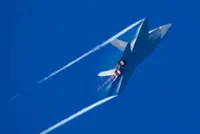
According to Tokyo, there were two incidents on Saturday in international airspace near Japan’s Okinawa islands in which Chinese J-15 aircraft locked fire-control radar onto Japanese F-15 jets – a prelude to directing weapons towards a target for a potential attack.

Beijing said its planes activated search radars in a common practice to ensure flight safety and accused the Japanese of “harassing” its forces during “normal military exercises and training”.

The Pentagon later confirmed the Hegseth-Koizumi call, issuing a statement that said the agenda included Japan’s efforts to increase its defence spending and strengthen its capabilities.

Also covered were China’s military activities and the importance of realistic training and military exercises across Japan, including in the Ryukyu Islands, according to the Pentagon.

“Secretary Hegseth and Defence Minister Koizumi reaffirmed the importance of the US-Japan alliance and underscored their commitment to deterring aggression in the Asia-Pacific,” it said.

Military tensions have risen between Beijing and Tokyo following Japanese Prime Minister Sanae Takaichi’s remarks last month that her country could take military action in case of an attack on Taiwan.

Her statement prompted strong protests and economic and diplomatic retaliation from Beijing, which sees Taiwan as part of China to be reunited by force if necessary.

Most countries, including the United States and its treaty ally Japan, do not recognise self-governed Taiwan as an independent state. But Washington is opposed to any use of force to change the status quo and is committed to supplying arms to the island.

Responding to the phone call on Friday, China accused Japan of making “self-justifying, inconsistent, and sophistical” remarks to stoke tensions.

“We hope the international community can distinguish right from wrong and not be misled by Japan. Japan’s allies, in particular, should recognise Japan’s intentions and avoid being swayed by its agenda,” foreign ministry spokesman Guo Jiakun said.

He once again requested Takaichi retract her remarks about Taiwan.

The escalating diplomatic row between Beijing and Tokyo has also seen joint military exercises between China and Russia, as well as the US and Japan, near Japanese airspace.

On Tuesday, Chinese and Russian aircraft – including nuclear-capable bombers, fighter jets and airborne early warning and control aircraft – carried out a joint aerial patrol over the western Pacific Ocean.

According to the South Korean military, the aircraft entered South Korea’s air defence zone from the East China Sea and the Sea of Japan, or East Sea, and met near Japan’s Tsushima Island.

China’s defence ministry later confirmed that the Chinese and Russian air forces had conducted their 10th joint strategic air patrol.

The exercise involved flying around Japan from the airspace between Okinawa’s main island and Miyako Island in the Ryukyu chain to the waters off Shikoku in the western Pacific, according to a social media post by Koizumi earlier this week.

The following day, air forces from the US and Japan conducted a joint military exercise over the Sea of Japan, or East Sea, which involved six Japanese fighter jets, comprising F-35s and F-15s, and two US B-52 aircraft.

The joint aerial training was followed on Thursday by the arrival of the USS George Washington aircraft carrier at the US naval base in Yokosuka.

Also on Thursday, White House spokeswoman Karoline Leavitt took a neutral position on the confrontation between China and Japan, stressing that US President Trump had a “phenomenal relationship” with Takaichi and that Japan was a “great ally of the United States.”

“With respect to China, the president also has a good working relationship with President Xi [Jinping], which he believes is a good thing for our country, and he believes that the United States should be in a position to have a good working relationship with China while maintaining our very strong alliance with Japan,” she said.

-- SOUTH CHINA MORNING POST


Follow us on our official WhatsApp channel for breaking news alerts and key updates!

Next In Aseanplus News

Philippines now says three fishermen injured by the Chinese coast guard's water cannons off disputed shoal
US seeks ‘constructive’ reset with China as trade tensions ease: Greer
‘Fact-twisting’: Hong Kong slams US report alleging erosion of human rights, autonomy
Ousted Nepal PM's party holds biggest rally since Gen Z protests
'No such thing as ceasefire here' - Both Cambodia and Thailand report attacks despite Trump ceasefire call
Sabah polls show voters prefer local parties that align with federal govt, says Saifuddin
Hong Kong court to hand down verdict in Jimmy Lai national security trial on Monday
Virandeep fires Malaysia to SEA Games cricket gold
Malaysia urges Thailand, Cambodia to cease military action along border
Why are South China Sea disputes hard to resolve? Power ‘asymmetry’, Malaysian expert says

Others Also Read