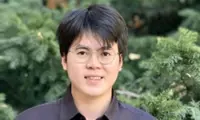
HANOI (VNExpress): Tran Thanh Nhan Duc failed his university entrance exam, a shocking failure that set him on a study mission to secure a US$93,000 (RM400,000)-a-year fellowship with the US Department of Agriculture's Agricultural Research Service.
The 29-year-old from central Vietnam's Binh Dinh Province is finishing his doctorate in civil engineering at the University of Virginia, with a GPA of 3.8/4 at a school ranked among the top universities in the US.
He was selected through the USDA-ARS Research Participation Program administered by the Oak Ridge Institute for Science and Education (ORISE), which places young scientists in federal agencies. His work will focus on modeling agricultural ecosystems to help address water-resource and food-production challenges in the western US,
"I'm very happy because having a job in a government agency at this time is very fortunate," he said. "It was something my father hoped for a lot before he passed away, so this result eases my mind."
In high school, Duc had strong grades. That made his failure in 2014 to enter the Accounting major at the University of Economics under the University of Danang a painful shock.
He not only felt he had disappointed himself, but also watched his parents face criticism and pity from neighbors. The pressure pushed him into a full year of intensive study; he lost 7 kg while retaking the exam.
The second time, he passed into the hydraulic engineering program at the University of Science and Technology – University of Danang. The earlier failure, however, stayed with him. Duc quietly made a new promise to himself: within 10 years, he would study abroad and earn a doctorate.
"I wanted to prove I wasn't inferior," he said. "And I wanted my parents to be able to hold their heads high."
In 2020, Duc won a fully funded Erasmus Mundus scholarship from the European Union for the Erasmus Mundus master's degree in Hydroinformatics and Water Management (EuroAquae+). The program took him through France, the U.K., Poland, Germany and Spain, combining water resources, data and engineering.
After completing three out of four semesters, his academic record and early research output drew attention from U.S. universities. He received several PhD offers, each with total funding packages in the hundreds of thousands of dollars.
Duc chose the University of Virginia, which offered the highest level of support, and moved to the U.S. at the end of 2022 to start his PhD in civil engineering.
From the very beginning, he set his sights on working for a U.S. government agency, something that typically requires a strong publication record, competitive awards and evidence that a researcher can handle large, real-world projects.
To build a portfolio that would stand out in federal recruitment, Duc targeted programs and awards at state or national level.
One of the achievements he values most is a summer fellowship at the National Water Center in 2024, often referred to as an "innovators" or "creative" summer program. It required excellent grades, solid programming skills and multiple relevant publications. There, he worked on water-resource and flood forecasting, topics closely aligned with the USDA position he will soon take up.
Over three years as a PhD student, Duc earned more than 10 scholarships and awards from state and national organizations and professional associations. Among them are the Dr. Robert C. Hoehn Graduate Student Scholarship from the Virginia Section of the American Water Works Association, and a top prize in the Michael H. Freilich student data visualization competition, co-hosted by the American Geophysical Union (AGU) and NASA.
At the same time, he published nearly 30 scientific papers in Q1 journals. His studies examine climate change, how floods and droughts affect communities, the impact of hydropower dams, and how satellite data can be used in hydrological research.
To strengthen his ability to work across disciplines, Duc deliberately chose diverse research topics. Instead of just telling employers "I can do this or that," he wanted finished projects that matched the job descriptions in front of him.
He also taught himself the Python programming language and machine-learning techniques, using artificial intelligence to process the massive and constantly changing datasets behind modern water and climate models.
Professor Venkataraman Lakshmi at the University of Virginia has supervised Duc since 2022. He describes his student as highly skilled, knowledgeable and an excellent communicator, with a level of commitment to research that is "remarkable."
According to the professor, Duc often takes on demanding projects and still delivers results "far beyond what is required." He also highlights Duc's ability to break down complex scientific concepts and make them clear and easy to understand, a crucial skill for applied research in public agencies.
Duc's work pace reflects that ambition. During his PhD, he often worked until 2–3 a.m. or stayed up all night, hoping to finish his doctorate within three years and complete the 10-year plan he made after his exam failure.
At the end of September, as he was getting close to that goal and applying to the USDA, Duc received devastating news: his father had passed away.
He immediately flew back to Vietnam, pausing his research and job applications. In the middle of funeral preparations, he thought about giving up. But he also knew how much his father had wanted him to find a good, stable job.
Between ceremonies, Duc updated his CV with new awards and publications and fixed bugs on his personal research website. One day after his father's funeral procession, he sat down for a 90-minute online interview with representatives from USDA-ARS.
The questions focused on his knowledge, technical skills and how he would approach real problems. Because he had already worked on many related topics, he did not find the interview too difficult. He described it as more of a discussion about future research directions than a test.
Two days later, the acceptance email arrived.
"I'm glad I'm about to finish my 10-year goal, though maybe not quickly enough," Duc said. "I'm very sorry my father couldn't wait to see it."
Duc has now returned to the U.S. and is working to regain his research rhythm so he can defend his dissertation well.
In the coming years, he hopes the USDA-ARS position will give him a stable income to support his mother and younger brother. He also wants to expand his professional network and seek opportunities to join projects that connect the U.S. and Vietnam in water and climate research.
"When my family situation is more stable, I want to return to Vietnam to be closer to my mother," he said. - VNExpress