
The University of Hong Kong (HKU) is actively pursuing plans to open a campus in Saudi Arabia, the Post has learned.
Sources disclosed the university’s expansion plans months after news reports revealed it had bought a property for the creation of a campus in Spain, marking a dual push into Europe and the Middle East.
“The university sees an opportunity in Saudi Arabia and has a plan to open a campus in Riyadh,” a source said over the weekend.
The insider said there was still no exact time frame for the plan, adding that it was still in its early stages.
Another source confirmed to the Post that the university had considered different places in the kingdom.
HKU at one point considered Diriyah, on the outskirts of the capital Riyadh, but later abandoned the idea, the second insider said.
The insider added that the Saudi campus was expected to be larger than the one in Spain.
The second source said the new campus could offer business courses among its programmes.
“The university believes this could offer Saudi Arabian students internship opportunities in mainland China via Hong Kong,” the insider said.
He added that HKU also believed the expansion could seize on opportunities created by stronger ties between the Middle East and Hong Kong.
The university hoped to expand its school as soon as possible, according to the source.
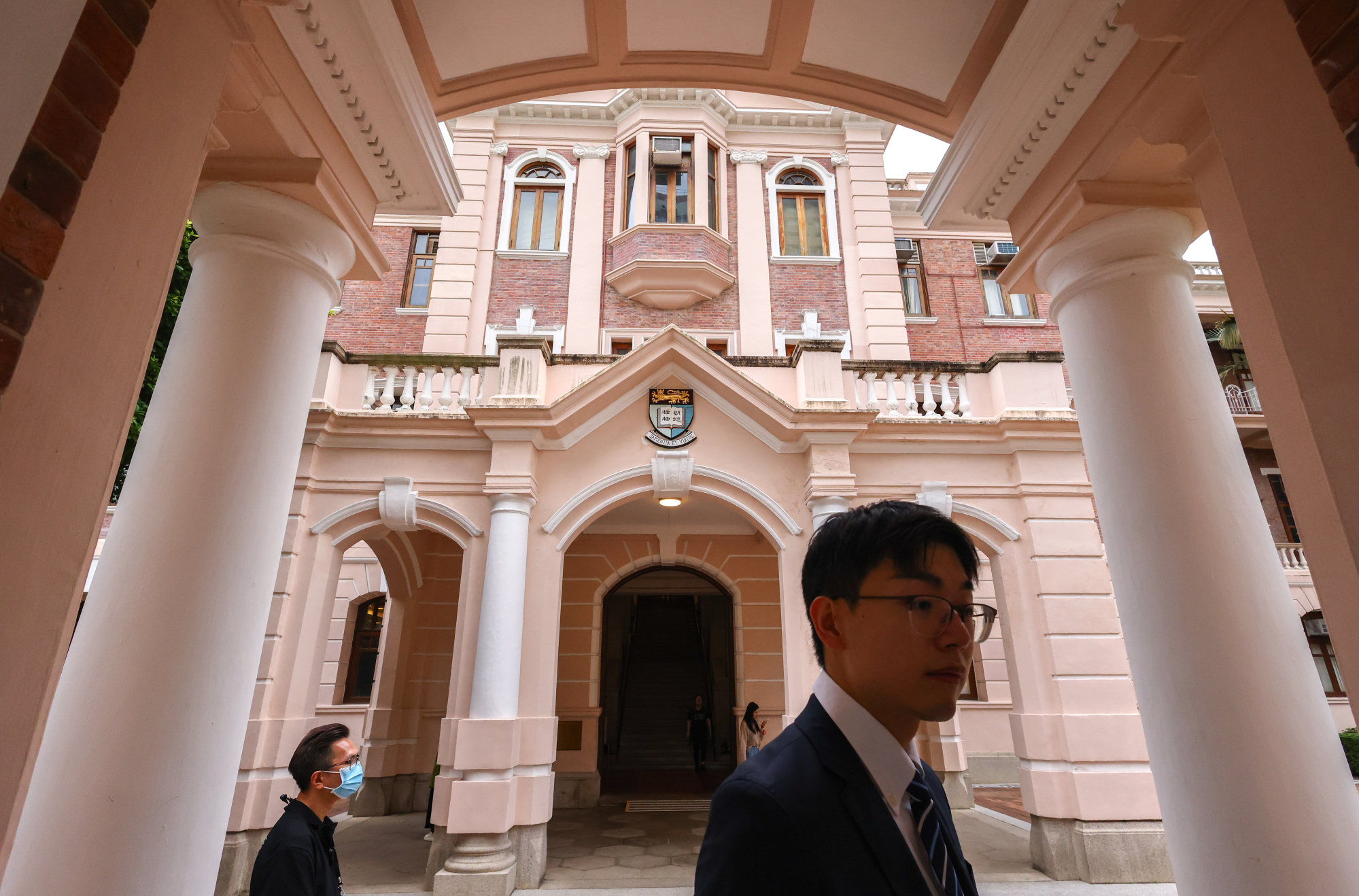
An HKU spokesman said in a reply to the Post that “they will be issuing a press release with further details at a later stage”.
“We will be sure to share it with you once it is available,” HKU said.
Earlier this year, HKU reportedly acquired a newly built property in Barcelona as part of plans for its first campus outside Hong Kong and the mainland.
Professor Lau Chi-pang, a member of the Legislative Council’s education panel and a special adviser to Lingnan University’s president on publicity, voiced his support for HKU’s decision to expand to the Middle East.
“HKU’s move makes sense. It has a good reputation and should be attractive to local students who want to enter the [mainland] market,” he said.
“It is also more convenient for students from Muslim countries to take an HKU course than to fly to Hong Kong because Hong Kong is not a Muslim-majority city and some Muslim students may not be easily able to get used to the living style here.
“Singapore may be more Muslim-friendly than Hong Kong. But our close connection with [the mainland], our role and position in the Greater Bay Area, are unparalleled.”
Lau said he also believed the Middle East was a good market for Hong Kong universities as the people there were considered more affluent and could afford the tuition fees.
Political scientist Chan Wai-keung, a lecturer at Polytechnic University, shared Lau’s views and said the move could help Hong Kong develop into an education hub.
“The move is also in line with the China policy of developing closer links with belt and road countries,” he said.
The Belt and Road Initiative is China’s plan to grow global trade.
Chan said he believed Hong Kong’s education sector had a strong reputation in Saudi Arabia.
He pointed to the recruitment of former Hong Kong University of Science and Technology (HKUST) president Tony Chan Fan-cheong to head the country’s King Abdullah University of Science and Technology.
“Hong Kong is building up its reputation as a quality education provider out there. One should not be surprised if more universities here follow suit to explore the Middle East market,” Chan said.
The latest QS World University rankings put HKU at 11th place globally, up from 17th and 26th in the previous two surveys.
Media reports last month said HKU would adopt a “centre approach” to enter the overseas markets. There is already the Shanghai study centre and a new centre in Spain is being renovated and is expected to be operational in a few months.
HKUST was also reportedly actively exploring the possibility of buying properties overseas to set up branch campuses.
Legislator Tang Fei, chairman of the Legco subcommittee on promoting the development of Hong Kong into an international education hub, welcomed HKU’s plans for expansion.
“It is not only that we go out to train overseas students, but also that we can upgrade ourselves by having closer cooperation with institutes there,” he said.
“It would be best if HKU could also offer some exchange places to allow Hong Kong undergraduates to go to study at the Saudi Arabian campus to see for themselves the development of the Middle East.
“Hongkongers also need to develop and widen our international perspectives. We have been too much influenced by Western perspectives. Some people might still think there are only deserts in Saudi Arabia.” - SOUTH CHINA MORNING POIST