Ahead of the 80th anniversary of Victory Day, marking the end of the Sino-Japanese war and the global fight against fascism, we look at the profound changes of the post-war period and how they continue to affect China’s place in the world. Part one of this series examines how the Chinese sacrifices of the conflict underpin Beijing’s determination to uphold global norms.
An estimated 35 million Chinese soldiers and civilians died as part of their country’s sacrifice as a key Allied power, yet 80 years later China finds itself not only a forgotten ally but also recast as an adversary.
When President Xi Jinping takes to the rostrum overlooking Tiananmen Square for next week’s military parade marking the 80th anniversary of victory in the Sino-Japanese war and World War II’s global defeat of fascism, China’s sacrifices will be remembered.
The spectacle is also likely to serve as a platform for Xi to assert China’s role as a defender of the post-war order, at a time when the country is increasingly painted – alongside Russia – as a revisionist power intent on upending the global system.
A communique from last year’s Nato summit declared that “China’s stated ambitions and coercive policies continue to challenge our interests, security, and values” and accused Beijing of seeking to reshape the rules-based international order.
The US-led Western bloc’s narrative of China as a threat has been gaining traction over several years. For example, on several occasions former national security adviser Jake Sullivan described the Group of Seven as the “steering committee of the free world”.
Sullivan’s implication – that nations like China, outside the Western-led framework of the G7, were inherently destabilising – and similar statements frame China’s growing global influence as a direct challenge to the Western-dominated security architecture.
It is a charge vehemently disputed by Beijing, which points out China’s consistent upholding of post-war institutions and norms in the face of rising geopolitical tensions and its growing competition with the United States.
“We must resolutely defend the post-war world order,” Xi wrote in a signed article published by Russian state media ahead of his visit to Moscow in May for the 80th anniversary of the Soviet Union’s victory over Nazi Germany.
“As the international situation is becoming more turbulent, we should safeguard the authority of the United Nations, defend the UN-centred international system ... and continuously push ahead with multi-polarity and inclusive economic globalisation.”
Xi recalled that “80 years ago, the forces of justice worldwide – including China and the Soviet Union – fought heroically side by side, united in their resolve, and defeated the seemingly invincible fascist powers”.
“Today, 80 years later, unilateralism, hegemony, and domineering bullying are causing profound harm. Humanity once again stands at a crossroads: unity or division, dialogue or confrontation, win-win cooperation or zero-sum rivalry,” he wrote.
Forgotten ally
Contrary to popular narratives – often amplified by Hollywood – the post-war order was not shaped by the US and its Western allies alone.
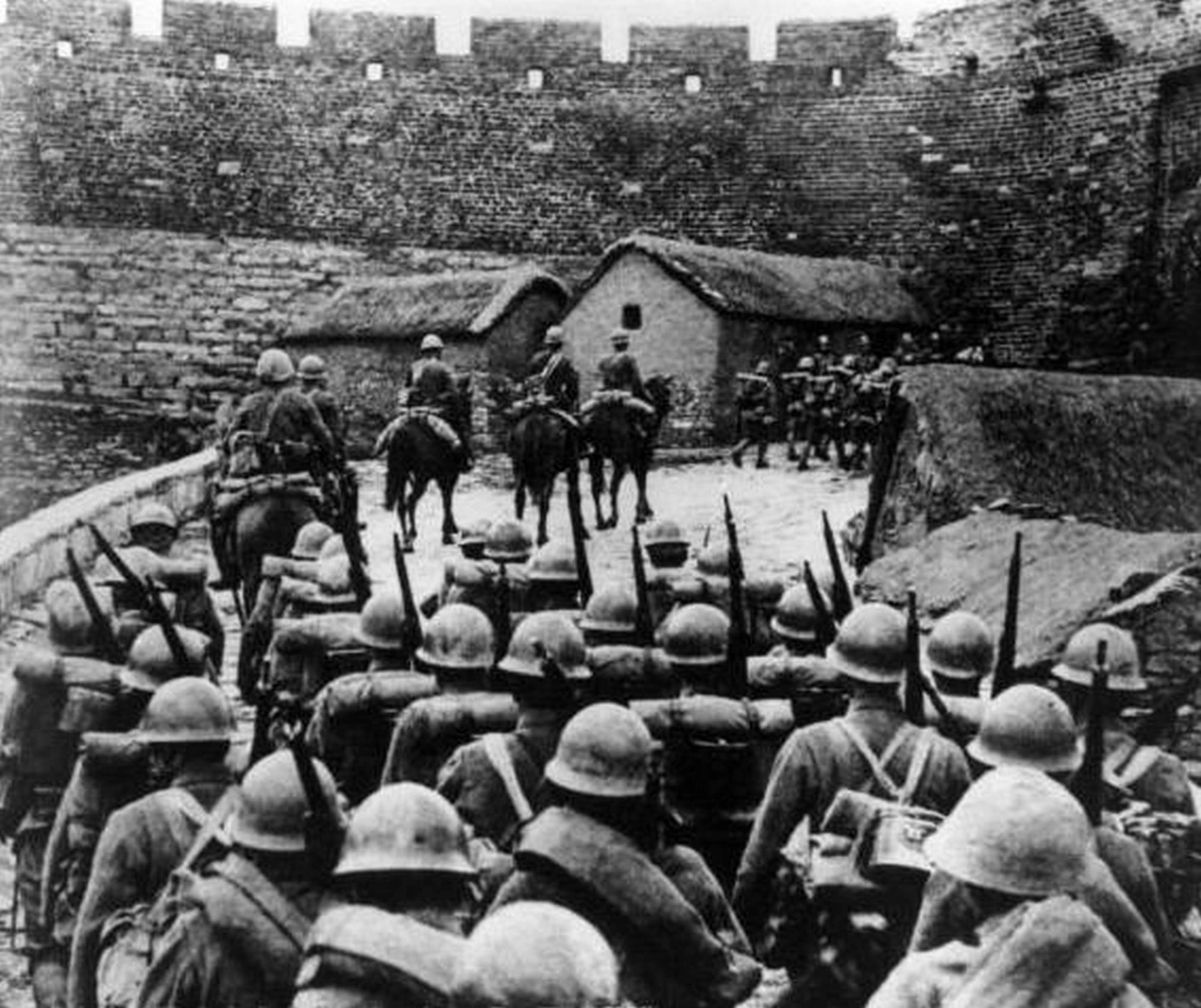
The Soviet Union played a decisive role, liberating much of Eastern Europe and bearing the brunt of the Nazi war machine, with more than 20 million deaths. China, too, was instrumental, pinning down over 500,000 Japanese troops in a gruelling resistance.
Yet, this history is fading, with some European leaders overlooking the Soviet sacrifices and crediting the US alone for their liberation.
For example, when US President Donald Trump told German Chancellor Friedrich Merz – at their first in-person meeting in June – that the D-Day landings were “not a great day” for Germany, neither leader noted Moscow’s contribution.
“In the long run, Mr President, this was the liberation of my country from Nazi dictatorship,” Merz said. “We know what we owe you,” he continued, adding that the US was in a “strong position” to play a similar role in bringing an end to the Ukraine war.
Trump mused about Moscow’s role in World War II during a news conference – also in June – when he observed that Russian President Vladimir Putin had reminded him that the Russians had been US allies in the conflict.
So why did everyone now hate Russia but love Germany and Japan, who were on the enemy side in the second world war, Trump wondered.
China’s contributions are even less acknowledged, reduced to footnotes in global historical memory despite its role as an ally of the US and the British Empire from just after Pearl Harbour in 1941 to the Japanese surrender in 1945.
It has also been largely forgotten that China was the first country to be invaded in what would go on to become the second world war, with British historian Rana Mitter one of the first Western scholars to consider the full implications of the Chinese contribution.
According to Mitter – in his 2013 book Forgotten Ally: China’s World War – if the Chinese surrendered in 1938, it could have put Japan in control of the country for a generation or more.
Japanese forces might also have been able to turn towards the USSR, Southeast Asia, or even British India, argued Mitter, now a US-Asia relations professor at the Harvard Kennedy School.
Beijing continues to preserve the memory of the joint Allied efforts, including US contributions, that helped China against the Japanese invaders. Xi has written to descendants of American pilots and other veterans, emphasising gratitude for their role.
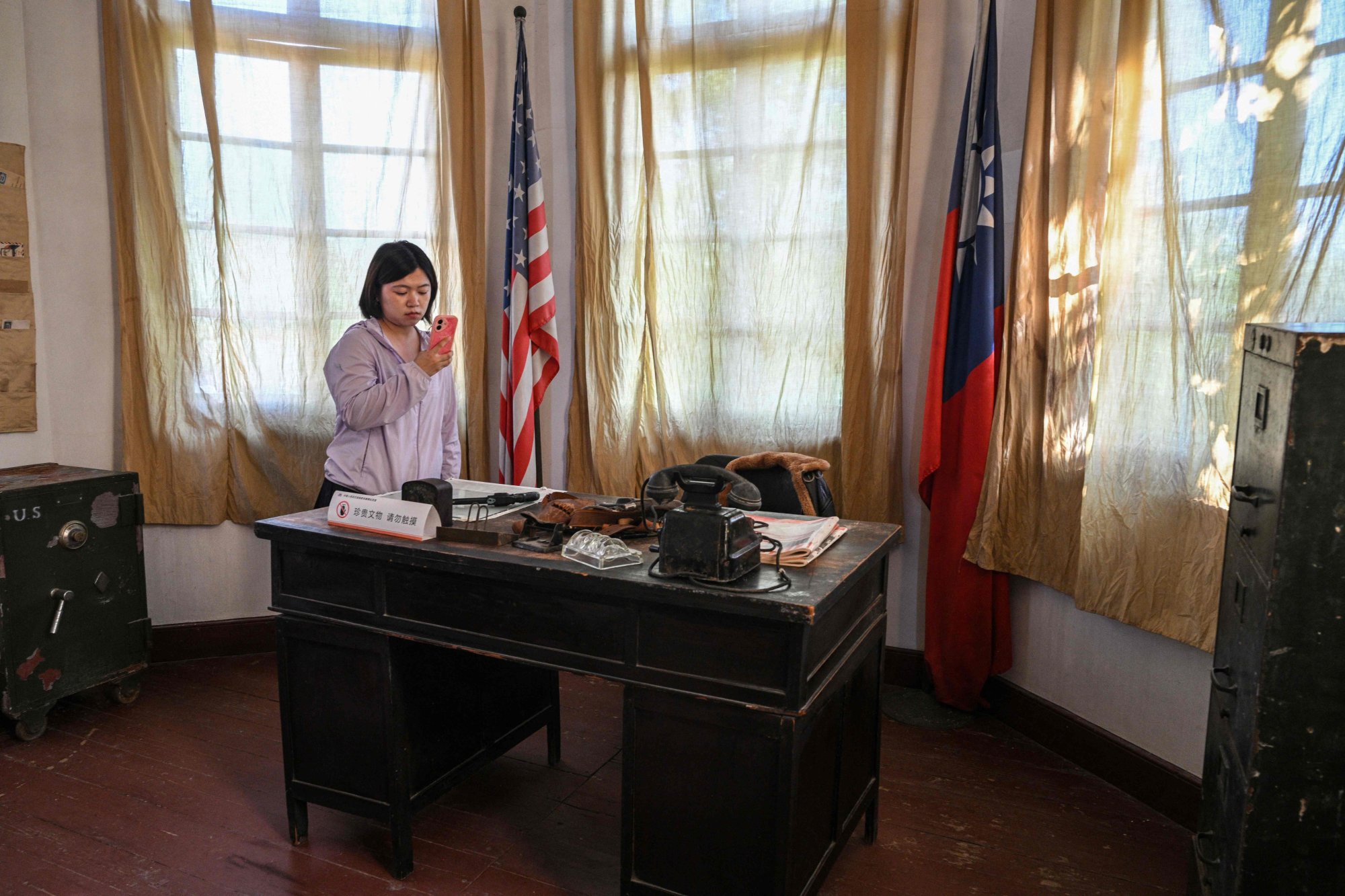
Despite current tensions in bilateral ties, sources have told the South China Morning Post that China has invited descendants of the US pilots known as the Flying Tigers to Beijing for next week’s 80th anniversary commemoration.
Beijing has increasingly looked to the legacy of the Flying Tigers and other examples of historical cooperation as a way of improving relations – particularly people-to-people exchanges, which have largely stalled since the Covid-19 pandemic.
In contrast, the US has not highlighted its wartime partnership with China, instead aligning more closely with Japan – a former Axis power – in its modern security strategy.
Whose world order?
The world order established after World War II, as outlined in the United Nations Charter, was built on collective safeguards, with the UN Security Council – where China holds a permanent seat – designed to ensure global stability through multilateral cooperation.
However, the US and its allies often refer to a different “rules-based order”, rooted in the post-Cold War era and characterised by Western-dominated institutions like Nato and the G7. It prioritises Western security interests, often labelling non-aligned nations as threats.
Nato was formed to counter the Soviet Union, but has continued to expand eastward, even after the collapse of the USSR – including with last year’s summit reaffirming its mission to counter “systemic challenges” posed by China.
For China and much of the Global South, Nato’s expansion represents a departure from the UN-centric system, replacing it with a framework that demands alignment with Western values.
In Asia, the post-war order is defined not only by collective security but also by the seismic shift of decolonisation. The war’s end catalysed independence from Western colonial rule for most Asian nations, among them India, Indonesia, Malaysia and Vietnam.
However, the ambiguous borders left behind by the colonial powers sowed the seeds for modern disputes, such as those in the South China Sea – disagreements that Beijing argues should be resolved peacefully by Asian nations, without external interference.
China’s Global Security Initiative, launched in 2022, emphasises this cornerstone of the post-war order, advocating for regional solutions free from “outside powers using divide-and-rule tactics” – a veiled critique of US involvement in Asian disputes.
A new multilateralism?
While the US has undermined globalisation by launching tariff wars and downplaying the roles of international organisations, China’s actions have reflected its ambition to reshape global governance.
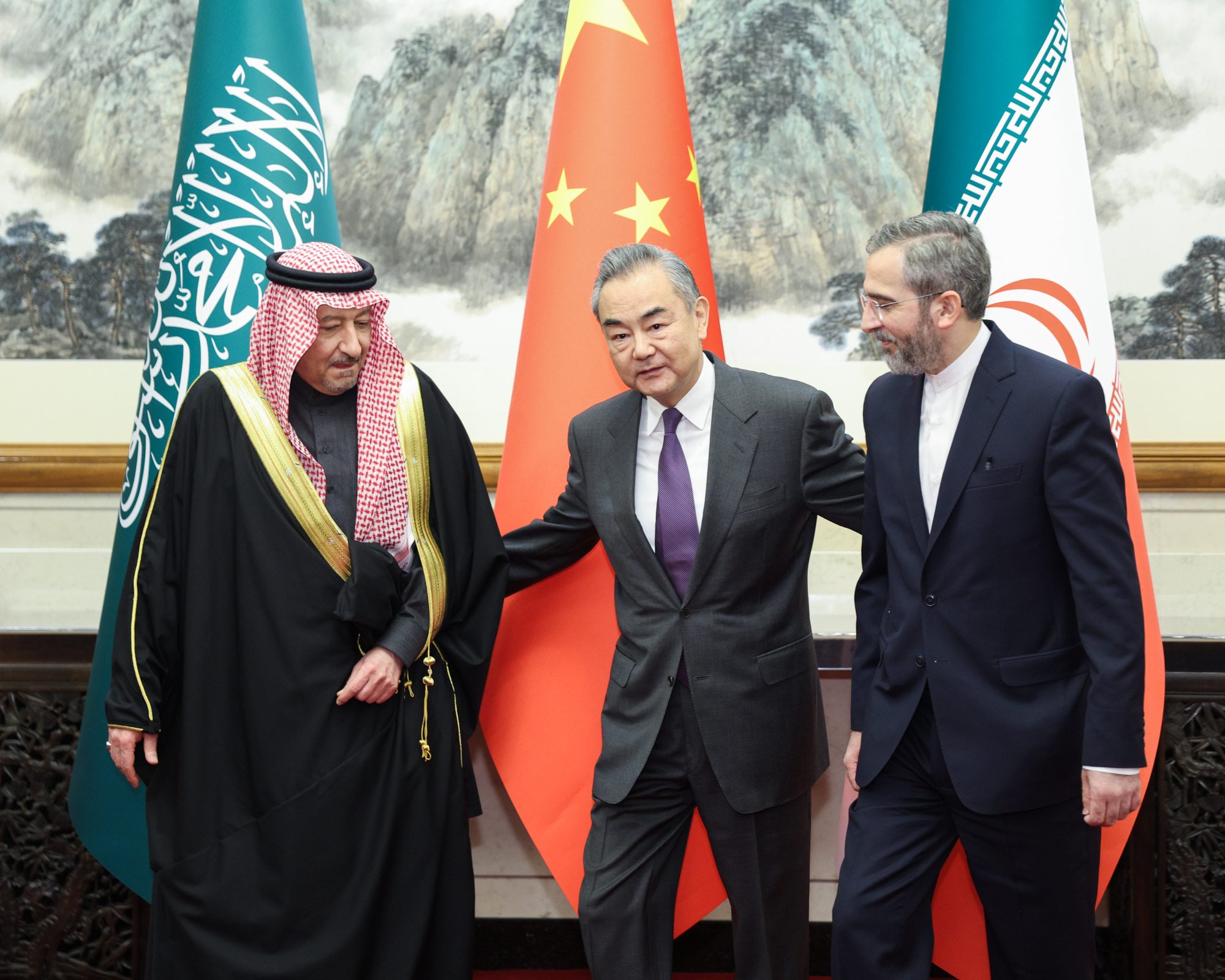
Beijing’s brokering of the Iran-Saudi Arabia detente in 2023 showcased its diplomatic clout, restoring relations between the Middle Eastern rivals after seven years of severed ties.
China’s Belt and Road Initiative has invested in infrastructure across around 150 countries since its launch in 2013, while institutions like the Asian Infrastructure Investment Bank and New Development Bank offer alternatives to Western-dominated financial systems.
These moves, coupled with increased contributions to the United Nations and active participation in the World Trade Organization, have underscored China’s commitment to multilateralism.
But the tension with the West, fuelled by competing visions of global governance, highlights a deeper debate: is China revising the international system to reflect its rise, or is the West redefining history to maintain its dominance?
According to Sourabh Gupta, from the Institute for China-America Studies in Washington, Xi’s Victory Day speech is likely to frame China as a steward of the original post-war order, not its disruptor.
He expects Xi to elaborate on China’s wartime role, which included tying down the adversary at immense cost, never flinching from its responsibilities as part of the collective resistance to the Axis powers.
“Via this elaboration of China’s wartime role, [Xi] will draw a link to China’s continuing responsible stakeholdership and burden-sharing role in international politics today,” Gupta said.
“China has neither the will nor the inclination to recreate the international system anew. And why should it? It owes its meteoric rise to the open, capitalist-led rules-based order, even if there are geostrategic elements it disagrees with.
“Rather, China seeks to revise and renew the system from within using incremental status quo-ist means that are framed within the rules and norms of the existing international system, broadly conceived.”
Political economist Zheng Yongnian from the Chinese University of Hong Kong, Shenzhen, said that while China was playing an increasingly important role in international affairs, as an atheist country it was an “outsider” to many.
According to Zheng, who is also a policy adviser to Beijing, “we must admit we don’t understand international relations and many diplomatic behaviours of the West and other countries of religious civilisations”.
“China is unable to reach an accurate judgment of the international political landscape until it admits [the lack of comprehension],” he wrote in the university’s Greater Bay Review published on August 15.
As an example, Zheng pointed out that many Chinese officials and experts were puzzled about why Europe favoured the US over China, even when it is threatened by Washington with higher tariffs and left out of Trump’s meeting with Putin on the Ukraine crisis.
Mitter said: “People, for good reasons, look a lot at the geopolitical, but they don’t look at the geoeconomic. Probably China is going to double down and really stress the elements of global geoeconomics.”
While the convertibility of the US dollar was “going to be ... difficult to compete with”, China would probably focus on strengthening its prowess in energy supply, given Beijing’s priority of political control over its currency and financial matters, he said.
“China is going to portray itself as the major global power for energy supply, particularly green tech and post fossil fuel,” he said.
“And it’s going to try and portray itself as being a country that, in terms of international trade and finance, provides a more sustainable model than the United States.” -- SOUTH CHINA MORNING POST