
For 20-year-old Mayank Yadav, riding a crowded bus in the summer months in this western Indian city can be like sitting in an oven.
That makes it a treat when he steps off and into a bus stop outfitted with sprinklers that bathe overheated commuters in a cooling mist.
“Everyone is suffering from the heat,” Yadav said.
“I hope they do more of this across the city.”
Rising heat is a problem for millions of people in India.
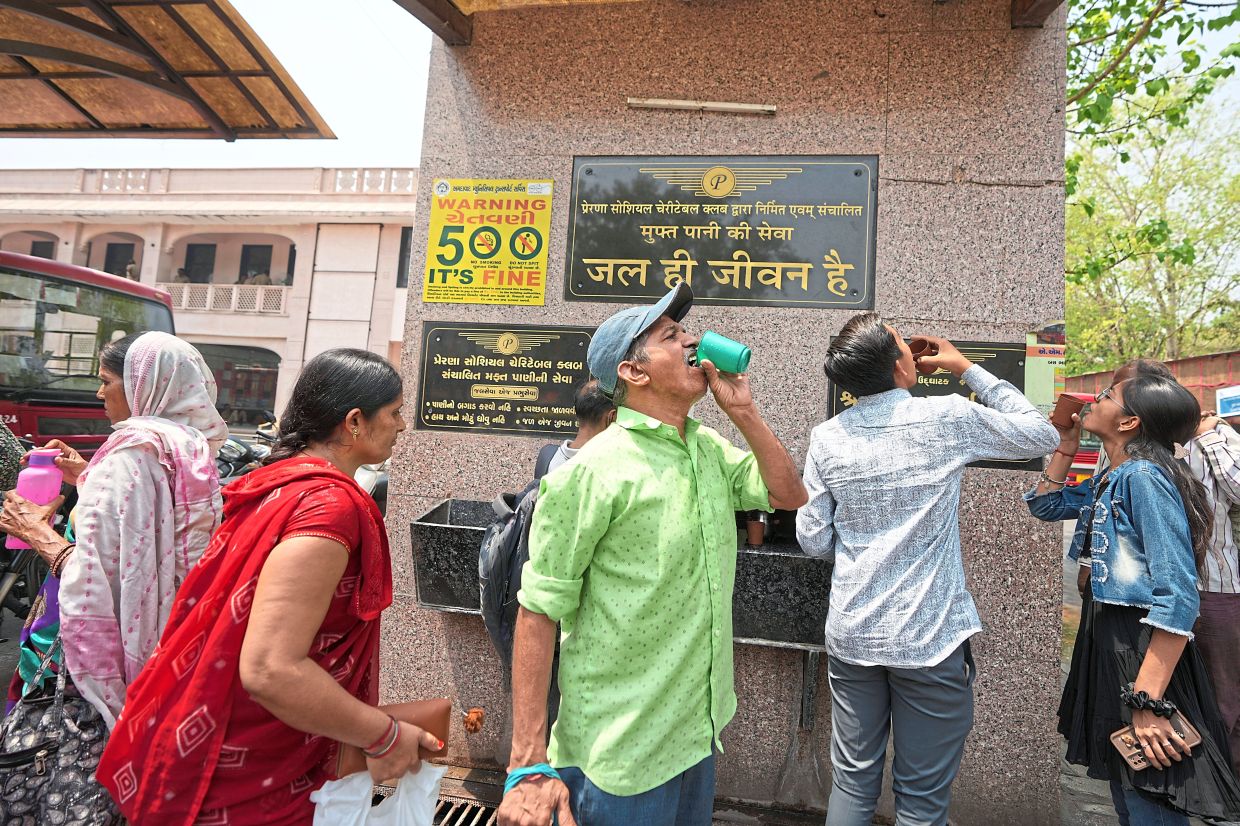
In Ahmedabad, temperatures this year have already reached 42°C, a level usually not seen for several more weeks, prompting city officials to advise people to stay indoors and stay hydrated.
And yet, coping with that heat is a familiar challenge in Ahmedabad.
After a 2010 heat wave killed more than 1,300 people, city and health officials rushed to develop South Asia’s first heat action plan.
The plan, rolled out in 2013 and now replicated across India and South Asia, includes strategies for hospitals, government officials and citizens to react immediately when temperatures rise beyond human tolerance.
Public health officials said it’s helped save hundreds of lives every summer.
City officials, with help from climate and health researchers, have implemented two simple yet effective solutions to help those affected most by heat: the poor and those who work outdoors.
By painting tin-roofed households with reflective paint, they’ve reduced indoor temperatures, which otherwise might be up to 5°C hotter than outside.
More recently, the city hung curtains woven of straw and water sprinklers at one bus stop so commuters can get relief from the sun and heat.
Officials said they plan to expand the idea to other bus stops in the city.
Residents said both measures have been a relief even as they brace for months of sweltering summer.
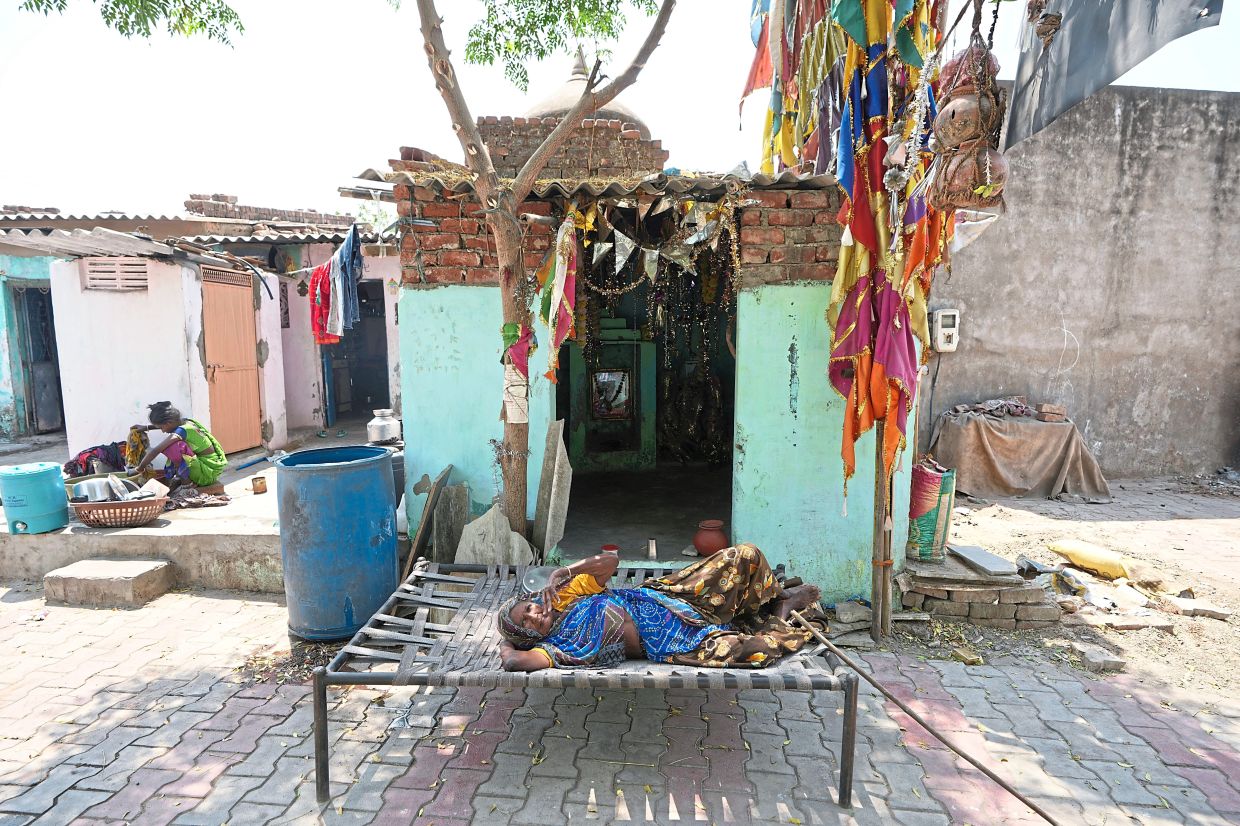
Throughout the city’s low-income neighbourhoods, hundreds of tin-roofed homes have been painted with reflective paint that helps keep the indoors cooler.
Residents said their houses were so hot before the roofs were painted that they would spend most of their time outdoors under any shade they could find.
“Earlier, it was really difficult to sleep inside the house,” said Akashbhai Thakor, who works as a delivery van driver and lives with his wife and three-month-old child in Ahmedabad.
Thakor’s roof was painted as part of a research project that is trying to measure the impact of the so-called cool roofs.
Early results have been promising.
“After the roof was painted, the house is much cooler, especially at night,” said Thakor.
People like Thakor are much more vulnerable to extreme heat because their houses aren’t insulated and, since most of them depend on a daily wage, they must work regardless of the weather, said Priya Bhavsar of the Indian Institute of Public Health Gandhinagar, who is working on the project.
Bhavsar said low-cost solutions could be the only respite for thousands in the city who can’t afford to buy an air conditioner.
Veer Vanzara, who lives in the same area as Thakor and works in a nearby garment factory, said the heat makes his job much worse, especially since his factory has no ventilation.
So his family is grateful for the cool roofs.
“The evenings and night are much cooler than before inside our house,” he said.
In Ahmedabad’s city centres, a 25m stretch of a bus stop has been draped with mats made of straw which, when sprinkled with water, immediately cool the hot wind.
Sprinklers installed on the bus stop roof lightly spray cool water on the commuters below, providing instant relief from the blazing heat just a step away.
“When nothing like this was here, it was really hot. What they’ve done is really good.
“Senior citizens like me can get some cooling from the heat,” said 77-year-old Ratilal Bhoire, who was waiting under the sprinklers with his daughter.
Bhoire said when he was younger, Ahmedabad was hot, but it was still possible to walk many kilometres without feeling dizzy, even at the height of summer.
“Nowadays, you can’t do that.”
Heat is the city’s biggest problem and heat waves – continuous days of extreme heat – are increasing, said Dr Tejas Shah of Ahmedabad Municipal Corporation, who oversees the city’s heat action plan.
“We are in the period of climate change, and it has already shown its effect,” said Shah.
Shah and other city officials said the onset of summer has become a testing time and efforts such as cool roofs and cool bus stops are reducing heat-related illness and deaths.
As climate projections predict only hotter and longer summers for his city, Shah said being prepared is the only thing to do.
“It (the heat) needs to be addressed in the proper way.” — AFP