




Senior scientist Yi Shouliang has returned to China to take up a new role at Sichuan University, after permanently leaving the US where he previously worked at the federal government’s Department of Energy.
The career decision, which follows this year’s escalating Sino-US tensions, saw him leave his academic role as adjunct professor at the University of Pittsburgh after less than 12 months and dissolve his commercial ventures.
Previously, he was a principal scientist and project leader at the DOE’s National Energy Technology Laboratory (NETL) where he focused on the Water-Energy Programme but resigned in June 2023 after five years at the helm.
Do you have questions about the biggest topics and trends from around the world? Get the answers with SCMP Knowledge, our new platform of curated content with explainers, FAQs, analyses and infographics brought to you by our award-winning team.
He then founded American Sustainable Membrane Technology LLC, serving as its CEO.
At NETL, Yi’s research focused on developing novel membranes and adsorption materials for the Carbon Capture, Utilisation, and Storage (CCUS) programme and water management initiatives.
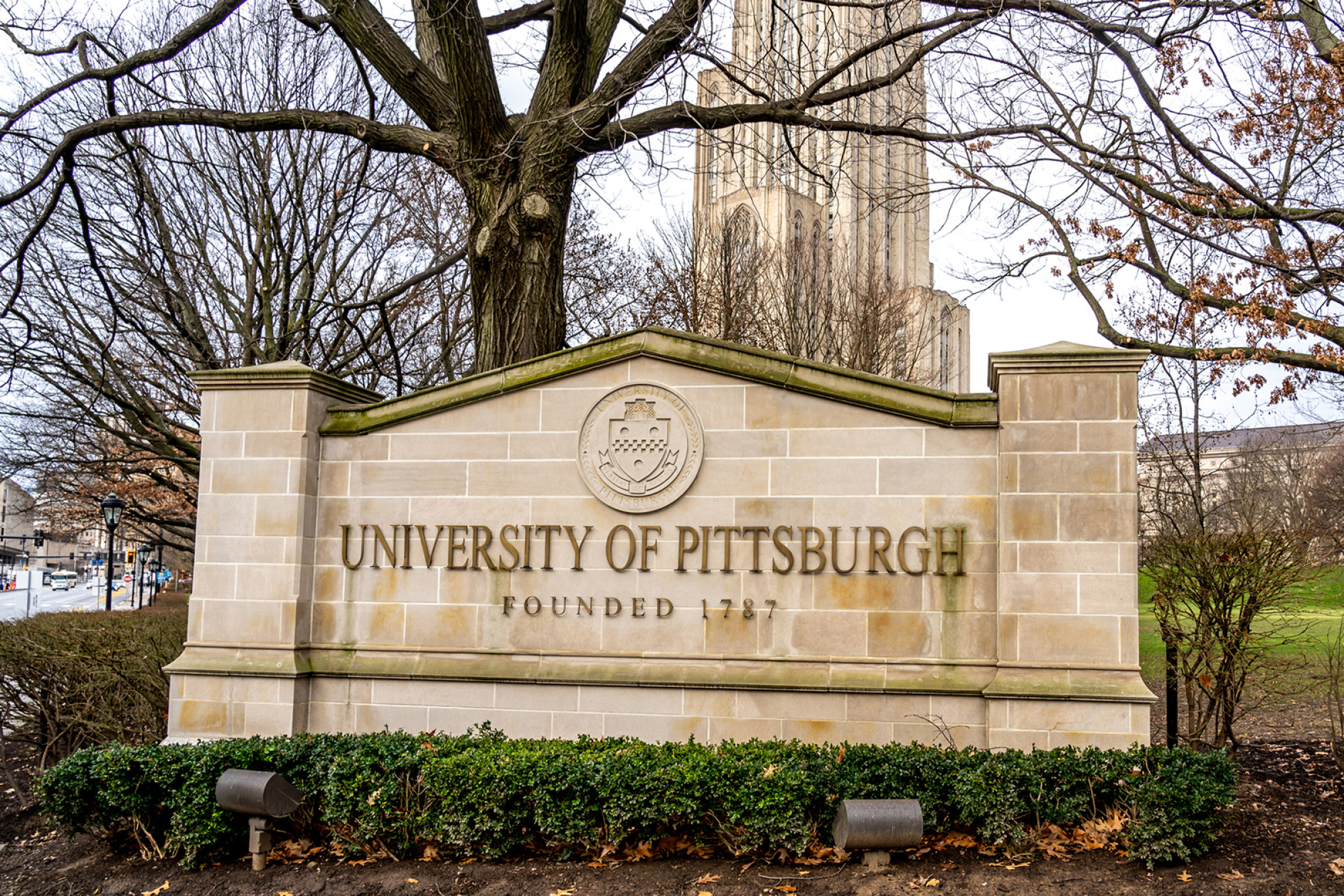
The circumstances surrounding his departure remain undisclosed and there are no listed records of Yi as a chief researcher on the DOE and NETL’s official websites, despite his lengthy tenure. Currently, his name only appears in patent filing and project proposals.
The South China Morning Post contacted Professor Yi via email regarding his DOE resignation but received no response before publication.
Yi took up his new role at Sichuan University, a Chinese institution on the US Entity List, earlier this year. His current research includes advanced separation technologies and engineering, while the lab also conducts exploratory research on artificial intelligence and machine learning.
These technologies are applied to high-performance membrane materials, porous functional materials, carbon capture and conversion, energy storage and gas separation, and ion-selective separation.
According to Sichuan University’s official website, Yi holds multiple titles, including Hai Na Distinguished Professor, doctoral supervisor, and head of the Green Low-Carbon Separation Technology and CCUS Innovation Team.
He is also a recipient of the National Overseas High-Level Talent Programme, previously known as the ‘Thousand Talents Plan’.
This Chinese government initiative is designed to attract and support leading scientists and innovators capable of advancing critical technologies, fostering hi-tech industries, and promoting interdisciplinary entrepreneurship in China.
While Yi’s publicly available academic record begins with his doctoral studies at the University of Chinese Academy of Sciences (UCAS), details of his undergraduate and master’s education were not initially disclosed.
Through an analysis of publication records, the Post revealed that Yi earned his bachelor’s and master’s degrees from Jiangnan University, formerly the Wuxi Institute of Light Industry, in 2005.
Notably, the university specialises in food science – a field aligned with Yi’s early research on lees fermentation.
After completing his doctoral studies at UCAS, Yi shifted his focus entirely to membrane separation technology.
He earned academic recognition through his thesis titled ‘Preparation, Performance, and Application of Organic Matter Preferentially Permeable Permeation Vaporisation Membranes’.
With extensive publications, Yi graduated in 2009 and was subsequently appointed as an assistant professor at UCAS, where he led the Renewable Energy Project team, overseeing biofuel production via an integrated fermentation-pervaporation process.
“A very good brother and friend – he has done very well in his research and has been working in the field of membrane separation,” remarked an anonymous UCAS faculty member.
In 2010, Yi became a Research Fellow at Nanyang Technological University in Singapore.
Two years later, he moved to the US and joined the laboratory of William J. Koros, a National Academy of Engineering member at Georgia Tech in Atlanta, serving simultaneously as senior scientist, laboratory manager, and senior project supervisor.
During this period, Yi expanded his expertise beyond academia. His breakthrough research on membrane materials for natural gas purification (removing CO₂ and H₂S) was published in Science Advances.
Concurrently, he led a research team with more than 20 members, co-founded a journal on membrane technology as editor-in-chief, and facilitated collaborations between Chinese universities and international researchers.
Before joining the NETL in May 2018, Yi served as associate editor for Separation and Purification Technology, Industrial Chemistry & Materials, and Carbon Capture Science & Technology, and as managing editor of Results in Engineering.
Yi has written more than 100 peer-reviewed papers in journals like Nature Materials. He also holds 12 patents in membrane and separation science.
In 2022, Yi received the Elsevier Engineering Frontiers Outstanding Scientist Award and was elected a Fellow of the Royal Society of Chemistry (RSC), Europe’s oldest chemical science organisation. These marked his final recognitions in Western academia.
The College of Carbon Neutral Future Technologies at Sichuan University prominently features recruitment announcements spanning researchers to postdoctoral positions.
Its manifesto encapsulates the institutional ethos: “We will provide you with a free academic environment, good working conditions, and generous compensation, helping you to showcase your talents and achieve your dream of becoming an academic master.”
More from South China Morning Post:
- ‘Ball is in China’s court’: Trump presses Beijing to make tariff offer
- Chinese scientists use AI to help visually impaired to ‘see’, explore the world
- US-China war ‘likely’ but not inevitable, warns top political scientist
For the latest news from the South China Morning Post download our mobile app. Copyright 2025.


