

Indonesia wants to bump up gas imports from US


Workers on a drilling rig in the United States. Indonesia could increase imports of US LPG and LNG as part of a response to Washington’s threat of imposing a 32-per cent import tariff on goods imported from Indonesia. - Bloomberg

JAKARTA: Indonesia is considering boosting imports of liquefied petroleum gas (LPG) and liquefied natural gas (LNG) from the United States, but experts urge caution to avoid harming local industries and stress prioritising long-term national interests over trade pressure.

Coordinating Economic Minister Airlangga Hartarto said on Tuesday (April 8) that the government could increase imports of US LPG and LNG as part of a response to Washington’s threat of imposing a 32-per cent import tariff on goods imported from Indonesia.
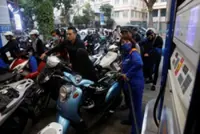

Upstream Oil and Gas Regulatory Special Task Force (SKK Migas) head Djoko Siswanto said the agency would avoid importing LPG and LNG in April and May this year considering the availability of sufficient domestic supply from the Tanggung, Bontang and Donggi Senori blocks.

“So far, we’ve never imported. Thank God, supplies for April and May will be met domestically,” he told reporters in Jakarta on Wednesday. Djoko explained that the current supply came from LPG and LNG volumes that had initially been designated for export but had since been redirected to state-owned electricity and gas companies PLN and Perusahaan Gas Negara (PGN).

“We plan to reduce gas exports from Sumatra to Singapore for June. Since Singapore will then face a shortfall, we’ll compensate that by maximising gas output from Natuna. For the second quarter, God willing, [domestic] supply will be secure,” he said. “We’ll reassess in the third and fourth quarters to determine whether imports will be necessary.”

Indonesia in recent years implemented a policy of annual export assessments, so that sufficient piped gas and LNG can be allocated for the domestic market, S&P Global Commodity Insights reported on Jan. 31, but growing uncertainty has pushed customers like Singapore to expand LNG receiving capacity and hedge long-term gas supply.

Indonesia's own LNG import plans are in limbo, the same report reads, as they require government approval despite PLN and PGN not having enough gas supply contracts. On Jan. 24, the market insights provider reported that Indonesia was projected to need an additional 54 LNG cargoes for 2025 to meet domestic gas requirements amid declining production levels.

Nevertheless, Djoko said that SKK Migas would prioritise importing LPG raw materials rather than LNG from the US for now. Should the government decide to increase imports from the US, the agency would accordingly reduce import contracts with other countries, particularly those from the Middle East, he added. “It is being studied, being evaluated,” he said in Jakarta on Wednesday, without further details.

Energy and Mineral Resources Minister Bahlil Lahadalia said plans to increase LPG and crude oil imports from the US would not halt imports from Indonesia’s primary oil and gas supplier countries. "[We] will not stop [imports from those countries], but the volumes might be reduced," Bahlil said on Thursday.

So far, the US only accounts for around four percent of Indonesia's crude oil imports, but it makes up about 54 per cent of LPG imports, according to the minister. Meanwhile, most oil and gas imports for domestic consumption have so far come from Singapore, the Middle East, Africa and Latin America.

resident Prabowo Subianto on Tuesday ordered the government to extensively cut back business regulations. Specifically, he vowed to do away with import restrictions and make the local content requirements (TKDN) “more flexible” because it “ends up making us less competitive”.

Another concrete instruction by the President was to eliminate quotas issued by the government for specific parties to import certain amounts of commodities, such as staple foodstuffs. Moshe Rizal, investment committee head of the Oil and Gas Companies Association (Aspermigas), welcomed the government’s move to ease business regulations but warned that it might backfire for the country’s long-term economic growth “if not done carefully”.

He pointed out the plethora of corruption cases that have tainted state-owned oil and gas giant Pertamina, which mostly revolve around import and export deals. “One time, we imported something when domestic production was sufficient. Another time, we imported something from a country when a cheaper alternative was available elsewhere,” he told The Jakarta Post on Wednesday.

He urged the stakeholders “to be careful”, because any wrong move would result in state losses. “We shouldn’t be sacrificing our national interests just to appease the US trade policy. Any policy must be evaluated based on whether it truly benefits the country,” Moshe said.

US President Donald Trump has pointed to large US trade deficits with other countries as grounds for imposing double-digit import tariffs on goods from around the world. “If the deficit was a problem [for the US], then Indonesia would buy US$18 billion worth of US products”, Prabowo said, citing wheat, soybean and cotton as products Indonesia could import more of from the US, alongside LPG, oil and oil drilling machines

Beyond trade, the US import tariffs add to the complexity of oil and gas developments in Indonesia, particularly through rising costs for construction and fabrication, according to Prateek Pandey, head of Asia Pacific (APAC) oil and gas research at Rystad Energy. "This could delay project timelines, especially for those nearing execution," he told the Post on Friday.

Most key projects were still in the pre-front end engineering design or FEED stages, so there was room to adjust, he noted, adding however that geopolitical and supply chain risks would now be factored into planning assumptions.

Asked about the prospects of offering more projects to US firms, Pandey noted the appeal of Indonesia’s “gas-focused” portfolio and that interest from European producers remained strong, with the country seen as a strategic growth area.

"The long-term outlook for gas developments in Indonesia remains cautiously optimistic, though cost escalation and supply chain challenges are real concerns," he added. "Timelines may be stretched, particularly if tariffs and trade barriers persist." - The Jakarta Post/ANN


Follow us on our official WhatsApp channel for breaking news alerts and key updates!
Indonesia , US , gas imports

Next In Aseanplus News

Asean News Headlines at 10pm on Wednesday (Jan 21, 2026)
Workers' Party’s swift refusal of Opposition Leader role signals unity behind Pritam Singh, say analysts
Endangered Sunda slow loris rescued from Singapore's HDB block near Sin Ming
Sultan of Brunei leaves hospital following successful knee surgery
MIC hasn't left BN, says Zambry
Singapore proposes Asean-first mechanism to trace scam calls across borders
Ex-TVB star Fiona Leung, 60, says she doesn't mind having wrinkles, grey hair
Thai Constitutional Court clears Phumtham, Tawee in Senate probe
Fahmi: Malaysia's economy remains strong, continues to be the focus of foreign investors
Kerala High Court denies bail to former TDB president Padmakumar, two others in Sabarimala gold loot case

Others Also Read