
In a landmark achievement, Chinese scientists have directly observed and manipulated prethermalisation – a critical transitional state in quantum systems – using the 78-qubit “Chuang-tzu 2.0” superconducting processor.
This allows researchers to “tune” the speed of quantum decoherence, providing a vital tool for managing complex quantum environments.
If a quantum system is disturbed, it naturally returns to a balanced state. The energy and information within it spreads out until they are evenly distributed. It would be similar to nudging a pendulum: it swings for a while but eventually slows down and stops.
This is a major challenge for quantum computing, which relies on keeping information perfectly intact. If a quantum system changes too quickly, its computational results become difficult to save and retrieve. However, predicting how long this process takes or what affects it is beyond the power of existing classical computers.
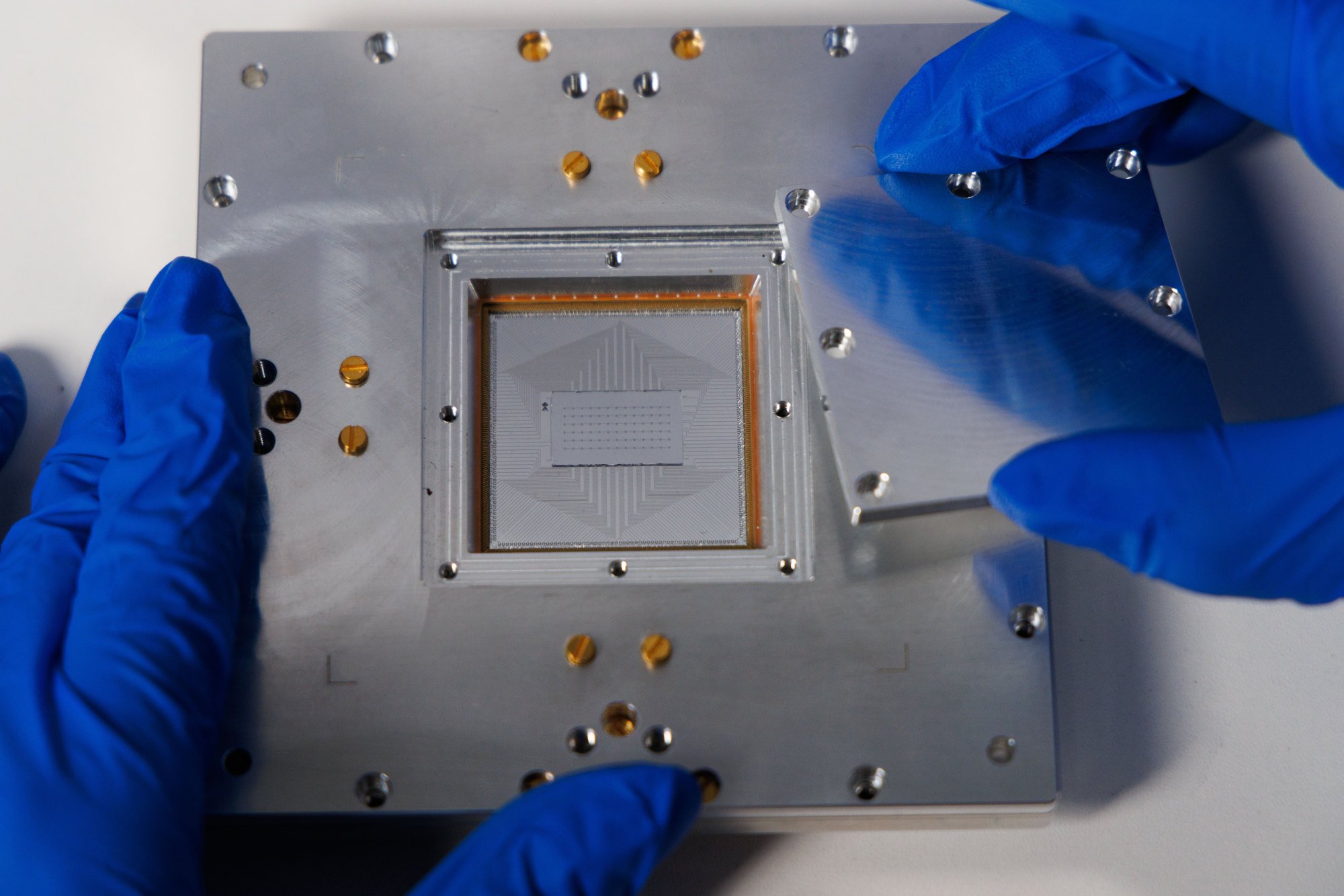
In a study published in Nature on January 28, researchers from the Institute of Physics at the Chinese Academy of Sciences reported the first observation of a counter-intuitive intermediate stage during this evolution. This stage is transient, relatively stable and, crucially, controllable, offering a possible avenue for preserving quantum information.
This prethermalisation stage is similar to heating ice: before ice completely melts into water, its temperature remains stable at 0 degrees Celsius (32 Fahrenheit) for an extended period. Similarly, in this brief plateau phase, the quantum system resists chaos and preserves its information.
The research was conducted on the Chuang-tzu 2.0, a superconducting quantum processor integrated with 78 quantum bits.
To precisely manipulate the system, the team used a tailored control sequence. By fine-tuning the pattern and timing of this sequence – much like adjusting a “heating rhythm” – they were able to lengthen or shorten the stable prethermalisation period as needed.
According to Fan Heng, a professor at the Institute of Physics and co-corresponding author of the paper, the team, like conductors, “successfully lengthened or shortened the duration of prethermalisation”.
“On Chuang-tzu 2.0, we clearly saw that chaos is held in check during the plateau,” Fan said. “But as soon as that period ends, complexity explodes and information floods the entire system.”
“The existence of the prethermalisation plateau indicates a potential time window for utilising quantum information before it dissipates,” he added.
Understanding the laws of thermalisation helps in designing controllable quantum operations and extending the lifetime of quantum states, directly affecting the practicality of quantum computing.
Fan said the research would also provide new ideas for designing better quantum error-correction schemes and extending the coherence time of quantum bits in the future. It validates the unique advantage of quantum simulators in solving specific complex problems.
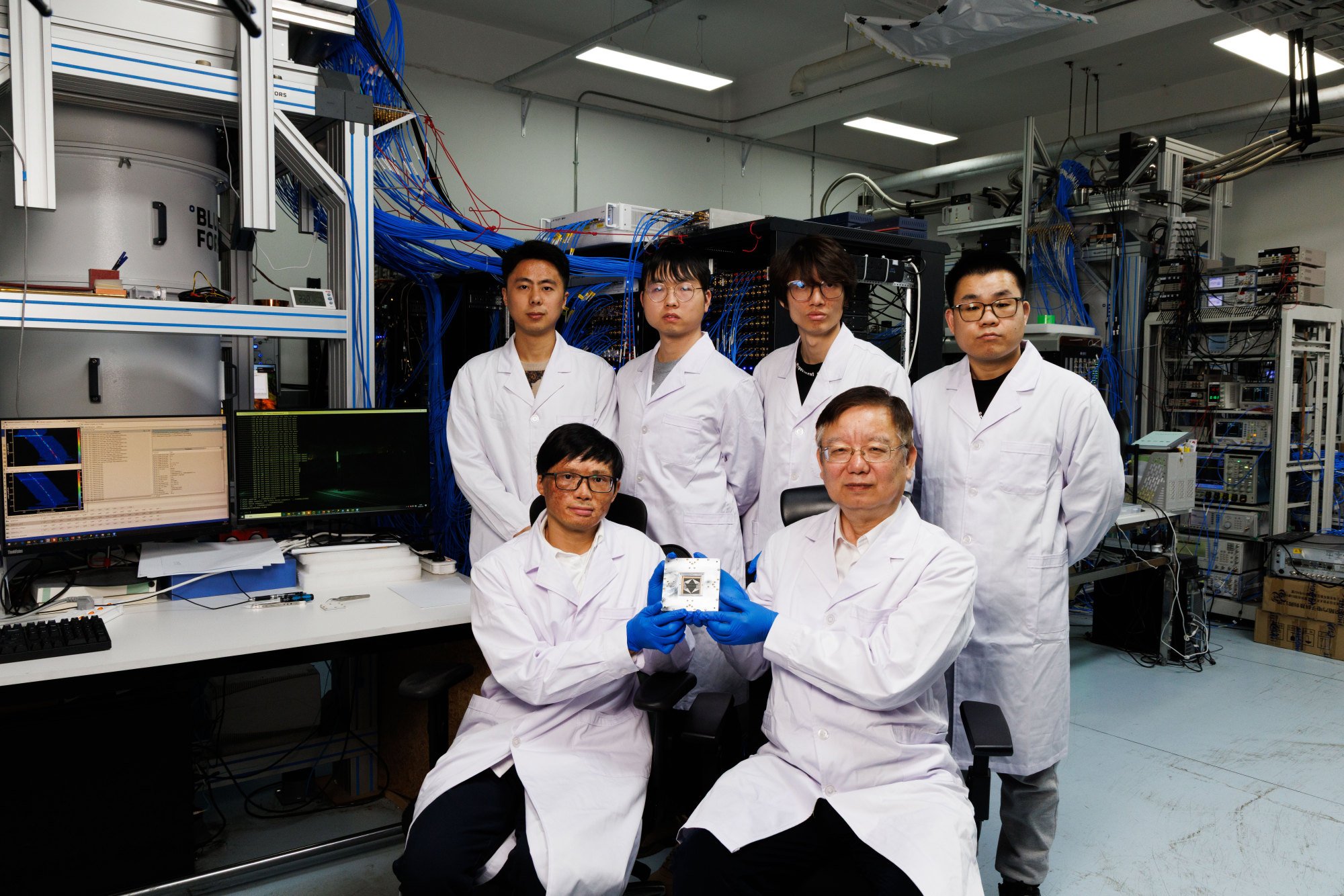
Chuang-tzu 2.0 was to the quantum world what a wind tunnel laboratory was to fighter jets, Fan added.
“For a quantum system with nearly 100 bits, its state space is extremely vast, making full-state simulation with classical computers impractical,” he said. “As a natural quantum system, a quantum processor can directly ‘evolve’ and reveal such complex dynamical laws.”
Fan said his team would continue to focus on developing larger-scale, higher-performance quantum chips.
According to a February 3 report in Guangming Daily, the researchers’ experiment “used a quantum chip to model processes too complex for regular computers and is just a glimpse of quantum computing’s potential”.
The newspaper added that “the main strength of quantum technology is its ability to fundamentally handle the intricate interrelationships within vast parallel possibilities”.
In developing new drugs or high-performance materials, chemists often rely on extensive trials in laboratories because precisely simulating the quantum behaviour of even a single molecule is extremely challenging for supercomputers.
In contrast, “quantum computers can simulate molecules in a way regular computers cannot”, the report said. “By acting as a natural quantum ‘simulator’, they could directly model chemical reactions and greatly speed up the discovery of new drugs and materials through virtual experiments.”
“Most internet security today uses systems like RSA, which are safe because regular computers find it incredibly hard to crack the maths problem behind it,” it continued, referring to the RSA encryption algorithm in which data encrypted using a user’s public key can only be decrypted by their corresponding private key.
Quantum technology, however, offers a new method called quantum key distribution.
According to the report, the new method works “because quantum particles cannot be copied perfectly. Any attempt to hack into the communication will disturb the system and leave signs of tampering, making it possible to create communication that is secure against interception.” -- SOUTH CHINA MORNING POST