
Chinese stocks’ world-beating rally faces a reality check after the US slapped a 34 per cent reciprocal tariff on imports from the mainland, casting a shadow on its fragile economic recovery.
The levy is in addition to the existing 20 per cent tariff imposed by President Donald Trump shortly after he took office in January, bringing it close to the 60 per cent rate he threatened during the election campaign and almost falling into the worst-case scenario projected by global investment banks.
The Trump administration also plugged a gap by imposing tariffs ranging from 24 per cent to 46 per cent on Southeast Asian countries, including Vietnam and Thailand, to prevent Chinese goods from being diverted to the US.
Do you have questions about the biggest topics and trends from around the world? Get the answers with SCMP Knowledge, our new platform of curated content with explainers, FAQs, analyses and infographics brought to you by our award-winning team.
“This will have a ripple effect on macro consumption, which is still weak but saw pockets of stabilisation recently,” said Kai Wang, a market strategist at Morningstar. “This could have long-term ramifications, and it is possible China might announce more fiscal stimulus to counteract perceived macro weakness.”
Even before Trump’s latest tariffs, the run-up in Chinese stocks spurred by the nation’s advances in artificial intelligence was showing signs of fatigue. Chinese tech companies’ valuation edge has weakened after they nearly closed the multiples gap with the “Magnificent Seven” US mega-cap stocks.
Economists have warned that the momentum of the economic recovery may fade in the coming quarters because of waning consumption and a persistent downturn in the property market.
The stock markets of Hong Kong, Shanghai and Shenzhen are closed today to observe the Qingming public holiday.
The Hang Seng Index slumped 1.5 per cent to close at a six-week low on Thursday, with exporters such as apparel maker Shenzhou International Group Holdings and machine tool maker Techtronic Industries bearing the brunt of the sell-off. Still, the gauge is up 14 per cent this year, the best performer among major global stock markets. The CSI 300 Index on the mainland fell 0.6 per cent.
The sell-off also swept across most Asia-Pacific markets on Thursday, with 11 out of the 14 major benchmarks declining. Vietnam’s main gauge plunged to the lowest in a year, while Indonesia, New Zealand and Taiwan were unscathed.
The sell-off extended overnight into Wall Street, leaving the Dow Jones index with a 1,679-point slump. Amazon plunged almost 9 per cent while Alibaba dipped 0.4 per cent. Garmin, a maker of sports watches, fell 15 per cent while Ford Motors dropped 6 per cent.
“We expect a knee-jerk reaction, with the US dollar weakening, US equities reversing gains and continued de-risking,” said Ray Sharma-Ong, head of multi-asset investment solutions for Southeast Asia at Aberdeen Investments. “The hardest-hit regions, including China, South Korea, and Taiwan, are expected to experience further de-risking as investors move towards safe haven assets such as Treasuries, the Japanese yen, and gold.”
Global investment banks were quick to quantify the possible damage from the reciprocal tariff on China’s economy.
The levy may knock one percentage point off China’s growth this year, adding to the 0.7 percentage point drag from the earlier 20 per cent tariff, Goldman Sachs said in a report on Thursday.
Morgan Stanley said that China may not meet its 4.5 per cent growth forecast this year because of the new tariff, adding that additional stimulus measures, including a widening of the ongoing consumer goods trade-in programme, might not be enough to cushion the impact.
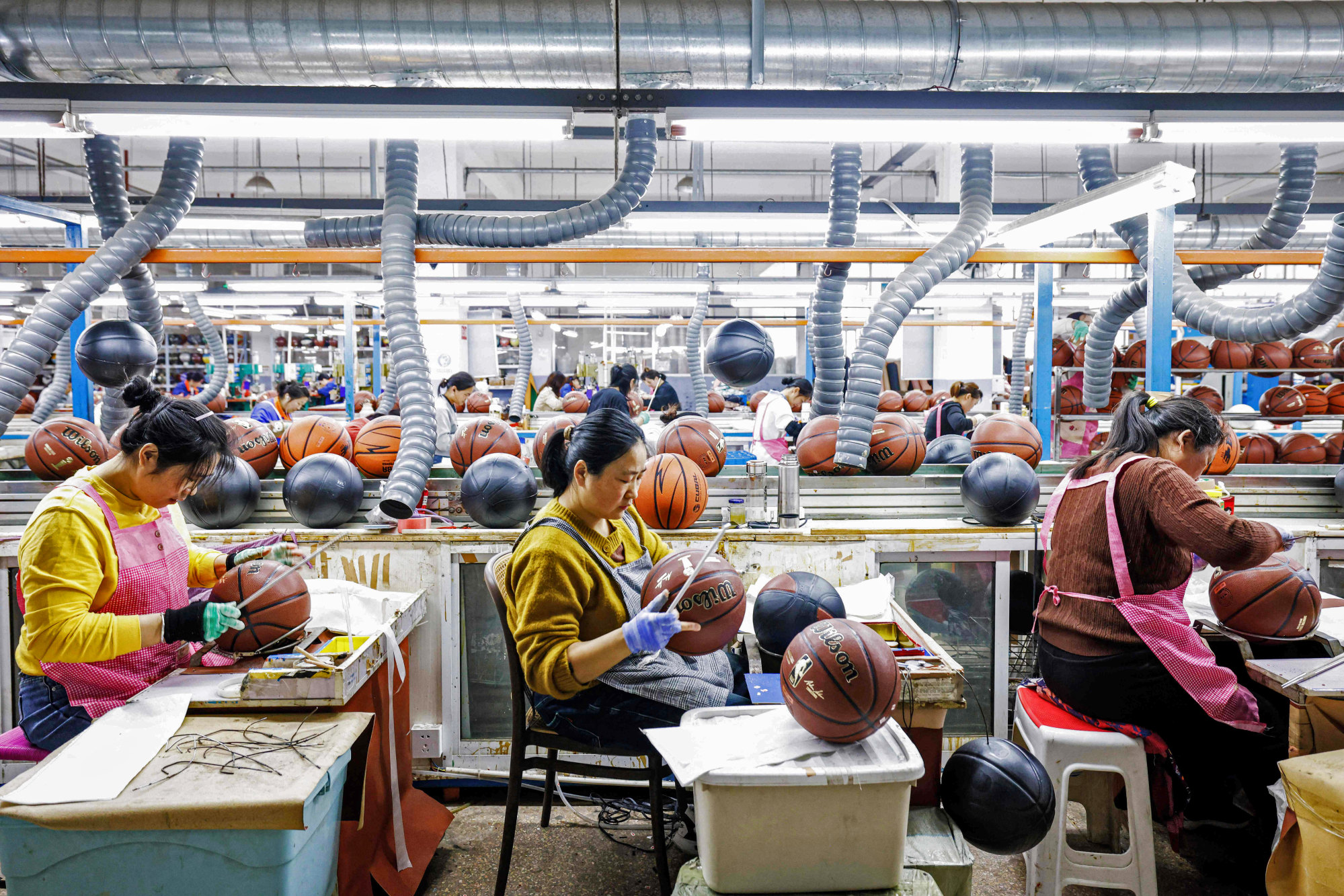
China would probably accelerate implementation of the 2 trillion yuan (US$274 billion) stimulus package announced at the National People’s Congress meeting last month, according to Morgan Stanley. Should growth deteriorate rapidly, it could trigger additional policy support in coming months, it said.
The Trump administration may threaten to revoke China’s most-favoured nation trade status, restrict American investment in China and Chinese investment in the US, tighten scientific and academic exchanges, and strengthen export controls of hi-tech goods, according to Nomura Holdings.
Some of the ramifications on stocks could be mitigated by China ramping up fiscal support and a weaker yuan, according to Alex Wolf, head of Asia investment strategy at JPMorgan Private Bank. He said Chinese stocks were fairly valued at the current levels.
The best strategy to ride out the reciprocal tariff was to bet on the plays that would directly benefit from new stimulus policies likely to be announced by China, according to Morningstar’s Wang.
“Risky assets are expected to remain under pressure and volatile as companies assess the impact of these tariffs on their business plans and the potential time frame for negotiations to reduce tariffs,” said Chris Kushlis, a strategist at T. Rowe Price.
“Asset prices can stabilise and recover if and when the market gains confidence that these tariffs are a ceiling rather than a moving target.”
More from South China Morning Post:
- Hong Kong stocks retreat to 4-week low as Trump’s reciprocal tariffs draw near
- Hong Kong stocks slip as traders cut risky bets amid Trump tariff countdown
- Hong Kong stocks rise for a second day as investors shrug off Trump’s latest tariffs
- US trade office lays out Trump’s case against China as ‘Liberation Day’ nears
- China vows to retaliate after ‘bullying’ US imposes 34% reciprocal tariffs
For the latest news from the South China Morning Post download our mobile app. Copyright 2025.