
US President Donald Trump’s pursuit of rare earth minerals in Greenland and Ukraine to counter China’s dominance over the critical metals might not match the reality of global reserves.
But Russia’s offer to give the US access to the rare resources needed for hi-tech applications could save Trump’s plan, and undercut China’s tightening export controls on critical minerals.
Rare earths are a group of 17 critical minerals used to produce electronics, superconductors, large magnets, defence systems and green technology.
Do you have questions about the biggest topics and trends from around the world? Get the answers with SCMP Knowledge, our new platform of curated content with explainers, FAQs, analyses and infographics brought to you by our award-winning team.
Greenland has the eighth largest reserve of rare earth elements in the world at 1.5 million tonnes, placing it behind the US at seventh with 1.9 million tonnes of “recoverable materials”, according to the US Geological Survey’s (USGS) annual report on global mineral commodities released in January.
China has the world’s largest rare earth reserves at 44 million tonnes. Ukraine is not listed among countries with a known share of rare earth reserves on the USGS database.
Russia ranks fifth in the world in rare earth reserves, with 3.8 million tonnes – double that of the US.
China has banned the export of technology used to extract and refine rare earths, as well as the technology to produce rare earth magnets.
While China has yet to place a blanket ban on any rare earth elements, its ban on exporting critical minerals like antimony, gallium and germanium to the US in retaliation against sanctions could eventually extend to the 17 minerals.
If that happens, the US – whose net import reliance for rare earth compounds and minerals is 80 per cent of consumption, 70 per cent of which is from China – would be left without a supply, according to the USGS.
On Monday, Russian President Vladimir Putin told state television that Moscow stood ready to jointly explore the country’s rare earth deposits, of which it mined just 2,500 tonnes last year according to the USGS.
Prior to sanctions being levied against Russia over its invasion of Ukraine in 2022, Russia provided a significant portion of US aluminium imports. Putin said that if the US market reopened, Russia could again supply the critical metal.
If Moscow and Washington come to an agreement on rare earths, it could not only diversify US imports and build mineral security against China, but it could also weaken Beijing’s means of retaliation against American sanctions in the form of export controls.
Nearly 70 per cent of the world’s rare earths, or 270,000 tonnes, were mined by China last year, leaving the US and European nations reliant on importing from China to meet demand.
China not only dominates the world in rare earth production, but it is also the leading producer of many other critical minerals including graphite, titanium, vanadium and zinc.
“The United States was 100 per cent net import reliant for 12 of the 50 individually listed critical minerals and was more than 50 per cent net import reliant for an additional 28 critical mineral commodities,” according to the USGS.
Trump has called for Ukraine to supply US$500 billion of profits from its “rare earth” minerals to compensate for Washington’s wartime assistance to Kyiv.
“They have great rare earth. And I want security of the rare earth, and they’re willing to do it,” Trump said during an interview with Fox News earlier this month.
On Monday, Trump said he had “serious discussions” with Moscow about ending its war in Ukraine and brokering economic deals, noting Russia’s “massive” rare earth reserves.
Putin on Monday may have underscored a key issue with Trump’s original plan – whether Ukraine has sufficient supplies of rare earth metals.
“We undoubtedly have, I want to emphasise, significantly more resources of this kind than Ukraine,” Putin said.
Ukraine does have large deposits of strategic minerals of US interest, including titanium, uranium, cobalt and lithium, which are used in applications such as batteries and aerospace. Some reports have falsely attributed these critical elements to be part of the country’s rare earth reserves.
While Ukraine does also reportedly have rare earth deposits, there are no publicly available estimates of such reserves. It remains unclear exactly how Trump defines rare earth minerals and whether it includes other critical minerals.
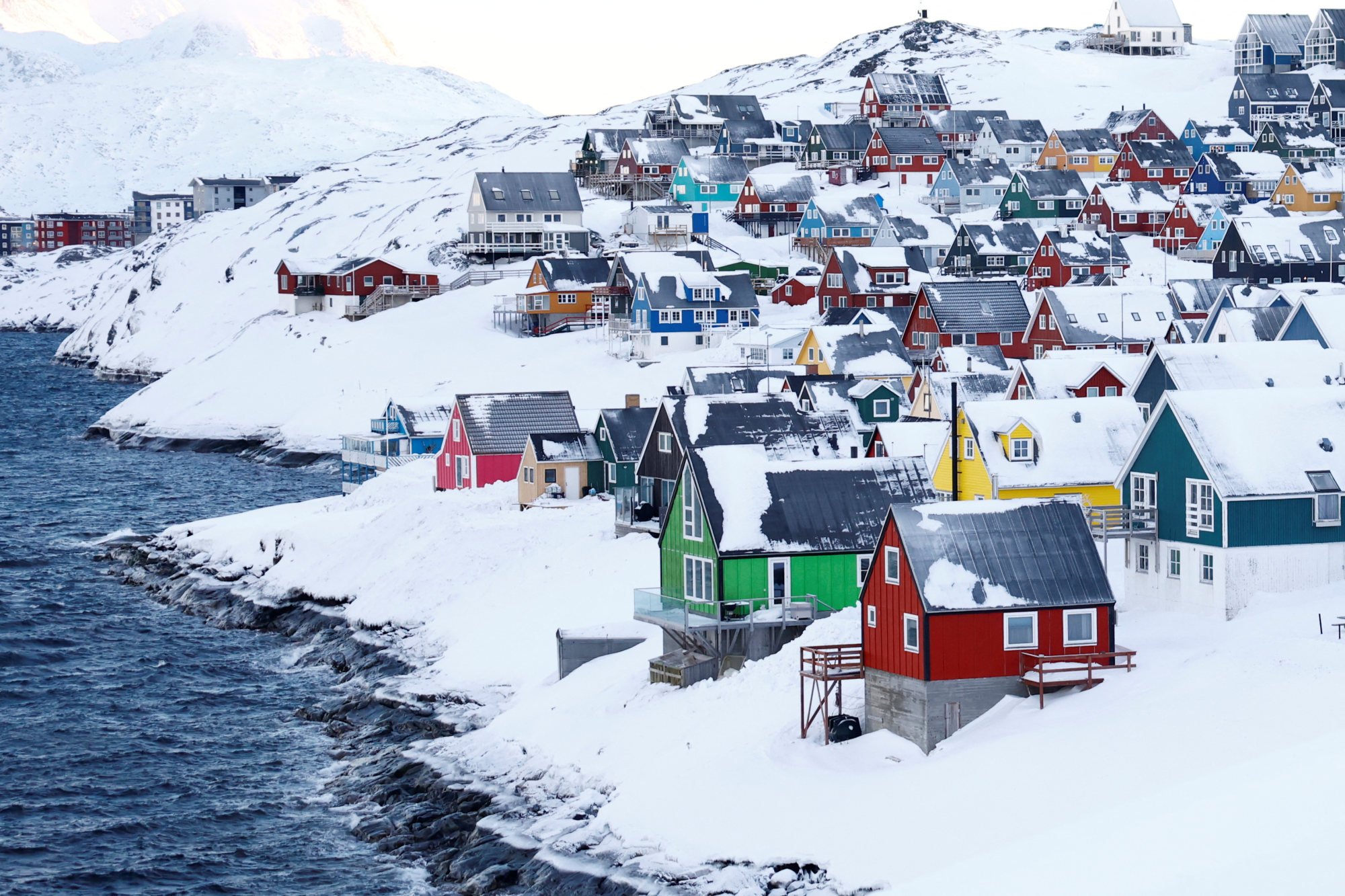
Trump had earlier set his sights on Greenland, an autonomous territory of Denmark, which he first proposed to buy during his first term and has now doubled down on this idea in his second term.
Greenland is vital to US national security since Beijing and Moscow’s icebreakers and other vessels skirting its coast outnumber those of Washington. The island plays a role in missile and submarine defence, as well as being a key player in northern shipping routes.
The largest island in the world could also be of interest to Trump due to the largely untapped critical minerals hidden beneath its ice, including rare earth elements.
Ukraine’s Institute of Geology has said the country does have deposits of rare earth elements, although detailed information on reserves is classified. This includes neodymium, used in wind turbines and EV batteries, lanthanum and cerium, used in TVs and lighting, and erbium and yttrium, which are used in technologies including nuclear power and lasers.
At an estimated 500,000 tonnes, Ukraine does have one of the largest confirmed lithium reserves in Europe, and its reserves of graphite – a key component in nuclear reactors and EV batteries – represent 20 per cent of global resources.
Ukraine has said most of its mineral resources are located in areas that have been captured by Russia since it invaded in 2022.
Greenland’s rare earth metals are currently untapped because of regulations, local opposition, and the difficulty of mining in harsh weather and ice-covered land, though this is changing as a result of climate change.
The island is also home to a large amount of critical minerals other than its rare earth metal reserves – including lithium, titanium, cobalt, niobium, graphite, nickel and zinc. Mining for new oil and gas as well as uranium has been banned on the island.
More from South China Morning Post:
- Russia says open to rare earths deal with US: ‘we have a lot of them’
- Trump wants money back for Ukraine aid: ‘rare earth and oil, anything we can get’
- Ukraine’s rare earths: the US$500 billion war prize Trump wants to secure
- Putin backs Trump’s proposal for US, China and Russia to halve defence spending
- As China curbs exports, US scours globe for rare earths – even war-torn Ukraine
For the latest news from the South China Morning Post download our mobile app. Copyright 2025.