The earthquake that struck US tech stocks this week over the advance of Chinese artificial intelligence start-up DeepSeek is sending shock waves beyond Wall Street and Silicon Valley, threatening to alter Washington’s sanctions, export bans and ‘high-fence, small-yard’ scheme that has irked Beijing.
On Monday, the Nasdaq Composite Index retreated more than 3 per cent, led by a sharp fall in shares of chipmaker Nvidia and other leading American tech firms before recovering partially on Tuesday as investors absorbed the news.
US-China analysts were divided as to whether the developments would hasten a tech decoupling of the world’s two largest economies or sow greater partnership.
Do you have questions about the biggest topics and trends from around the world? Get the answers with SCMP Knowledge, our new platform of curated content with explainers, FAQs, analyses and infographics brought to you by our award-winning team.
Bilateral collaboration “could provide opportunities for the US to learn from China’s advancements and apply those lessons domestically”, according to Yilun Zhang of the Institute for China-America Studies, a Washington-based think tank, even amid a challenging political reality.
“The themes of decoupling, export controls and investment screening will likely continue to dominate US policy,” Zhang said, as they would in China, others added.
The jolt hit as soon as financial markets opened on Monday and after word spread that DeepSeek had created an open-source product comparable to its US competitors for what appeared to be a fraction of the cost.
The company also appeared to use a different, less costly process that obviates the need for massive amounts of the expensive GPU chips that Nvidia has dominated.
“DeepSeek has thrown down quite a challenge to the AI community and the US government,” said Paul Triolo of DGA-Albright Stonebridge Group, a Washington-based consultancy.
Widespread use of DeepSeek’s open-source model could be unprecedented and might never have been envisaged by the designers of US export controls, added the former government analyst in a report.
But Triolo and others cautioned these are early days. Global competitors and government officials will work overtime to take DeepSeek apart, learning how it works, how much was crafted with stockpiled foreign chips and how much is home-grown.
“Perhaps this is a Sputnik moment,” said Jeffrey Moon of the China Moon Strategies consultancy and formerly with the Office of the US Trade Representative.
“But perhaps when we find out all of the facts, that is something much less impressive and we’ll be talking about how the stock market value has changed so much and there wasn’t much behind it,” he added.
No matter how it plays out, the geopolitical stakes have justified Washington’s effort to slow Beijing’s advances in foundational AI models, said Anja Manuel of the Aspen Security Forum.
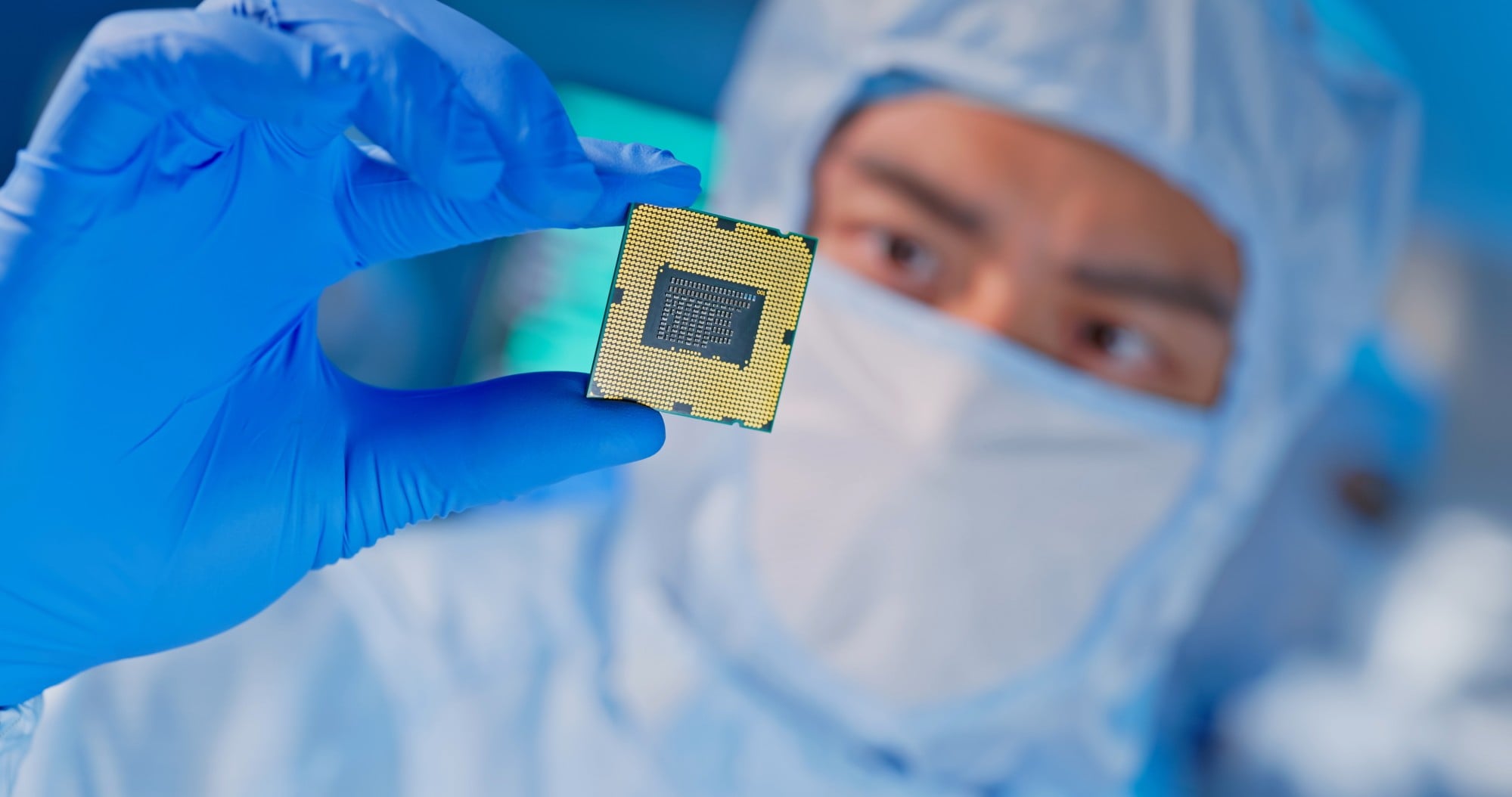
Moreover, the best way to achieve that objective has been to focus on hardware, namely semiconductors and the equipment used to make them, added Manuel, who is also with Rice, Hadley, Gates & Manuel, a Washington-based consultancy.
She believed the US had gone too far in some areas, including its restrictions on Chinese access to equipment that was widely available, hurting American companies and undercutting efforts at ‘small-yard’ containment.
“We overreached a bit,” said Manuel, a former diplomat, calling export controls a short-term and imperfect fix.
DeepSeek’s impact shows that the US should jump-start its own development, rather than relying on containing China, even as it maintains basic testing to ensure the models are used responsibly, she added, citing Britain’s example as a model.
Washington also needs to keep identifying chokeholds, Manuel continued, including chips focused on AI inferencing, namely how models apply what they learn in training to real-world situations. And it needs to work closely with Chinese counterparts.
“The Chinese are just as worried about us as we are about them,” she said. “If you do not talk, you never will get an agreement. That is really important.”
If DeepSeek proves a game changer as some believe, efforts by the US to rework its complex and detailed export-control regime would be slow while the geopolitical implications would be felt rapidly, analysts said.
“There will be a period of paralysis. Undersecretaries and assistant secretaries are not in place” and rank-and-file officials would fear losing their jobs under Trump, said Larry Wortzel of the Washington-based American Foreign Policy Council.
“And of course, in China a similar period of paralysis will slow the bureaucracy,” he added. “Chinese officials are already fearful of taking initiative and wait for direction from President Xi Jinping.”
Sanctions, meanwhile, are “yesterday’s game”, according to Abishur Prakash of The Geopolitical Business, a Toronto-based consultancy. “That entire strategy has been exposed as being ineffective,” he added.
That said, Washington is too committed to sanctions architecture built up over decades to dispense with it, Prakash said. And while the Donald Trump administration may try to cut government jobs, positions in the Commerce and State departments tied to geopolitics and export controls would proliferate, he predicted.
With hardware bans increasingly porous, Washington is likely to put greater focus on controlling the way Chinese use technology once they have it, Prakash said.
Specifically, the US would look at what answers an AI model spits out, just as DeepSeek puts limits on questions related to China, human rights and other redline issues.
Analysts differed on what impact the DeepSeek news would have on Sino-American relations, with some arguing it underscores the importance of scientific collaboration.
In October, the two sides renewed a 45-year-old science and technology agreement after an extensive delay. It addresses government-backed initiatives at educational institutions and it is unclear how the Trump administration will implement the pact.
“You want to be able to have collaboration with what’s going on in China,” said Denis Simon of the Quincy Institute, a Washington-based think tank, who described “huge synergies to be captured”.
If the US were to step away from engagement, “we would be removing ourselves from that equation and it would be to our detriment”, he added.
Yet others, like Sourabh Gupta of the Institute for China-America Studies, said jolts such as that delivered by DeepSeek “will simply turbocharge this competition” and lead to a decoupling of the tools that drive science and technology breakthroughs.
China has already signalled that US export controls are a major irritant and that it will retaliate, analysts have said, meaning any move by the White House to impose new US sanctions and export-control strategies would likely elicit a response from Beijing.
“It is a tit-for-tat game,” explained Wortzel, a former military attaché at the US embassy in Beijing. “I expect responses to be asymmetric and geared to what one side thinks will hurt the other the most, while not inflicting self-harm.”
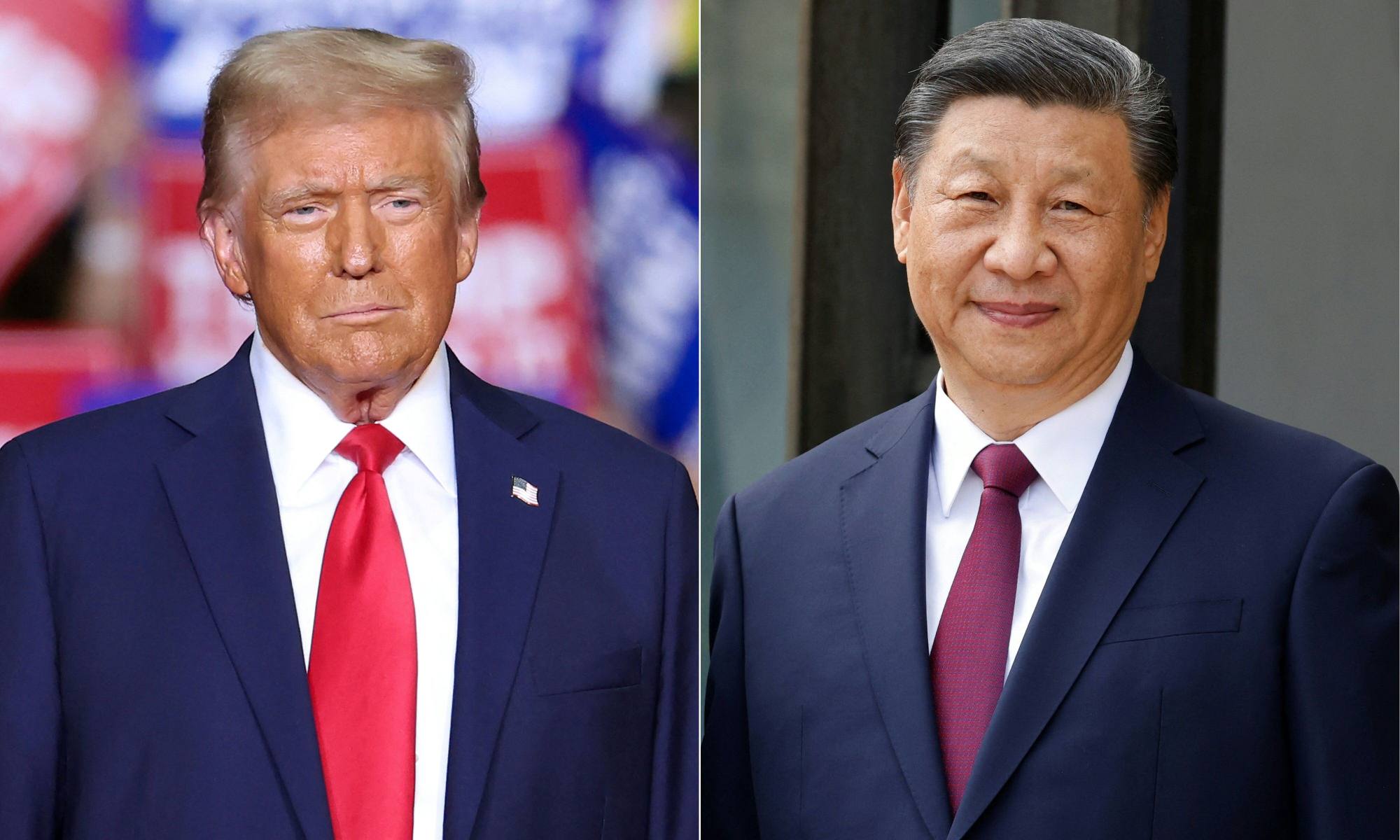
As the countries face off in the latest chapter of their quest for global tech supremacy, Trump and Xi could be likened to boxers in the first round of a prize fight, Wortzel said.
“They will feel each other out with jabs, but not attempt to be too exposed to any knockout blows,” he added. “President Trump, however, in my view, will have a tendency to want to deliver heavy blows early.”
More from South China Morning Post:
- How tech start-up DeepSeek emerged as the unlikely game changer in US-China AI war
- Nvidia shares jump after DeepSeek surprise sparked US market sell-off
- Chinese AI start-up DeepSeek breaks for Lunar New Year as its success rattles Wall Street
- DeepSeek’s tech breakthrough hailed in China as answer to win AI war
- Nvidia says DeepSeek advances prove need for more of its chips
For the latest news from the South China Morning Post download our mobile app. Copyright 2025.