



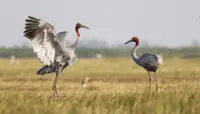
PHNOM PENH (Bernama): Sarus cranes are not just a symbol of natural beauty, they are now critical in Cambodia’s wildlife narrative.
Once hunted by poachers, these majestic birds are breathing new life into one of their favourite homes in Kampong Trach in the eastern part of the Kingdom.
The Sarus Crane (Grus Antigone), the tallest flying bird at over 1.5 metres tall, redefines its role in Cambodia's ecology and economy.
Donning a red patch on their necks that adds elegance, these birds are facing a high risk of extinction in the wild due to rapid urbanisation, lack of wetland habitats, human exploitation, and the effects of pollutants.
Interestingly, Sarus Cranes have struck a deal with local farmers to protect their wetland habitat and food supply during the winter.
The innovative Crane RiceTM idea was initiated by NatureLife Cambodia in 2021 to encourage the recovery of the Sarus Crane in Kampong Trach.
The birds are now helping farmers improve their income by allowing their images to be printed on rice bags, which can be sold at a premium price in the local market - about 5 per cent to 7.5 per cent higher than normal rice.
Farmers, in return, support the well-being of Sarus Cranes by setting aside part of their paddy for the birds to feed on, using fewer pesticides in their paddy fields and avoiding encroachment on protected areas or stealing their eggs.
NatureLife Cambodia’s Chief Executive Officer, Bou Vorsak, told Bernama that this threatened species are important to the ecology but facing a dramatic decline in Indochina and Southeast Asia in the last decade.
According to last year’s census, they declined from 1,000 to 480 birds, particularly in Vietnam and Thailand.
However, he said Cambodia still maintains a healthy wild population with 180 birds.
"So we created the Crane Rice initiative to benefit Sarus Cranes and the local community. The aim is to provide a safe habitat for the Sarus Cranes in the rice fields, and safe food as they feed on particular varieties of rice native to the area.
"We provide premium prices for the community that collaborates with us and they must follow some strict criteria like no hunting, leaving five per cent of rice after harvesting for the Cranes to eat, reducing chemical use by at least 30 per cent (in their rice fields) and applying sustainable agriculture techniques,” said Vorsak.
In addition, farmers are given free organic fertiliser and free rice seeds to plant in the Crane RiceTM areas.
Today, some 120 families in Kampong Trach in Kampot province are involved in saving the birds on their 135-hectare rice fields.
"These birds are important for their ecological values and we need to protect them. They can alert the health of the ecological system in areas like grasslands or rice fields where they (forage).
"If the birds don’t visit these areas, then we know the ecology of the area has changed. Maybe because of high use of pesticides or habitat has changed, or there is no food for them anymore,” Vorsak explained.
Cambodia’s northern and eastern plains are popular breeding grounds for the birds - nesting in Ratanakiri, Mondulkiri and Preah Vihear provinces, and after breeding they migrate to grassland along the Mekong Delta and Tonle Sap Lake.
The International Union for Conservation of Nature listed Sarus Crane on its Red List of Threatened Species as "Vulnerable” - which could face extinction if not protected. - Bernama



