




In the first of a three-part series examining mainland China’s increasing military presence around Taiwan, SCMP details how coordinated air force, navy and coastguard drills and patrols have intensified over the past 18 months and what it could mean for the self-governed island’s defences.
Decades after a civil war in the middle of the 20th century led to the foundation of the People’s Republic of China, tensions between mainland China and Taiwan are surging again. Despite Beijing’s repeated calls over the years for peaceful reunification the military option has never been taken off the table.
The People’s Liberation Army (PLA) – so named by the Communist Party as a reference to its seizure of cities during the conflict – has been increasingly active around Taiwan.
Do you have questions about the biggest topics and trends from around the world? Get the answers with SCMP Knowledge, our new platform of curated content with explainers, FAQs, analyses and infographics brought to you by our award-winning team.
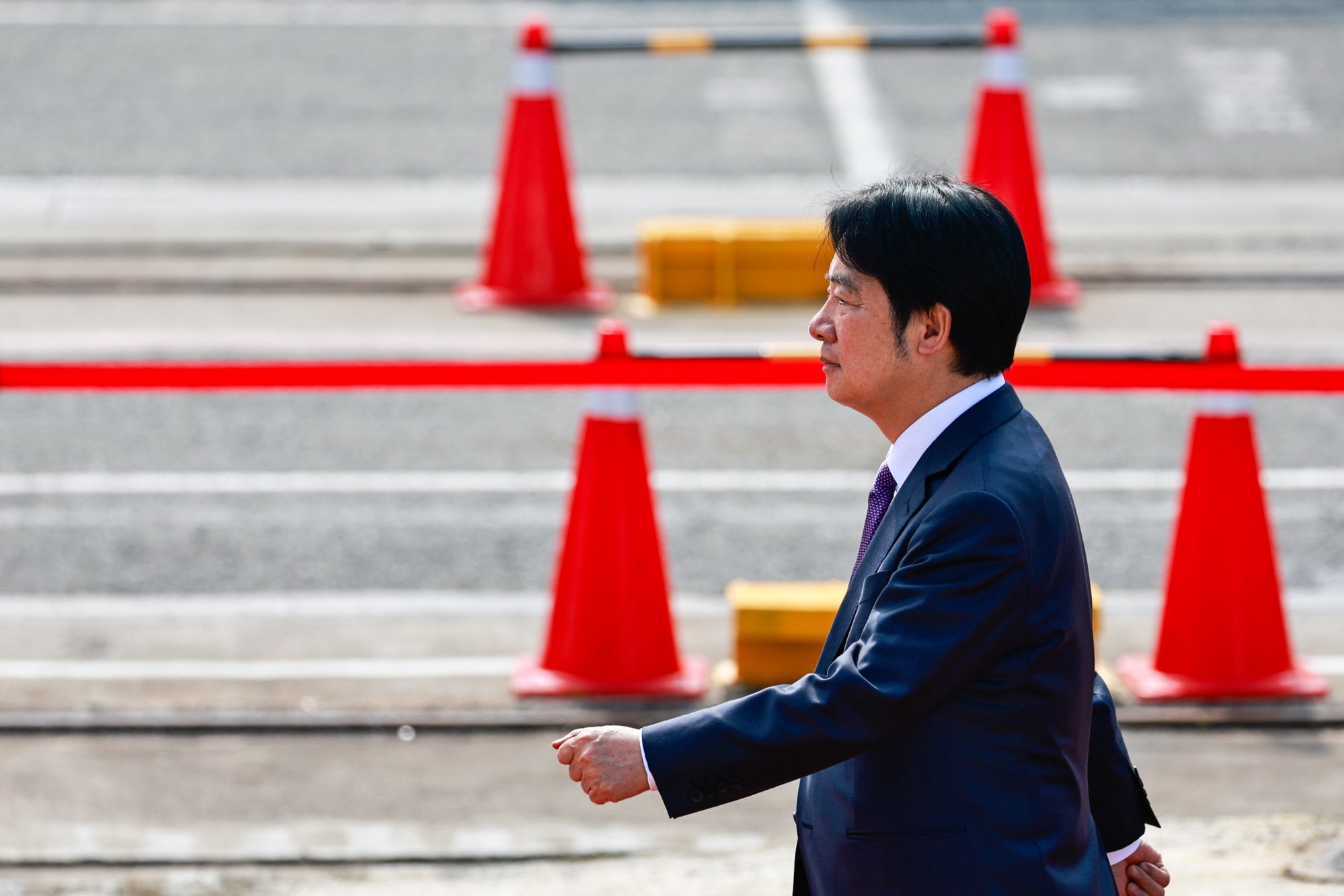
Strains between Beijing and Taipei have intensified since the independence-leaning Democratic Progressive Party’s William Lai Ching-te was elected as the island’s leader.
With Lai now six months into his term, a tally by the Post, based on the almost-daily figures released by the island’s defence ministry, has revealed how the PLA turned up its pressure on the island since Lai was sworn in in May.
The analysis, which examined tracking data from the past 18 months, showed that the PLA has deployed more aircraft, increasingly closer to the island, with a higher number of sorties, and a higher percentage of those sorties, crossing the median line that divides the Taiwan Strait.
The military exercises are becoming increasingly comprehensive, with blockade manoeuvres and “island encirclement patrols” becoming routine, covering more of the island, including the strategic east of the island, where the Taiwanese military intends to deploy key assets such as submarines.
The analysis has also shown more coordination between piloted planes and drones – which are key to gathering intelligence and helping to provide missile guidance – as well as further collaboration between PLA Navy vessels and the Chinese coastguard, indicating greater war preparedness.
Apart from gathering intelligence, the drills also appear to be helping the PLA practise anti-submarine tactics in the eastern waters while testing out Taiwan’s defence capabilities and responses, according to observers.
The ramped up military activity by the PLA has further strained the Taiwanese military, which is significantly smaller in size, while widening the gap of combat readiness between the two forces.
However, a higher state of PLA preparedness does not equate to a greater likelihood of war, according to Brian Hart, deputy director of the China Power Project at the Washington-based Centre for Strategic and International Studies.
“On one hand, if the PLA is better prepared, China’s leadership may feel more confident in using force. On the other hand ... If China’s adversaries enhance their own readiness and capabilities by comparable levels, then the PLA is not in a better place in relative terms,” Hart said.
Hart arguing deterrence would become a more meaningful factor, saying: “If the PLA reaches a sufficiently high level of capability compared to its adversaries, Beijing may be able to credibly threaten the use of force and achieve its objectives without having to go to war.”
Lyle Goldstein, director of the China Initiative at the Watson Institute for International and Public Affairs at Brown University in the United States, agreed war was not inevitable.
“Ultimately ... I don’t think they want to do this,” he said. “I think they want to achieve their political goals without violence. But I think their patience has a limit too.”
More patrols, more often, everywhere
Since 2021, the total number of military aircraft entering Taiwan’s air defence identification zone (ADIZ) has jumped significantly.
By the end of November, a total of 2,771 warplanes had been detected in Taiwan’s airspace, according to data compiled by the Post.
The number is significantly higher than the annual totals for previous years: 972 in 2021; 1,738 in 2022; and 1,703 in 2023, according to PLATracker, an open-source database based on reports by Taiwan’s defence ministry.
The PLA has also pressed closer towards the island, with more than 60 per cent of flights reportedly crossing the de facto median line – the unofficial midway boundary in the Taiwan Strait – since April this year, according to the tally by the Post.
In June, a month after Lai’s inauguration speech, the proportion of flights that crossed the median line peaked at 73 per cent compared with 20 to 40 per cent over the previous 10 months.
The numbers of aircraft and vessels patrolling near Taiwan in November – the same month as the US presidential election – remained similar to levels in November 2023, but aligned with this year’s trend that saw a higher proportion of aircraft crossing the median line.
Since the 1950s, the two sides have had a tacit understanding of the median line, but in recent years, Beijing has repeatedly dismissed its existence.
An analysis of the almost daily maps published by Taiwan’s defence ministry have shown a growing frequency of PLA aircraft at multiple points around the island.
On more than 60 days from June to August – a peak season for strategic exercises – PLA aircraft were present at least three Taiwanese fronts, about triple the amount in the same period in the previous year.
Operational maps have also revealed more frequent PLA patrols along Taiwan’s eastern seaboard, a region shielded by the Central Mountain Range, a natural barrier that necessitates longer flight times from the mainland.
China’s defence ministry has not responded to a request for comment by the Post.
Four years ago, when Taiwan began reporting sporadic military intrusions into its airspace, most of the activity was to the southwest of the island, which faces the mainland.
In addition to the daily exercises, the PLA has also intimidated Taiwan this year with two large-scale military exercises near the island, dubbed Joint Sword-2024A and B. There was only one such exercise in 2022 and 2023.
Analysts said this year’s drills, which have increasingly resembled blockade operations, were likely planned to send a message to Taipei after speeches by Lai, who Beijing views as a “separatist” promoting a “stubborn Taiwan independence stance”.
Hart said the locations of the operation “show a pretty consistent pattern of clustering maritime deployments around Taiwan’s top ports, as well as around many of Taiwan’s main military bases”.
“In terms of scale, proximity, [and] the complexity of those units in action, they all appear to be geared towards a real thing in the future,” said Collin Koh, a senior fellow at the S. Rajaratnam School of International Studies at Singapore’s Nanyang Technological University.
While Beijing has used the drills to signal its military capabilities and what it has called “punishment for Taiwan independence forces”, the activity has also peaked during times when foreign warships have sailed through the Taiwan Strait, or when a US arms sale to the island is announced.
“At the same time, we cannot deny that all these activities have a tangible benefit – to prepare the PLA for the various contingencies they have in mind,” Koh said.
However, there are also “practical reasons” for the PLA exercises in the Taiwan Strait as the Chinese military expands its forces, according to one observer.
The PLA has shifted more training to “out sea and coastal airspace” as the airspace over land on the mainland has become more crowded by commercial operations, said Chang Ching, a former captain from the Taiwanese navy and a senior research fellow at Taiwan’s Society for Strategic Studies.
“When military aircraft take off or practice aerial combat, they could cross into civilian flight routes ... and interfere with domestic flights,” he said. The recent adjustment of civil aviation route M503 on the southeast side of the mainland’s coast near the sensitive median line was a sign of the severity of the issue, Chang said.
Drones
In addition to more warplanes, the PLA has deployed more unmanned aerial vehicles (UAVs) around Taiwan, with many long-haul patrols launched over the summer.
Chang Yen-ting, former deputy commander of the Taiwanese air force, said he expected the drones to be used mostly for reconnaissance and intelligence gathering around the island, as they were not loaded with ammunition.
The PLA drones that have been deployed near Taiwan in recent years – such as the medium-altitude long-endurance BZK-005 and TB-001 – can fly reconnaissance missions around the entire island for up to 40 hours at an altitude of about 26,000 feet (8,000 metres).
“These drones will only conduct reconnaissance during peacetime and integrate with combat missions during wartime,” Chang said, adding that classified combat exercises would only be conducted on the mainland, not in the Taiwan Strait.
The deployment of the Rainbow series drones, which have been spotted near Taiwan, could help the PLA to gather more accurate intelligence on rocket and missile targets, according to Lu Li-shih, a former instructor at the Taiwanese naval academy in Kaohsiung.
Drones would also likely collect information about Taiwan’s missile stations and military base defence capabilities, which satellites might not be able to obtain, he said.
Meanwhile, the long-term pressure resulting from these low-cost PLA drone operations could further stretch Taiwan’s ability to respond.
As the PLA intensifies its activities near the island, Taiwanese forces will have to be selective and flexible when considering interceptions, Chang said, adding that the Taiwanese military has long faced a manpower shortage.
Previously, Taiwan would send fighter jets to intercept PLA aircraft every time they appeared, but as the frequency of those sorties has been ramped up, the military in 2021 pivoted to using land-based missile forces for tracking.
Analysts have warned that assets that have not been tested or publicly reported around Taiwan during peacetime could also be critical on a potential battlefield.
One of those weapons is the strike drone, which Goldstein believes would have a “huge role in the Taiwan scenario”.
“Drone strategy could be a big part of China’s strategy. Occasionally you have a missile strike, and those are bad, but [with] drones everywhere and destroying everything ... drones become absolutely critical in attacking air defences, which is the key to the whole campaign,” he said.
China has been a “drone superpower” since before the war in Ukraine, where attack drones have repeatedly showed their key role on a modern battlefield, Goldstein noted, adding however, “I doubt that they would reveal those really much in peacetime.”
There are also the underwater unknowns. “Are there any kind of frogman operations? Are they using mid-range submarines or unmanned underwater vehicles to scout the waters around Taiwan?”
Preparing for longer combat, real blockades
The aircraft deployed by the PLA near Taiwan have been flying longer missions, a sign that the military is better prepared for a possible conflict with the US over Taiwan, according to Thomas Shattuck, a non-resident research fellow at the Global Taiwan Institute.
The longer flight times required to get to Taiwan’s east coast or to circumnavigate the island as well as the variety of aircraft flying together on such missions also imply more frequent air refuelling missions, Shattuck said.
“Given the geography of the region, the PRC has less of an immediate need for greater competency in refuelling missions, but it would be relevant for longer missions in a broader conflict with the United States should a war erupt over Taiwan,” he said, adding that such missions are crucial to maintaining a permanent presence around Taiwan.
The PLA has also coordinated more with China’s coastguard and held more joint operations between theatre commands during its exercises near Taiwan.
A report by CSIS showed that there were 16 additional Chinese coastguard vessels operating within the vicinity of Taiwan beyond the original 17 vessels reported by Taiwan.
“It is difficult to assess exactly how well the Chinese coastguard and PLA are operating jointly, but there are signs of increasing coordination,” said Hart, one of the authors of the report.
Denny Roy, a senior fellow at Honolulu-based East-West Centre, said the coastguard vessels would be a force multiplier for the Chinese navy while the wider use of the coastguard “demonstrates greater ability and willingness to conduct a blockade”.
It also “reinforces the PRC’s narrative that the Taiwan Strait is PRC territorial waters,” he said, adding that the trend would likely continue.
Joint operations
Cross-command theatre training is also taking place. The Shandong and Liaoning aircraft carriers were recently included in drills led by the Eastern Theatre Command.
The Shandong belongs to the Southern Theatre Command while the Liaoning is part of the Northern Theatre Command.
Song Zhongping, a former PLA instructor, said: “Both the Southern Theatre Command and Northern Theatre Command have respective operation plans [for Taiwan], as military conflicts will also break out in other regions covered by these commands.”
Chinese President Xi Jinping has also visited military units that are not under the Eastern Theatre Command, apparently for Taiwan-related war preparation.
In October, Xi made a rare visit to a PLA Rocket Force unit, which analysts said will play a key role in trying to deter the US from getting involved.
Two weeks later he visited an air force airborne unit, which is responsible for parachute and helicopter landings.
Brown University’s Goldstein said these operations would be especially important for getting troops into eastern Taiwan, which is shielded by the Central Mountain Range.
“If you want to land special forces commandos on Taiwan, where do you put them? You do not fly them into the teeth of the defences ... You go around it. You go to the back side of Taiwan, to the mountains where there are hardly any defences,” he said.
Lu, the former naval instructor in Taiwan, said he has repeatedly spotted air force troops from at least three other theatre commands at Eastern Theatre Command training bases in official videos.
“If conflicts in Taiwan break out in the future, the Eastern Theatre Command will of course take the lead in the battle. However, there will be casualties in the battle, and the loss of fighter jets will have to be supplemented by other theatre commands,” he explained.
Since each command theatre has its own rules of engagement, training during peacetime would be essential to future cross-command operations, Lu said.
But he said he had not observed a similar arrangement within the navy, since the Eastern Theatre Command had a comparatively sufficient number of combat vessels.
Taiwan’s responses
Taiwan has boosted its defence budget in recent years and while its combat readiness remains low, it has made progress.
“I think the Taiwanese are on the right path in that sense. They view the missile programme as the critical component of it, and they appear to be keen to try to indigenise it as fully as possible, so that they do not rely on external sources for air defence and for coastal defence,” said Koh, the Singapore-based defence analyst.
As the war in Ukraine has dragged on, Koh said Washington had relaxed its previous reservations about providing advanced weapons to Taiwan.
For example, in an arms sales deal between Washington and Taipei in October, an advanced missile defence system – battle-tested in Ukraine – had been included in a package for the first time.
But worries still loom about Taiwan’s “fairly robust defences”, which could still be overwhelmed by drone swarms and hypersonic weapons as Beijing invests heavily in those technologies, according to Goldstein.
He also said Taipei has spent some of its defence budget on “items of very little utility”, such as building attack submarines and purchasing fourth-generation fighters, and should have devoted more resources to growing its ground defences and kamikaze drones instead.
More from South China Morning Post:
- Taiwan’s Lai suits US with low-key stops but may yet draw ire from mainland China
- Taiwan’s leader tests Beijing’s red lines
- Beijing vows ‘resolute’ response after US approves US$385 million in weapons to Taiwan
For the latest news from the South China Morning Post download our mobile app. Copyright 2024.


