
The controversial protest song banned by the Hong Kong government has reappeared on YouTube and two music streaming platforms, following pressure from US lawmakers to lift restrictions.
Dgxmusic, the music production team of “Glory to Hong Kong”, posted links to the song on streaming platforms Spotify and KKBox on their social media on Monday.
“We are very sorry for the recent confusion which has caused inconvenience to everyone,” the team said.
Do you have questions about the biggest topics and trends from around the world? Get the answers with SCMP Knowledge, our new platform of curated content with explainers, FAQs, analyses and infographics brought to you by our award-winning team.
“Despite our best efforts, we still cannot promise such incidents will not happen again for now. We will continue to work to reinstate other albums and ask for your understanding and tolerance.”
A check by the Post on Tuesday morning found versions of the song, which became an unofficial anthem of the 2019 protests, released by Dgxmusic were available on Spotify and KKBox.
A new playlist with 10 versions of the song was uploaded by Dgxmusic to YouTube on Tuesday morning.
The song resurfaced on music streaming platforms on May 29 after it was removed globally by its former distributor EmuBands following an injunction issued by a city court.
They cited prohibitively high legal costs associated with the appeal court injunction that sought to restrict the song’s circulation.
Again, in early June, the production team said the tune was removed from music platforms by their new New York-based distributor DistroKid “without explanation”.
On May 8, the Court of Appeal ruled in favour of the government and granted an interim injunction after the administration took the matter to court last year.
The court agreed that the song had become a “weapon” that could be used to arouse anti-government and separatist sentiment in the city.
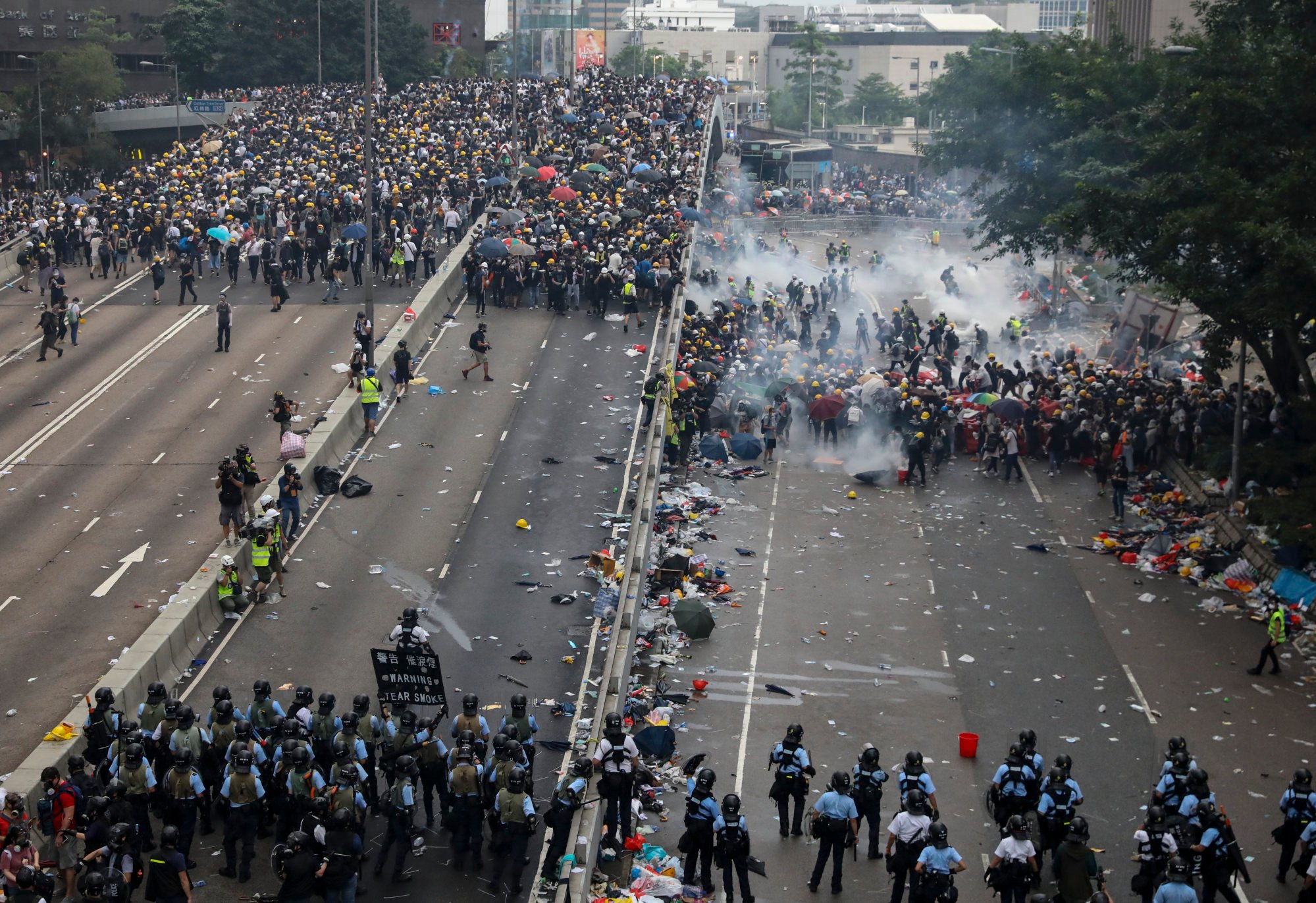
The injunction bans people from “broadcasting, performing, printing, publishing, selling, offering for sale, distributing, disseminating, displaying or reproducing [the song] in any way” with the intention to incite others to separate Hong Kong from the rest of the country, commit a seditious act or insult the national anthem, “March of the Volunteers”.
Earlier this month, the US Congressional-Executive Commission on China, a bipartisan panel that advises the United States’ Congress and president, urged YouTube and its owner Google to restore 32 videos removed as a result of the injunction.
Paul Lam Ting-kwok, Secretary for Justice, told public broadcaster RTHK last week that the injunction not only targeted the 32 removed videos but the song as a whole.
“Even if the tune has been rearranged, if in essence the song reminds people of [Glory to Hong Kong], that is also not allowed,” he said.
“Do not think that changing a line of lyric, or a single tune will allow you to escape the injunction order.”
The song has been mistakenly played instead of the Chinese national anthem “March of the Volunteers” at several major sports events in recent years.
The Post has reached out to the production team, distributors and YouTube for comment.
More from South China Morning Post:
- Protest song ‘Glory to Hong Kong’ YouTube clips still blocked despite US lawmaker pressure
- US lawmakers push YouTube, Google to restore links to protest song ‘Glory to Hong Kong’
For the latest news from the South China Morning Post download our mobile app. Copyright 2024.