




The release of a new state media video of China’s Shandong aircraft carrier suggests the giant vessel might soon be heading out on the high seas as it continues its preparations to become combat-ready, according to a military insider.
“The Shandong will probably start its drills and training on the high seas later this year, which is a necessary step for it to achieve initial operational capability [IOC],” a source close to the navy said.
State broadcaster China Central Television released the footage on Tuesday, showing how the carrier had been continuing with its preparations despite the world being gripped by the coronavirus pandemic.
Do you have questions about the biggest topics and trends from around the world? Get the answers with SCMP Knowledge, our new platform of curated content with explainers, FAQs, analyses and infographics brought to you by our award-winning team.
“After being handed over to the navy [from the shipbuilder], it takes at least 18 months for an aircraft carrier to achieve IOC as there are thousands of items to test and approve,” said Zhou Chenming, a researcher at the Yuan Wang military think tank in Beijing.
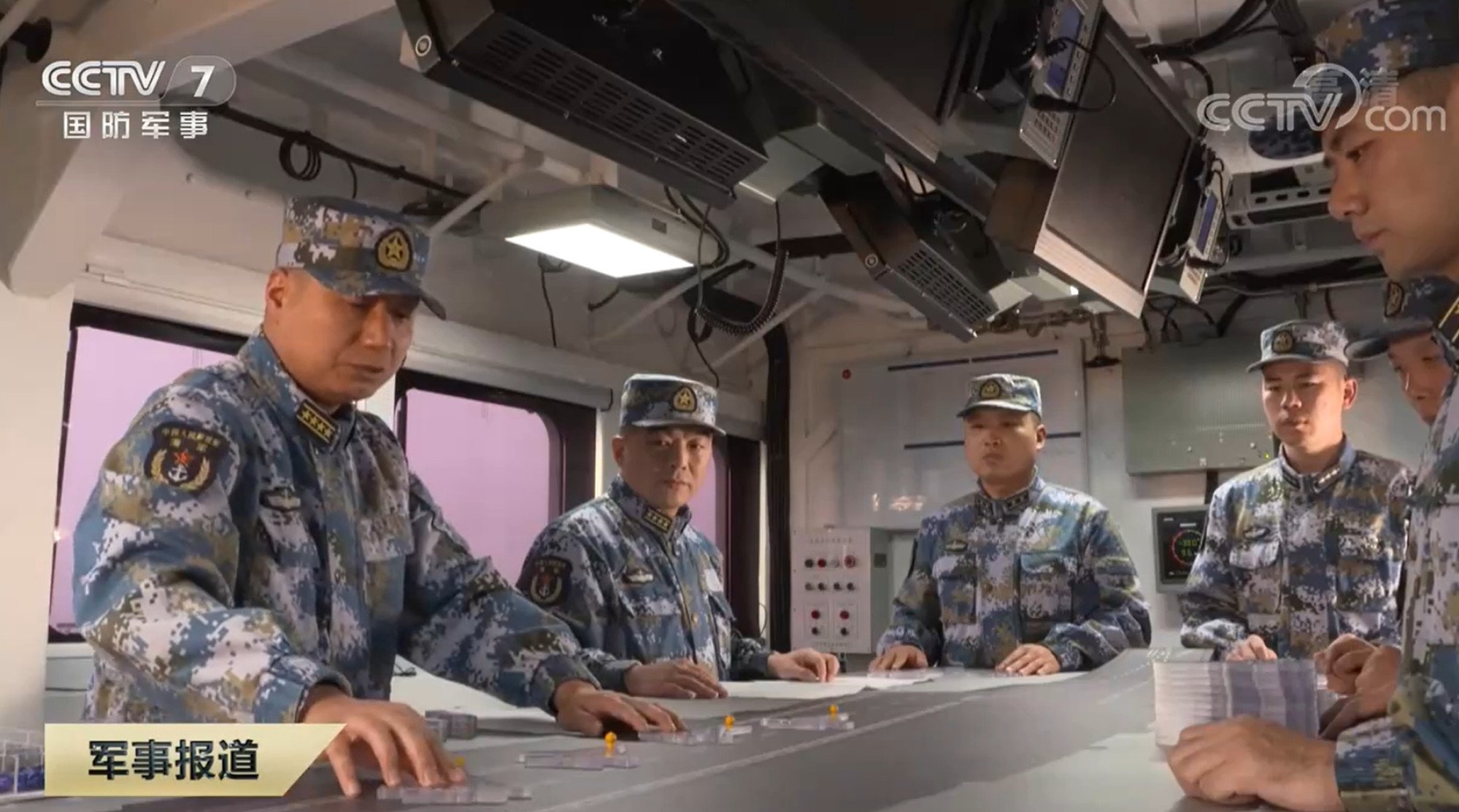
According to the CCTV video, the Shandong, which is China’s first domestically developed aircraft carrier, features 12,000 different equipment systems. It is on course to become the navy’s second carrier with IOC status, after the Liaoning.
A third Chinese aircraft carrier – featuring the world’s most advanced electromagnetic catapults for launching jets – is expected to launch later this year.
While the Shandong has already conducted nine sea trials, they were all in Bohai Bay or the South China Sea, which was relatively close to its home base in Sanya, Hainan province, according to Lu Li-Shih, a former instructor at Taiwan’s Naval Academy in Kaohsiung.
He agreed that the CCTV video suggested the vessel was now ready to take to the high seas.
“The Shandong will sail through the first island chain – as its sister ship the Liaoning did before it – to the western Pacific, for its first high-sea exercises,” he said.
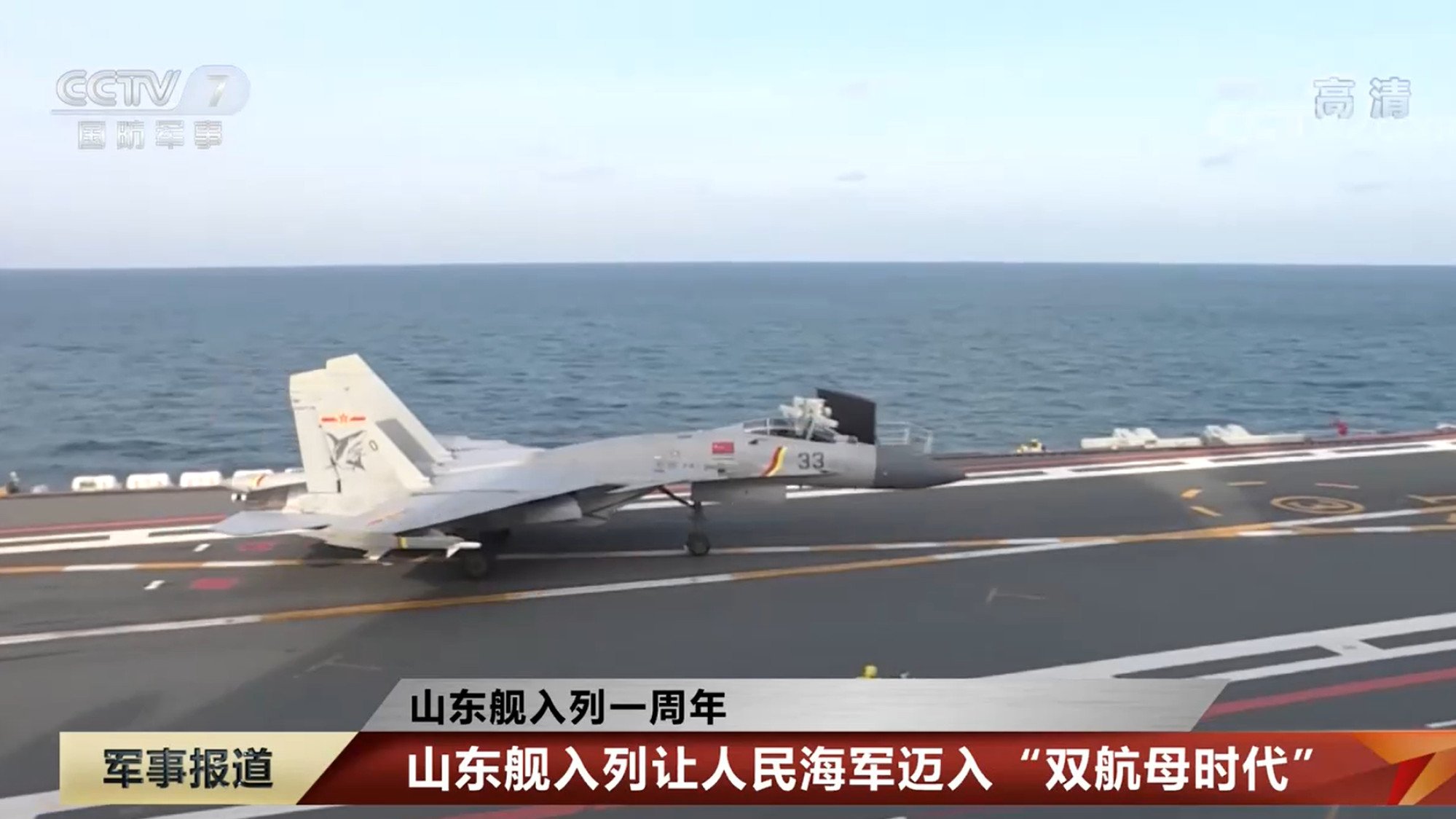
Because of Covid-19 restrictions, much of the CCTV footage was shot by members of the Shandong’s crew. It took television viewers inside the 20-storey accommodation and operations block that towers above the deck of the ship and gave them a brief insight into the day-to-day lives of the 5,000 sailors who call the vessel home.
The video also provided information about the Shandong’s ski-jump for launching jets and its powerful cannons capable of firing 10,000 rounds a minute. A CCTV reporter said the angle of the ski-jump was 14 degrees, and not 12 degrees as many experts had guessed.
“China Shipbuilding Industry Corp [which built the Shandong] has never announced the angle, but the blueprint for the Liaoning shows that the angle on its ramp is [also] 14 degrees,” Beijing-based naval expert Li Jie said.
“But based on the thrust of the J-15 fighter jet, many experts believed the ramp angle on the Shandong would have to be reduced a little,” he said.
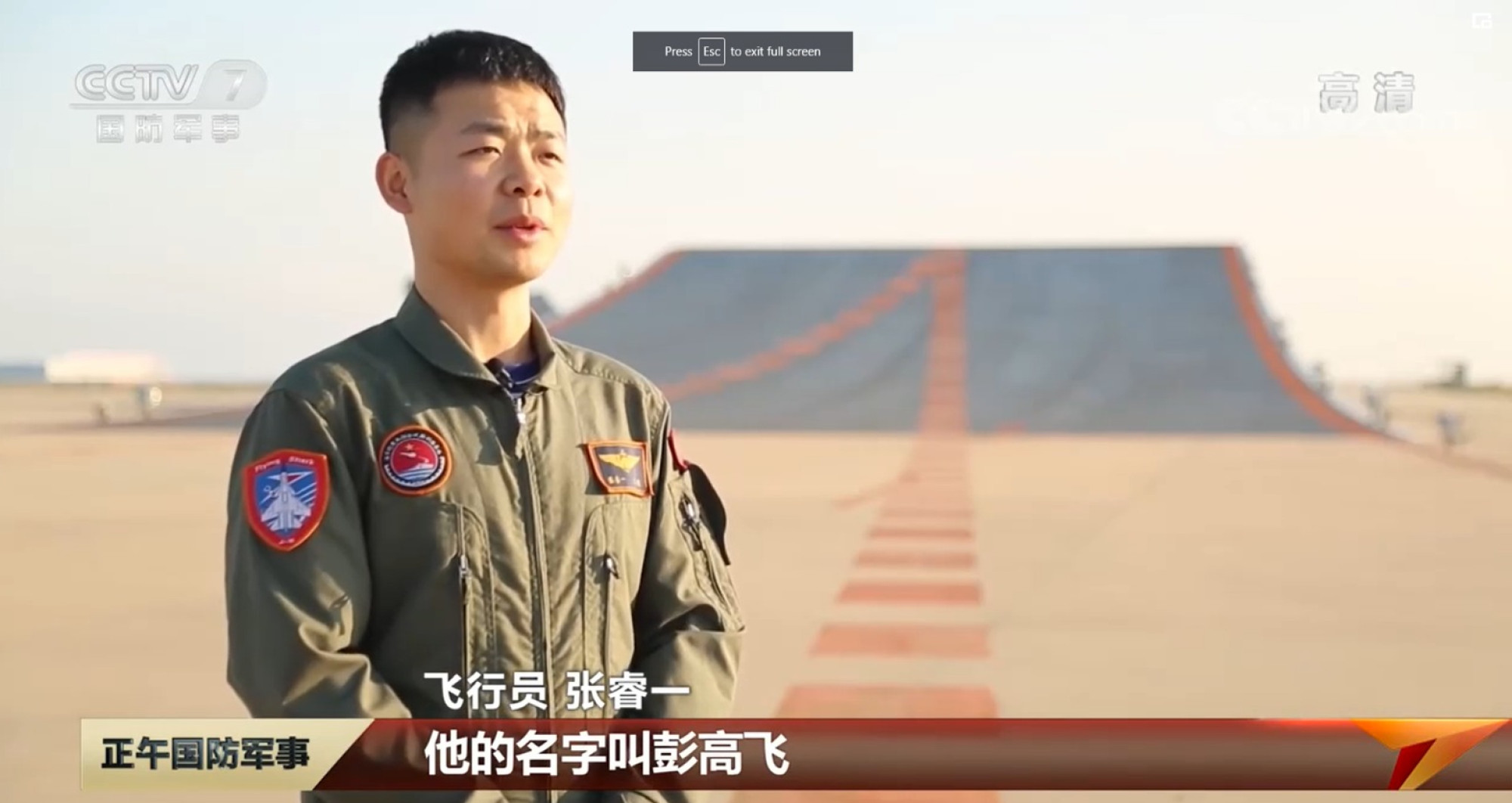
Hong Kong-based military commentator Liang Guoliang said the ski-jump angle on the Liaoning – a Soviet-designed Kuznetsov-class carrier China bought from Ukraine in 1998 – was designed to accommodate Russian Su-33 Flanker fighters.
“Four options for the ski-jump ramp angle – eight, 12, 14 and 16 degrees – were tested,” Liang said. “More powerful aircraft need a lower angle, and it’s a fact that China’s J-15 is more powerful than the Su-33.”
In November, PLA pilot Peng Gaofei was killed in a crash during a flight exercise from the Shandong. He was the second J-15 fighter jet pilot to die since 2016, when Zhang Chao was killed due to a problem with the flight control system in his aircraft.
More from South China Morning Post:
- China’s Shandong aircraft carrier crosses Taiwan Strait a day after USS Mustin
- China’s first home-grown aircraft carrier the Shandong begins sea trials
- China’s Shandong aircraft carrier completes sea trial but no word on basic combat readiness
- Chinese Type 055 destroyer joins aircraft carrier group for first time
For the latest news from the South China Morning Post download our mobile app. Copyright 2021.
Already a subscriber? Log in
Get 20% OFF The Star Digital Access
Cancel anytime. Ad-free. Unlimited access with perks.


