OH ING YEEN takes a look at the Korean community in the Klang Valley and finds out more about their reasons to stay.
There are about 20,000 Koreans living in Malaysia now and most live in the Klang Valley. Other places where they have settled include Kota Kinabalu (2,000 people), Penang (1,000), and Johor Baru (500).
Initially, many Koreans were drawn to Malaysia for work but, in recent years, education has become one of the main attractions for many Koreans.

The Malaysia My Second Home (MM2H) programme and golf are also among the factors that atrract Koreans to Malaysia.
Korean Women’s Association (KWA) vice-president Yoon Kum Ju said many Koreans travel to Malaysia to play golf because it is an expensive sport in Korea and there are not as many golf courses available.
“During winter in Korea, Koreans come here to play golf. There are even two-month golf courses at golf academies for them,” she said.
Kum Ju also said many Koreans were moving to Asia for education but there were still those who would opt for European countries or the US if they intended to migrate.
“For Korean parents, their children’s education is of utmost importance and they are willing to sacrifice a lot for their children,” she said.
Korean Society in Malaysia (KSM) chairman Yoon Sun Kyu, the 34th chairman since the society was formed 48 years ago, said that in the early 1960s, there were only about 30 to 50 Koreans in Malaysia and many of them were doctors.
“At that time, Korea was not such a developed country and many Koreans came to Malaysia to learn about technology.
“Now, things have changed. Many Koreans come here for their children’s educations instead of work,” he said via the society’s business department chief Steve Cho, who acted as an interpreter.
“Malaysians are very friendly and warm. It is less stressful, less polluted and safer compared to other South-East Asian countries.
“Life in Korea is fast-paced and stressful. I have had more time for my family since we came to Malaysia,” Sun Kyu said.
KWA president Wee Jeong Lim pointed out that the cost of living in Malaysia was cheaper compared to Korea or other countries.
Wee, who was appointed last year, said the association had been very active until 2000 but the new committee have made plans to revive the association and organise activities such as charity projects.
According to Cho, language is also one of the factors that Koreans chose to live in Malaysia.

“Well-to-do Koreans will send their children to study in America or Canada. However, as many Malaysians speak English, Koreans feel that it is also a good environment for their children.
“Another reason many Koreans choose Malaysia is because it is nearer to home,” he said.
Nevertheless, parents feel that it is important that their children learn their mother tongue, too.
As Korean children in Malaysia who study in international and national schools do not get to learn the Korean language, they are enrolled in the Korean School of Malaysia in Ampang.
Classes are conducted in Korean and they learn literature, history, mathematics, music and sports.
Every Saturday from 8am to 1pm, 550 Korean children between the ages of six to 16 attend classes that follow the syllabus of schools in Korea. There are 25 teachers in the school.
According to principal Ryu Seung Wan, the school is ranked in the top 10 in the world for having the most students.
“Parents send their children here so that they will be able to learn Korean and cope with their studies when they return to Korea for their tertiary studies.
“We have various activities such as Sports Day, Children’s Day (May 5) and Parents’ Day (May 8 ) and the parents also participate along with their children,” he said.
While many Koreans previously resided in Ampang, there are more Koreans staying in Damansara and Mont Kiara now.
The KSM will also be relocating its offices from Ampang to Mont Kiara.
“As the crime rates in Ampang escalate, more and more Koreans have chosen to move to Mont Kiara due to the comparatively lower crime rates,” Sun Kyu explained.
Jeong Woong Hee, 27, who has lived in Malaysia for more than 10 years, said, “Previously, about 80% of the Koreans here lived in Ampang and 20% in Mont Kiara, now it is about equally spread out.
“Compared to 10 years ago, there are now more Korean restaurants and shops in Malaysia. Koreans (collectively) spend approximately RM1bil per year in Malaysia,” he added.
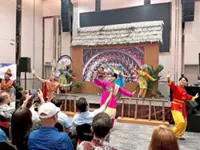
Among the events that Koreans celebrate are Seollal (New Year) according to the lunar calendar and the Korean autumn harvest festival Chuseok, which is akin to the Mid-Autumn Festival.

“We (Koreans living abroad) uphold our culture, sometimes even more than Koreans living in Korea and we pass it on to the next generation,” Kum Ju said.
Cho, who is also Daorae restaurant’s chief operating officer, said during Seollal, the restaurant would give out tteok-guk (rice cake soup).
Hallyu (the Korean wave), which refers to the spread of Korean culture around the world, has affected Koreans living away from their country as well.
Sun Kyu, who is also the chief executive officer of Daorae Korean BBQ Restaurant, said Korean food became increasingly popular after the Korean drama Dae Jang Geum (Jewel in the Palace) was aired in 2003.
“The Korean wave was rising and gaining popularity not only in Asia but around the world. This is helpful for Koreans doing business overseas,” he said.
Kum Ju added, “With Hallyu, more people around the world know about our culture.
“Nowadays when I’m out with my friends, some Malaysians would come up to us and say ‘Annyeonghaseyo’ (Hello in Korean) when they hear us speaking in Korean,” he said.
Korean festivals
*Seollal (Korean New Year)
The Korean New Year, which usually lasts three days, is celebrated on the first day of the lunar calendar.
According to Korean Women’s Association (KWA) vice-president Yoon Kum Ju, Korean children wish their elders and perform a traditional bow.
“In turn, their parents will give them new year’s money, like how the Chinese give out ang pow.
“Adults will also give their elderly parents money, too,” she said.

Yutnori is a traditional game usually played during Seollal. It can be played by using four Yut sticks, tokens, and a piece of cloth as the board (called malpan) but there are also other variations such as using a paper with markings.
The game is played by two teams and the teams that bring all the tokens (called mal, which means horse) home (back to the starting point) first win.
*Chuseok (Harvest Festival)
Chuseok, which is sometimes referred to as the Korean Thanksgiving, is a harvest festival celebrated at the same time as the Mid-Autumn Festival.
Songpyeon is a half-moon-shaped festive food traditionally eaten during Chuseok. Yoon said that Koreans believe if you make beautiful songpyeon, you will have a beautiful daughter.
The skin is made from glutinous rice and is naturally-coloured using mugwort for green and omija (Schisandra chinensis) berries for pink colouring.
It has a variety of fillings such as sesame seeds, black beans, mung beans, jujube and chestnut paste. - Photos by RAJA FAISAL HISHAN, SHAHRUL FAZRY ISMAIL and courtesy of the Korean Women’s Association and the Korean School of Malaysia
Video: Korean Fever in Malaysia
httpvh://www.youtube.com/watch?v=0V9A9mPn0wA&
httpvh://www.youtube.com/watch?v=J8CVEqrFjtU&
Already a subscriber? Log in
Get 20% OFF The Star Digital Access
Cancel anytime. Ad-free. Unlimited access with perks.