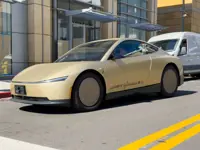
WASHINGTON: US electric carmaker Tesla is facing scrutiny from the country's road safety regulator after launching its Cybercab robotaxi – a vehicle with no steering wheel or pedals – on public roads.
The National Highway Traffic Safety Administration (NHTSA) sent Tesla a list of questions in September, highlighting a rule requiring all vehicles on US roads to have a foot-operated brake and asking how a Cybercab without pedals can comply with that safety requirement.
Tesla has been given until the end of September to respond. If the violation continues, the company faces fines of up to US$139mil (RM567mil).
Tesla had used a standard US procedure to self-certify, before launching a number of Cybercabs in Austin, Texas, in early September, that the vehicles complied with standard road safety regulations.
The NHTSA immediately raised questions. Under existing rules, all vehicles on US roads are required to have a steering wheel and pedals.
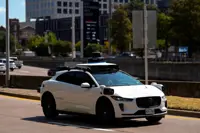
The leading robotaxi provider Waymo, for example, has retained the controls in thousands of its vehicles, which operate without a human at the wheel. Emergency services such as police or fire crews can use them if needed.
There is also an exemption: after a review by the NHTSA, companies can obtain permission to put up to 2,500 vehicles without a steering wheel or pedals on the road. Amazon subsidiary Zoox has made use of this provision, transporting passengers in its novel pod-shaped vehicles in Las Vegas and San Francisco.
Tesla did not apply for such an exemption. Meanwhile, some Cybercab passengers reported seeing controls on the vehicle's display when they got in – controls that did not respond to their input. Tesla may regard this feature as an adequate substitute for a steering wheel and pedals.
Tesla chief executive Elon Musk has said that autonomous driving and humanoid robots would define the future of the electric carmaker. Unlike Waymo and other robotaxi developers, Tesla does not use the more expensive laser radar systems that scan a vehicle's surroundings, relying instead solely on cameras.
While this approach is cheaper, experts and rivals have criticised it as insufficiently safe. Musk maintains that cameras are adequate. Despite the tech billionaire's sweeping announcements, Tesla has so far put only a small number of self-driving vehicles without human supervision on the road. – dpa