Tokyo: Played entirely in a retro anime style, Nintendo's new co-op space adventure Orbitals follows young, headstrong mechanic Maki and reclusive cartographer Omura on a space station without a proper power source since a devastating cosmic storm 15 years ago.
Now another major storm is forecast, and before it potentially tears the ailing station apart for good, the twin-like duo head out into space to find help. Joining them is mechanic Kinakoko, a warm-hearted rough diamond.
Searching for energy sources across galaxies
In their search, Maki and Omura explore three areas, encountering various destroyed space stations and settlements across different galaxies. Sometimes everything is completely frozen over, sometimes lava bubbles up all around you – but players must always solve puzzles to make it out in one piece. The goal: to find the dormant energy sources of the stations, which could offer a safe haven from the approaching storm.
The levels – around three per chapter across just 12 chapters in total – have their strong moments, but between them lie long, tedious lulls that reveal an uneven quality.
Orbitals – developed for Nintendo's Switch 2 console by Tokyo developer Shapefarm – fails to maintain the pace, scattering good ideas between sluggish passages.
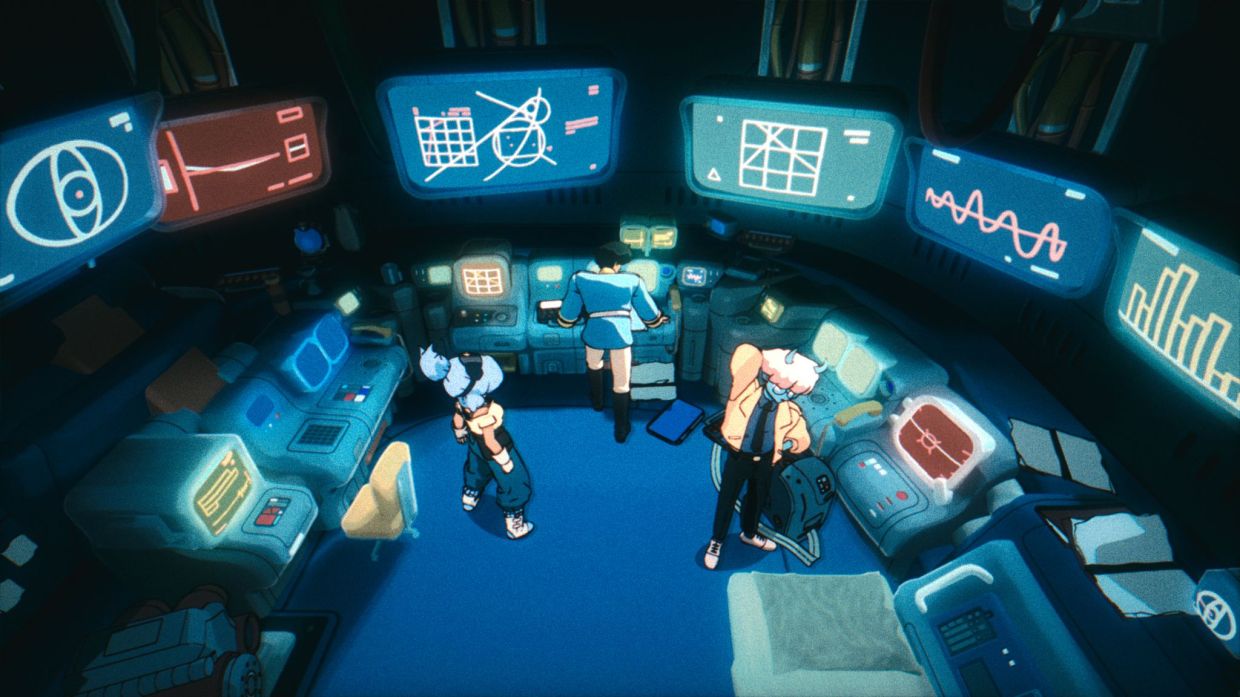
Particularly irritating is the constant back and forth between space stations, spaceships and docking manoeuvres, which adds nothing to the gameplay or the story and simply pads out the playing time.
Things happen that are never explained or resolved
On top of that, events occur or are mentioned by the characters that are never explained or resolved – such as an admittedly beautiful cutscene in which a glowing figure drifts past the pair's ship. Why? Nobody knows.
On the plus side, there are a handful of entertaining minigames on the stations and ships: competitive jump rope, for instance, or one-on-one arcade fights.
The spaceship and settlement are populated with all manner of creatures and characters, who also bring interactions with them. But like so much in the game, they too fall short of expectations.
Even later in the game, they barely change their behaviour, their reactions repeat themselves, and the same stale enthusiasm eventually jars with the tone of the story.
Positives: music, cutscenes and co-op
The music alone is an unqualified success. The songs by singer Mami Ayukawa show a keen feel for poppy 1980s anime and consistently convey more emotion than the story itself. The game's eight language versions are also flawless, and the cutscenes, produced in collaboration with anime studio Massket, could easily pass for genuine series excerpts. Characters like Kinakoko are a delight, and the final boss fight is genuinely strong.
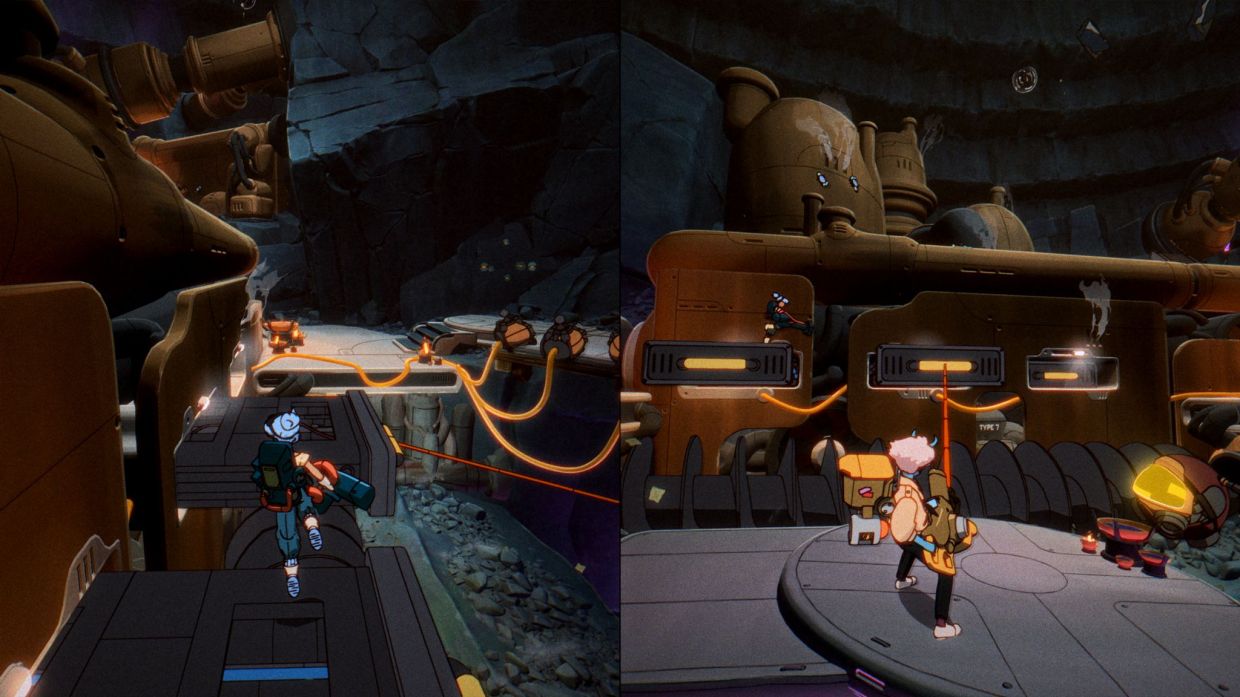
Another clear plus is the co-op feature on which the game is entirely built: anyone who has bought the game can invite someone to play along for free via GameShare. The connection is stable and bringing someone into the game is always fun. The second player can also be present locally, requiring only a second controller or Joy-Con 2 controllers.
The animation at 24 and 12 frames per second is impressive. Viewed as a film, it is remarkable, and few other games commit to the retro look as consistently.
In play, however, the look and animations become a problem. Foreground and background blur together, and because both characters are dressed almost identically, it is easy to lose track of who is where during hectic puzzles. This is no longer merely a stylistic question – it is a design flaw that makes some passages unnecessarily difficult.
The game also has rougher edges than one would expect from a finished product. The audio in cutscenes is unreliable, dialogue falls out of sync with the animation, and volume levels jump noticeably between scenes – in a game whose entire appeal rests on its scenes feeling like real anime.
Lots of potential – but somehow not quite finished
The visuals, the sound and two people trying to save their battered home in space: the ingredients for a great game are all there. But the credits roll after just eight to nine hours.
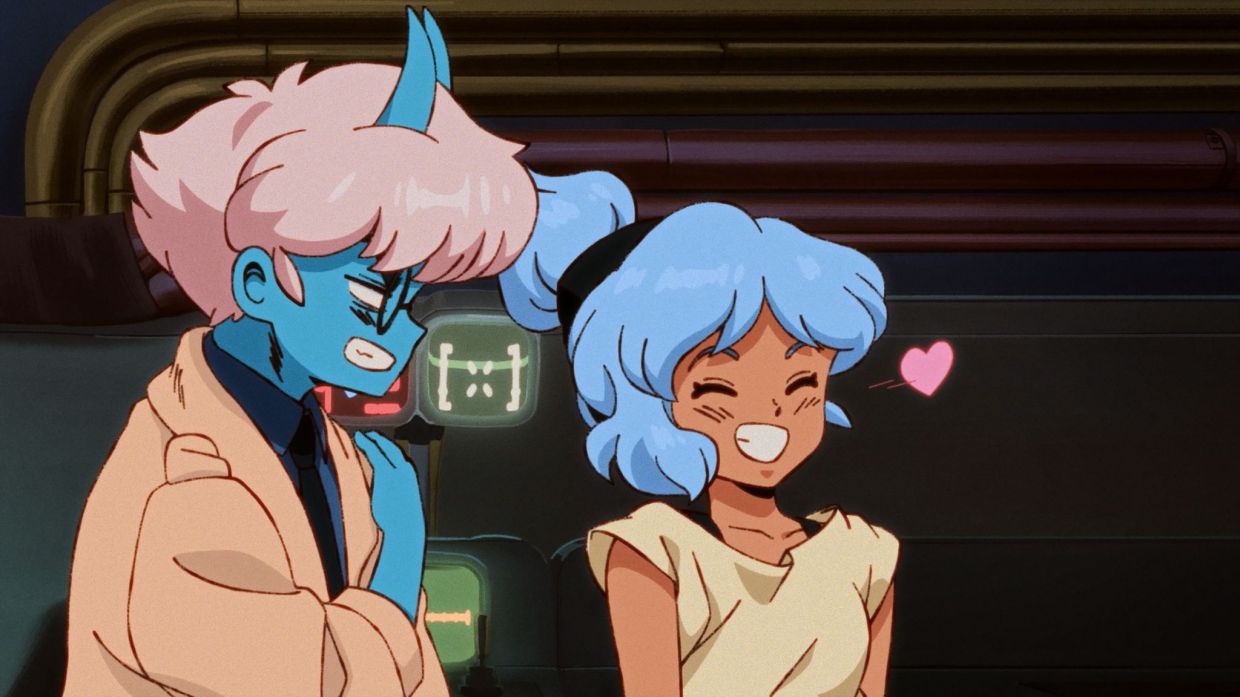
What remains is a story that raises many questions and answers few, puzzles that are not always engaging, bosses that are at times dull, and a colour palette that at times makes the game barely playable.
For a space game, the options for moving around in the spaceship are also severely limited. All of this points to a game that needed more development time. A good soundtrack alone cannot save a game that disappoints both in play and in storytelling.
Orbitals was released on Sept 3, 2026, for Nintendo's Switch 2 and is priced at around €50 (RM235). – dpa