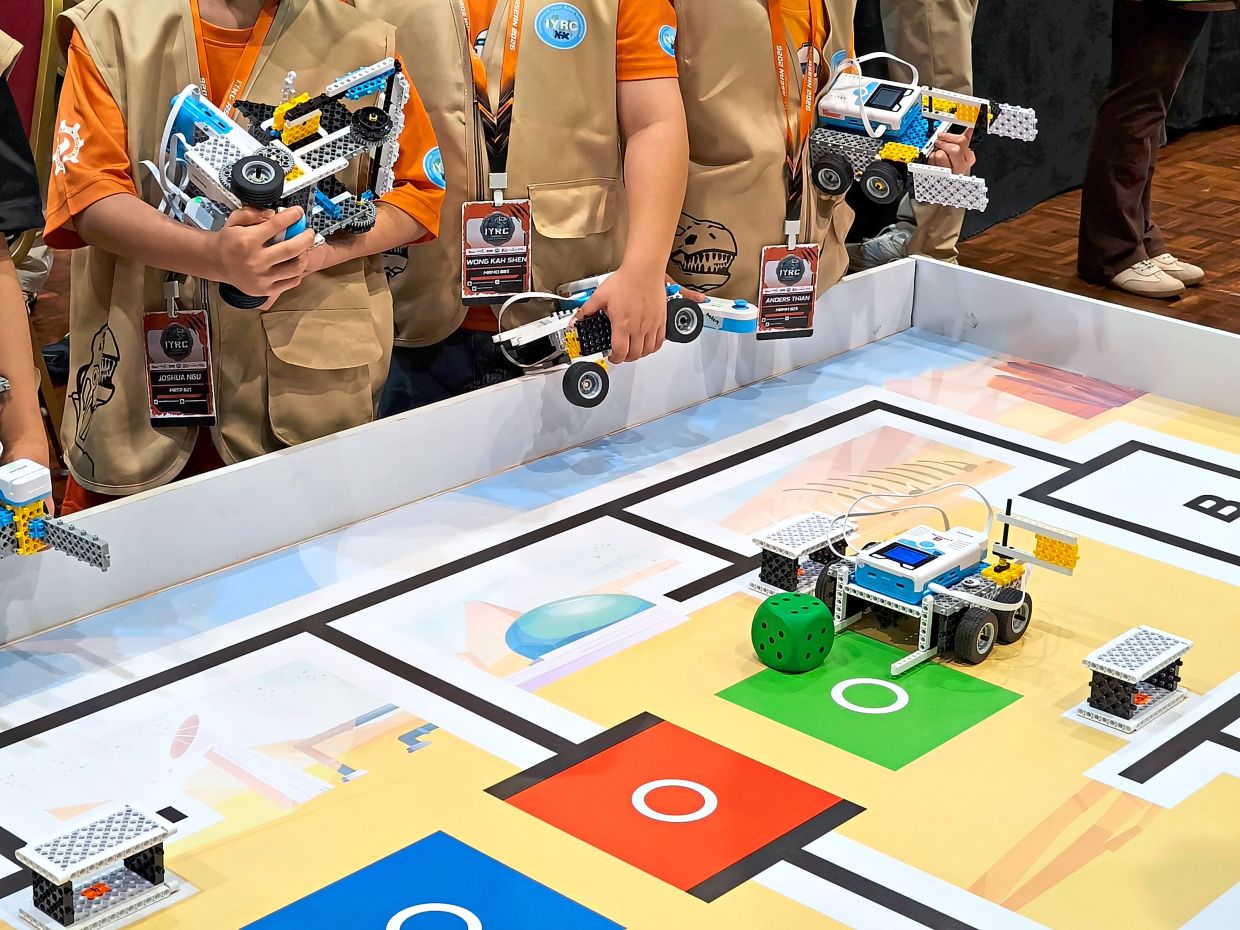
It’s a Saturday morning at a local university in Selangor, where participants have gathered for the International Youth Robot Competition (IYRC) Asean 2026.
Science teacher Nur Syamsiah Abdul Majid shares that her school, Sekolah Kebangsaan Bandar Penawar from Johor, sent 26 students to take part in the competition. The competition requires students to design, build and programme a robot before putting it to the test in a series of challenges. In one category, the robots must complete simulated rescue missions by navigating obstacles and transporting objects, such as balls, to designated checkpoints.
“We believe that events like this will help our students to develop a more keen interest and enhance their understanding of STEM (science, technology, engineering, and mathematics),” says Nur Syamsiah.
Outside the main hall, the Creative Design exhibition has students setting up booths to showcase a model, prototype or robotics systems aimed at real-world problems such as world hunger, one of the United Nations’ Sustainable Development Goals. Visitors could ask questions and watch as the students demonstrate the capabilities of their designs.
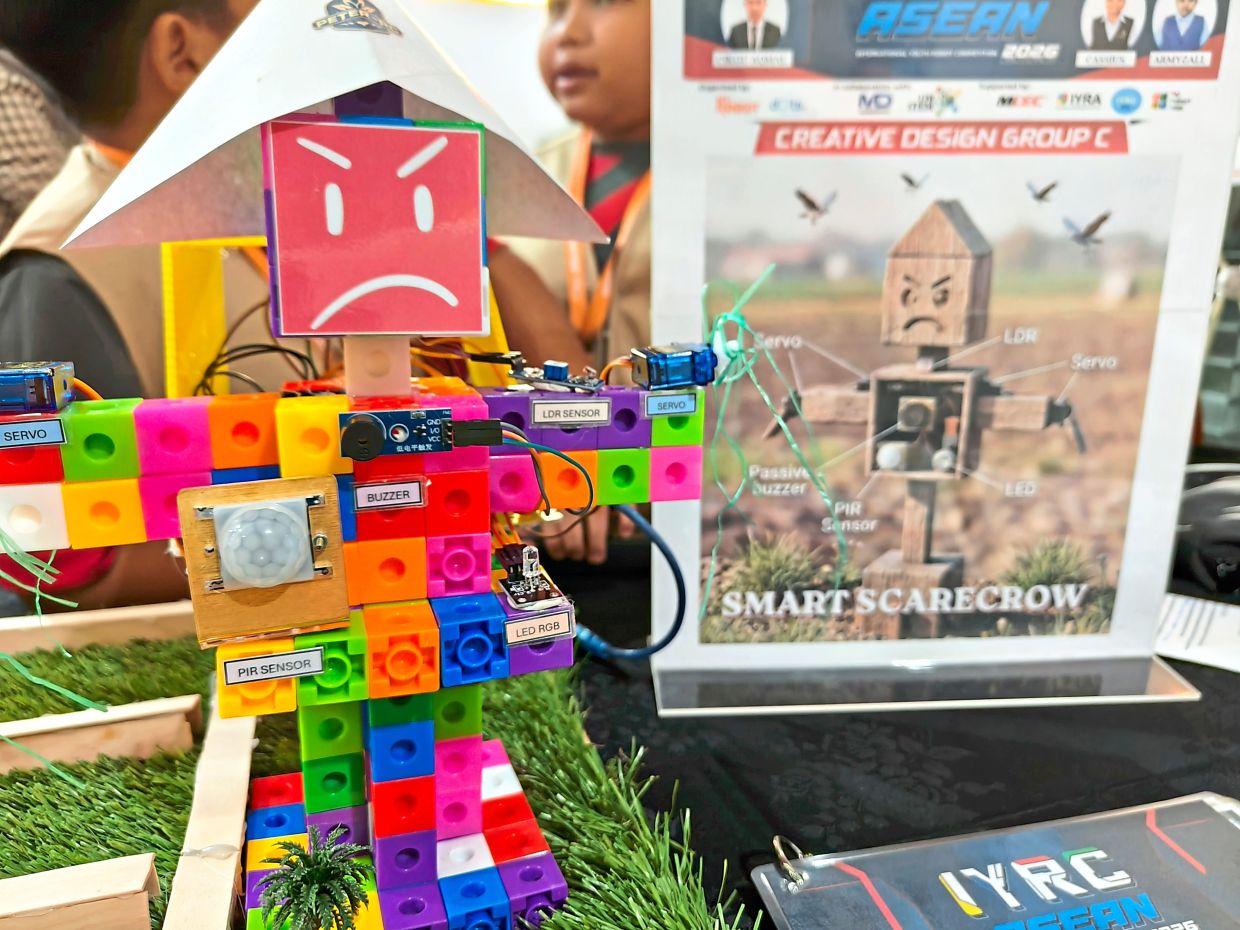
Two 11-year-old boys from Sekolah Kebangsaan Pengkalan Tereh in Kluang, Johor – Cassius Clay Wencesclaus and Armyzall Yukhazmi Putra Yee – took five days to build a Smart Scarecrow robot, a system equipped with various sensors to detect birds and other animals in paddy fields before driving them away with sound.
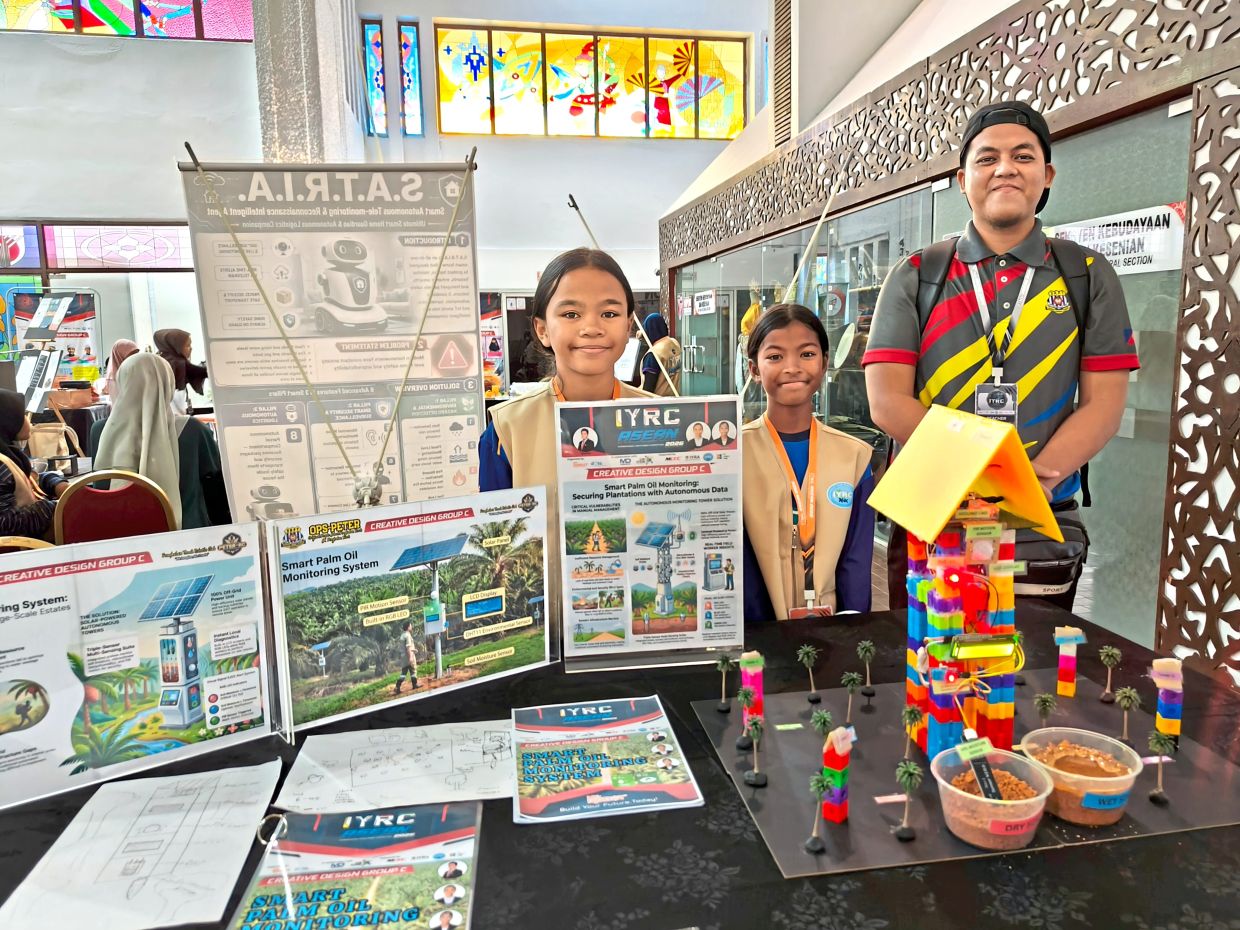
Another team of two 12-year-old girls from the same school, Qaseh Allysa Balqis Sidin and Nikisha Aryana, presented a Smart Palm Oil Monitoring System equipped with multiple sensors to monitor soil moisture levels, movement and temperature. The system was designed to demonstrate how sensor data could support plantation monitoring in the agriculture industry.
“The students are inspired to come up with innovations that could help their parents as most of them work in agriculture,” says science teacher Che Muhammad Fakhri Che Lah, adding that students were selected to represent the school based on their science knowledge and presentation skills.
Growing interest
As artificial intelligence (AI) and advanced technologies become increasingly embedded in everyday life, robotics classes are attracting growing interest from Malaysian families. RoboThink Malaysia business development manager Ellis Khan says the children’s robotics and coding centre has recorded roughly 50% more new student registrations than it did a year ago.
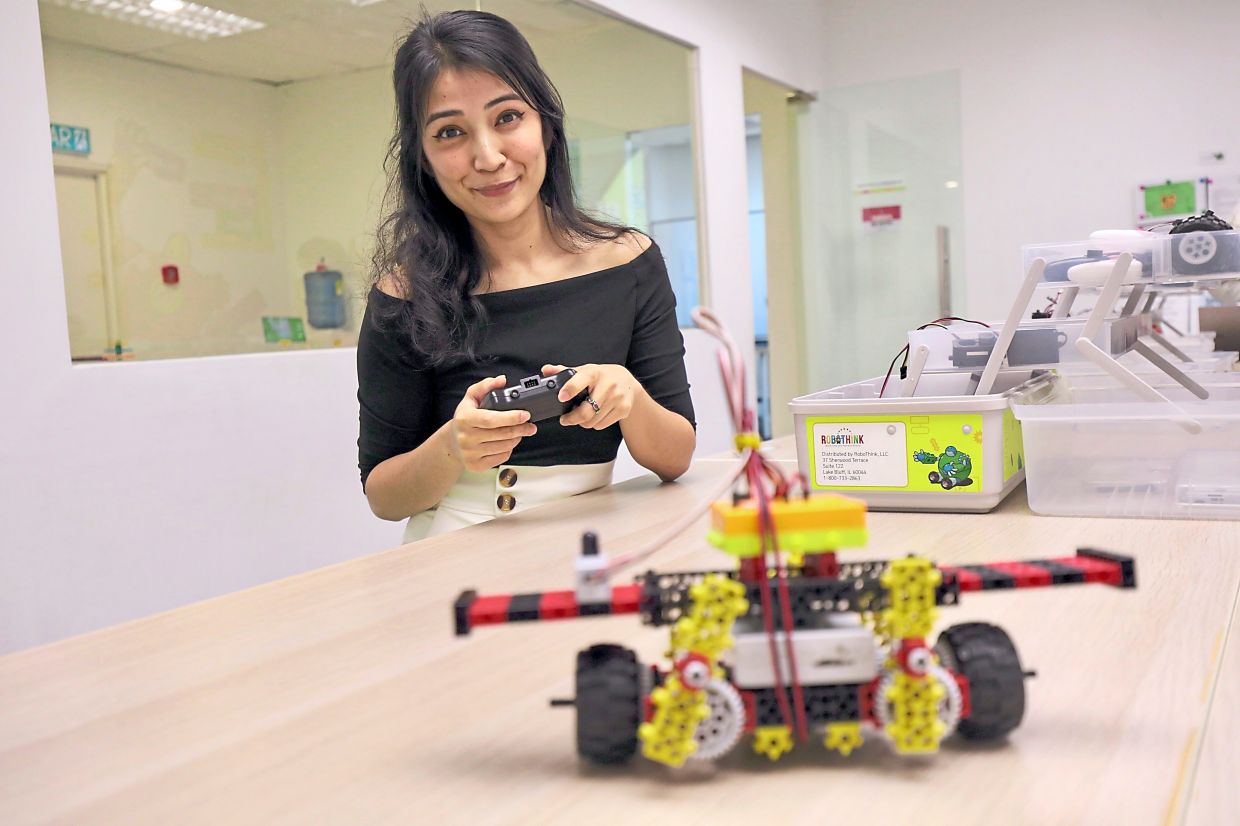
“We have parents who say they want their children to be a robotics engineer or design the latest technology in the future. But we have to explain that the emphasis is on children developing critical thinking and problem solving skills that they can use beyond the classroom,” Khan says during an interview in Bandar Utama, Selangor.
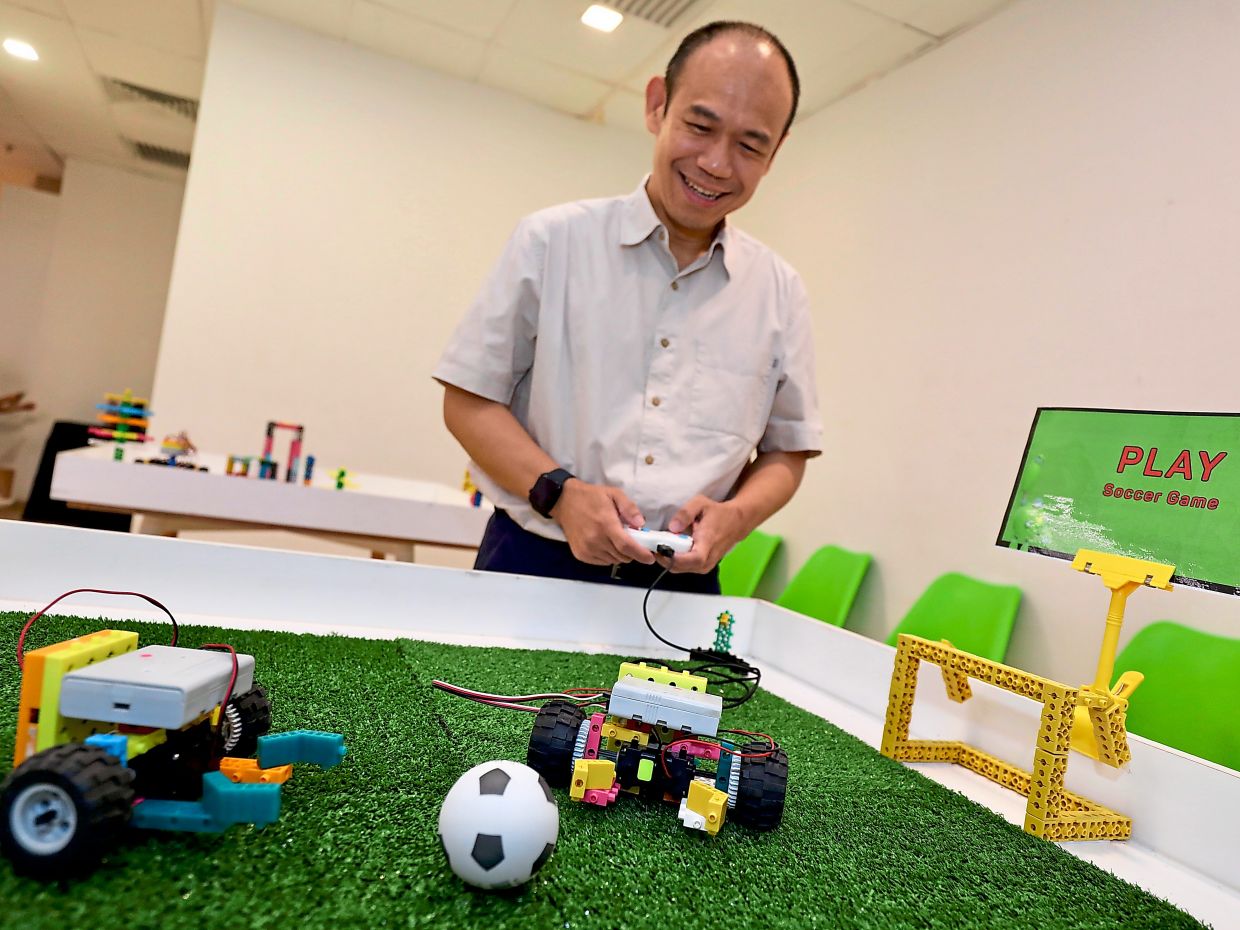
Its junior robotics course requires participants to build a two-wheeled robot using building blocks before learning to control it with a remote. Once they complete the entry-level classes, students can progress to advanced learning sessions, where they build more sophisticated robots that can move faster and in different directions, and programme them to perform increasingly complex tasks, such as navigating along a hanging bar.
“One of our youngest students is just four years old. While some may not be able to read or write when they first join us, we focus on helping them understand basic instructions and develop the building skills needed to assemble and take apart the blocks,” she says.
Muhammad Zulzakwan Kamarudin, a RoboThink instructor, also believes there are more students interested in learning about robotics since he joined the company back in January last year. Apart from conducting classes at the private learning centre, he shares that RoboThink has also offered robotics lessons to students at a primary school in KL.
“This year, we had 60 students in the class compared to 20 in the previous year. The first time that comes to mind for most students is that they want to build something and make it move,” says Muhammad Zulzakwan.
Based on conversation with some young participants, IYRC co-organising chairman Olivia Ooi says children have their own need to keep up with learning about technology.
“I think there is some peer influence here as they see friends building robots and learning to code, then they become interested. Some parents also tell us they’re looking for a more meaningful alternative to screen time,” says Ooi.
In Bangsar, Roboticist co-founder Ilylia Kamaruzaman says that the learning centre, which was first established in 2009, has robotics programmes to accommodate students from as young as four years old.
“There has been a lot of conversations on STEM and we are more seeing queries from parents who are curious about it because they don’t want to be seen as just merely picking up on a trend,” says Ilylia, adding that the number of new sign-ups have increased steadily over the years.
According to her, most parents who enrol their children in robotics classes hope it will encourage a lasting interest in science and technology.
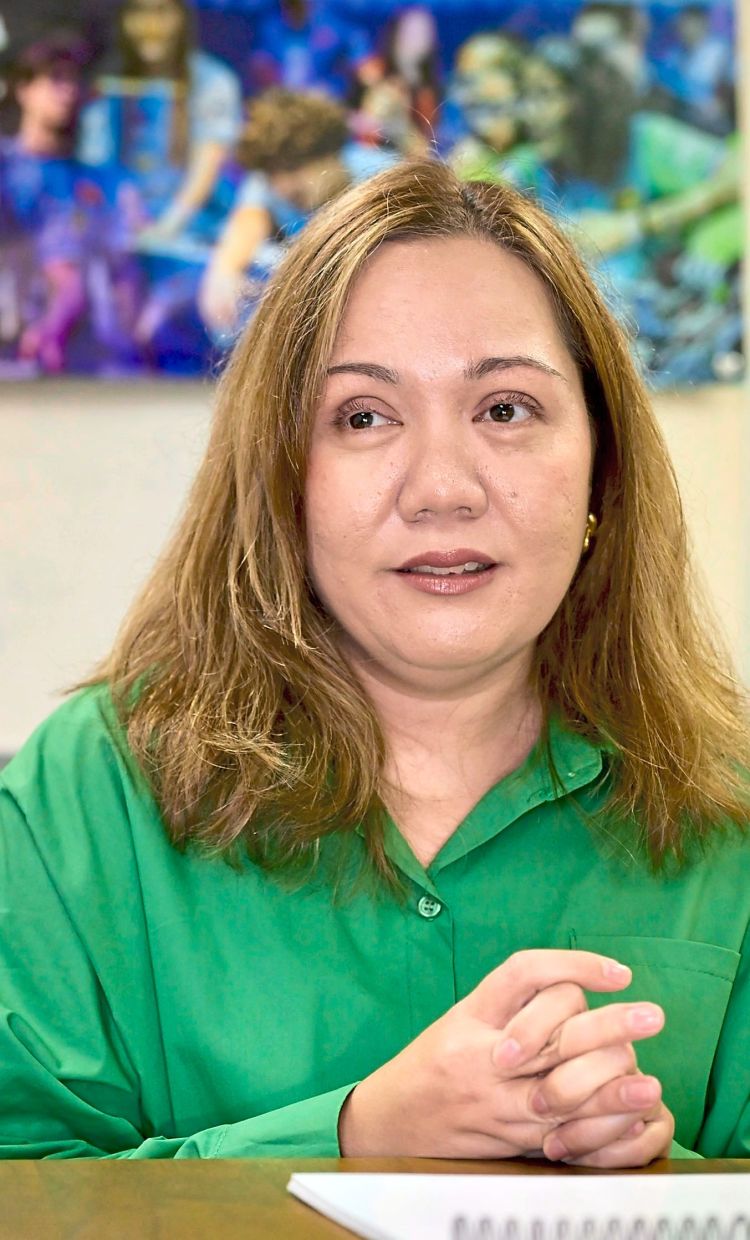
“They want the kids to be in the science stream, hoping it will lead towards a career in technical science fields like engineering and robotics,” she says.
Parent and chartered accountant Whitney Low shares that her 11-year-old son has been attending classes at Roboticist since he was seven. His younger brother, 8, is also a student.
“This started out as a way to get them off their gadgets and improve their focus in school. Initially, I was worried about the modules being too challenging for them.
“But over time, I could see how much they enjoyed the classes. They would tell me about learning to calculate distances and angles so their robots could move along the right path,” Low says.
Students who excel in the programme at the advanced level will be selected and trained to join the First Global Challenge, an international robotics competition. This year’s edition will take place in South Korea later in October.
“Children need opportunities to build, make mistakes, troubleshoot and try again. That hands-on experience is what helps those skills stick and prepares them for whatever path they choose in the future,” Ilylia says.
She is optimistic that early exposure to robotics can help students build a strong foundation for future careers in technology.
At Roboticist, 11-year-old Hana Zulaikha Muhammad Kamal attends lessons on weekends and spends about an hour with her instructors.
“My mom wanted me to join the robotics class in school. But there’s no coach there anymore and I still want to continue learning robotics so I joined this class,” Hana Zulaikha says, adding that she has attended eight classes so far.
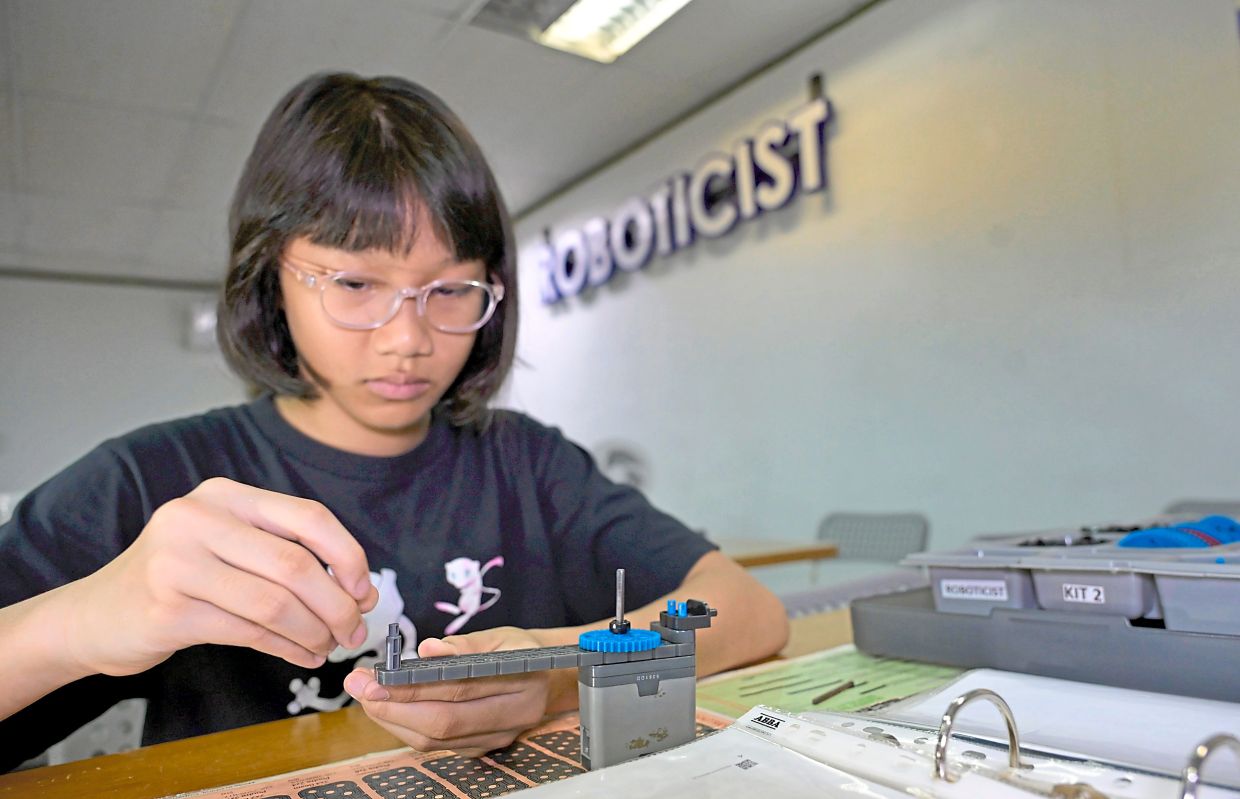
“My favourite is a robot with three wheels because it can move in any direction. I hope to create my own robot that can move items and can go really fast,” she says.
Future talent
The National Robotics Roadmap 2021-2030 identifies robotics as a key driver in supporting Malaysia’s ambition towards becoming a progressive, high-tech nation. It highlights the potential of robotics to address several national challenges, including improving productivity, reducing reliance on low-skilled foreign labour, and strengthening pandemic and disaster management capabilities.
However, the roadmap also acknowledges several barriers to wider adoption, including limited use of robotics in the manufacturing and services sectors, gaps in policy and governance, and a shortage of skilled workers. These are among the key challenges it aims to address to accelerate the growth of Malaysia’s robotics ecosystem.
In 2025, the Science, Technology and Innovation Ministry (Mosti) launched the Robotics Talent Development Academy (RoTDA), a one-stop centre that provides robotics training for students and professionals. Its minister, Datuk Chang Lih Kang, said the initiative aims to produce at least 1,000 new robotics professionals each year.
Prime Minister Datuk Seri Anwar Ibrahim has also outlined Malaysia’s ambition to become an AI Nation by 2030, saying the country should not “remain merely a consumer of AI”. In a keynote speech in July, he stated that Malaysia would invest in people and talent to develop the next generation of engineers, innovators and researchers capable of competing in the global digital economy.
But while efforts to build the talent pipeline are gaining momentum, RoboThink Malaysia director Eddie Choong says equal attention must be paid to creating opportunities for people to showcase what they have learned.
“As long as we have more industries capable of developing advanced technologies and employing the children who grow up to become tomorrow’s graduates, I think that will be the government’s biggest contribution,” says Choong.
Years ago, Ilylia says coaches from Roboticist were sent to provide weekly robotics lessons to students in a rural area in Negeri Sembilan. A year later, the students took part in a demonstration day, where they showcased their robotics inventions.
“The students wanted to use robotics to help their parents. One team came up with a small robot that could be used to fold clothes at home,” she says.
Ilylia believes Malaysia has the talent and creativity needed to drive innovation, but young innovators need stronger support systems to help them develop their ideas further and eventually contribute to the country.
“We need more funding for research and development to support the innovations that we see and bring them towards commercialisation. Most of the time, students’ journeys end at events like demonstration days, and this affects their motivation to continue developing their ideas,” she says.
Sustaining interest
Choong believes the interest in robotics will continue to grow as more people will see more robots become a part of everyday life.
“In the past, robots were mostly found in factories, but today we’re already seeing them in places like restaurants and shopping malls. I believe more parents will see robotics as an important skill for their children to learn,” he says.
He also hopes to change some preconceived notions about robotics.
“I think some people still believe that it’s only for boys? We have about 30% female students here and I would like to improve that. When a child says, ‘Teacher, I want to build a robot’, I will tell them the possibilities are endless,” Choong adds.
Teacher Nur Syamsiah says guiding her students in robotics is about more than just winning competitions; she hopes they will enjoy the learning experience and gain valuable skills along the way.
“We want our students to be happy. As long as this experience helps them gain opportunities to enter good secondary schools, that is enough for us,” she adds.
Last year, science teacher Che Muhammad Fakhri led his students towards a gold medal in the Creative Idea category at 27th International Robot Olympiad (IRO2025) in Gold Coast, Australia.
His team of three Orang Asli students, which included Qaseh and Nikisha, won with a robotics system designed to study the surface of Mars, presenting a concept involving two coordinated robots in the Creative Idea category.
He shares that the journey to competing at the international level was not easy, as the school had to secure additional funding to support its students.
“The school organised various fundraising activities. I had a burger stall while other teachers sold drinks. Even parents helped out by selling goods from their farm,” says Che Muhammad Fakhri, adding that they also received support from their local assemblyman.
Beyond financial challenges, he also had to help his team overcome self-doubt as Orang Asli students from a small school with around 40 pupils.
“As a teacher, I’m proud when my students do well and prove that they have the potential to shine in robotics. I hope the experience will help them to excel in the future,” he says.
At the end of the three-day IYRC event, Che Muhammad Fakhri says his students placed 5th in the Creative Design category.
“The results are not great. But it is enough to serve as a catalyst for personal development and success,” he adds.
Meanwhile Khoo Jian Hui, manager at My-Robot Medini in Johor, says his students – Tan Yang Hee, 8, from SJK(C) Tah Tong and Wong Kah Shen, 9, from Stellar International School – won gold in the Creative Design category at IYRC 2026 for those between five to nine years old.
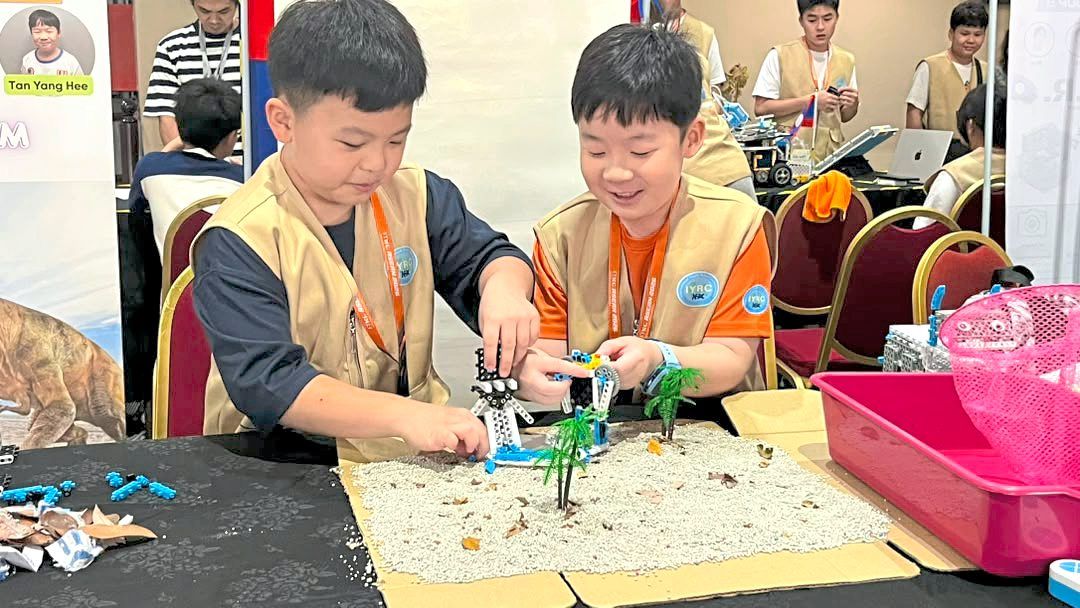
“They designed a robotic arm that can assist in clean-up (of rubbish at the beach) and part of the competition requires them to do a storytelling presentation about the robot’s feature,” he says.
Beyond the classroom in Bandar Utama, Muhammad Zulzakwan hopes to extend robotics learning to children at his community in Bukit Naga in Shah Alam, Selangor.
“Robotics can be costly and I want to provide the knowledge for free. I’ve asked Eddie if I can use some of the class material to teach kids in my neighbourhood. I think it’s important to make it accessible to more children whenever possible,” he says.