
Eager to impress, the young football players darted and dribbled around the purple cones laid out on the patchy grass. Their speed, control and footwork were all being carefully evaluated – but not by a veteran scout.
Not even by a human being.
Instead, the Brazilian athletes were being assessed by a mobile app powered by artificial intelligence (AI), part of a handful of new tools promising to revolutionise the way that talent is discovered in the football-mad nation.
“We’re talking about millions of unseen boys and girls,” said Roger Wittmann, a German sports agent who created Cuju, one scouting app gaining ground in Brazil. “This is a big chance for them to be seen.”
Platforms like Cuju have quickly attracted hundreds of thousands of users in a country where playing professional football is a dream shared by many. The tools have also caught the attention of major football clubs, some of which are now using apps to recruit.
Brazil, where football is deeply intertwined with everyday life, exports more star talent than any other country in the world, with some athletes earning millions of dollars at top European clubs.
AI scouting platforms are already common in Europe, where evaluating football talent has long been rooted in metrics and statistics. But in Brazil, deep economic and regional inequalities have historically made it difficult to standardise scouting practices.
Instead, discovering Brazil’s football talent has been left to the nation’s storied scouts. Known as “olheiros” in Portuguese, these veteran talent hunters often spend decades scouring amateur matches, neighbourhood leagues and school tournaments, from the Amazon rainforest to Brazil’s dusty outback, looking for the next big star.
Yet now, powerful AI technology could identify emerging talent faster and better than the human eye alone. It also could reach more aspiring athletes across Brazil’s vast territory, giving even those in remote reaches of the country, where few scouts might venture, a chance to be spotted.
Most AI scouting platforms work by analysing videos that users upload or drills they record directly into the apps. Weighing a vast array of abilities, from speed to ball control, they spit out a score and add athletes to a database. There, human agents seeking talent can find them, or the apps can pitch athletes directly to specific clubs.
For now, at least part of talent recruitment remains in human hands. But progress in AI is prompting discussions about how much should be turned over to machines.
On a crisp Sunday morning, a few dozen teenagers lined rows of faded concrete bleachers in a modest stadium in rural São Paulo state, clutching well-worn, muddy cleats.
Many had come from towns hundreds of miles away for a tryout that could earn them a roster position on a local team in Aguaí, a sleepy town of 30,000. The athletes, all 14 to 19, had been selected on the basis of their scores on an AI-powered mobile app. Now, they hoped to show off their skills in real life.
On the sidelines, some boys ran one-minute drills as the app captured and graded their movements in real time. Later, on the field, the teenagers jostled for control of the ball as a team of trainers watched closely.
Davi Barossi, 18, quickly made an impression. He dodged two defenders and plunged the ball into the corner of the net. Barossi had travelled 10 hours by car from the southern state of Santa Catarina. “I’m here pursuing my dream,” he said, the day after watching Brazil’s national team compete in the World Cup.
Nathan Moraes, an 18-year-old from the Amazonian state of Pará, was having a tougher time. After a tackle gone wrong, he limped off the field, wincing in pain. “Each opportunity you get, you have to give it your all,” he said, massaging a cramped shin.
During a pause, the players grilled each other, wolfed down chopped fruit and guzzled water. “I’m in second place on the app,” Moraes boasted. “What’s your ranking?”
On a battered phone, Barossi showed off his own metrics. He worried because he is shorter than many players his age, he said. But, after doing drills through the app every day, he had climbed into the top 30 nationwide in his age group. “I’m always kicking the ball around and recording it,” he said.
While most experts agree that AI tools can help set precise, standardised criteria for players, they warn that technology can have blind spots.
Metrics can favour taller or stronger athletes, overlooking less conventional talent. While much of Brazil is online, these apps remain less accessible to poor athletes without a decent connection or a quality cellphone camera. And users can delete or swap uploaded videos as many times as they want, notching a higher score that may not always reflect their abilities.
Then there are those who believe that, no matter how advanced, artificial intelligence simply cannot top the trained eye of a professional olheiro.
“It’s a gift that God gives you,” said João Maradona, a Brazilian scout whose work scouring Brazil’s remote northeast unearthed several athletes who went on to play for Brazil’s national team. “Nobody can teach you to see, in just 15 or 20 minutes, that raw talent that’s really special.”
Perhaps unsurprisingly, those building AI scouting apps have different views. At a small startup office in São Paulo on a recent afternoon, analysts working for the app Footbao sifted through videos submitted by athletes. With speedy clicks of a mouse, they scored each player across two dozen different categories.
The grainy clips had been selected by artificial intelligence as the most promising out of tens of thousands uploaded to the app by players around Brazil. After the analysts vetted the videos, AI technology ranked the players using a formula and produced a detailed report for clubs.
The AI was still being trained. But the aim was to eventually automate the evaluation, reducing human error and grounding the scouting process in data.
“We’re not trying to take the job away from a scout,” said Nick Rappolt, the startup’s chief operating officer. “We make scouting more efficient, more economical.”
In many ways, advanced technology is already transforming football, as top clubs experiment with AI to analyse matches, prevent player injuries and mount game strategies. Recruitment, proponents of AI say, is just the next frontier.
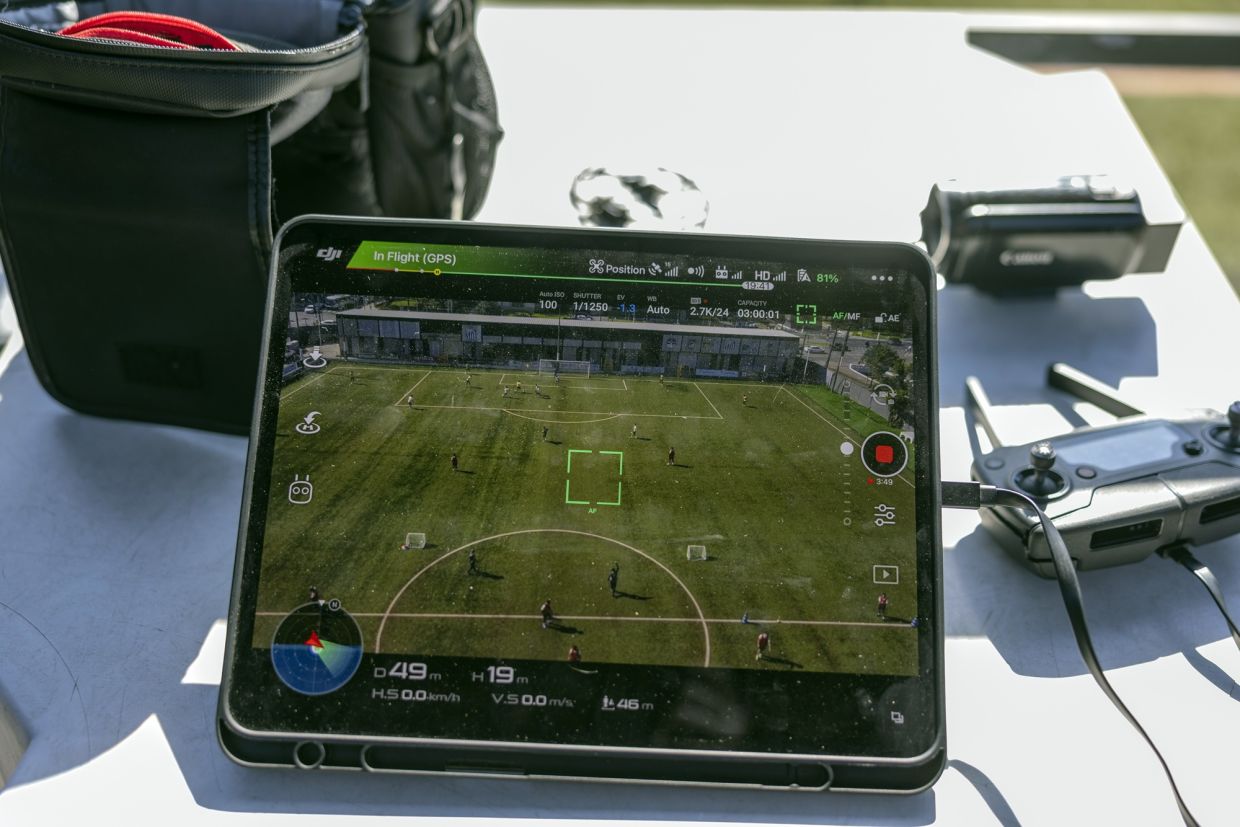
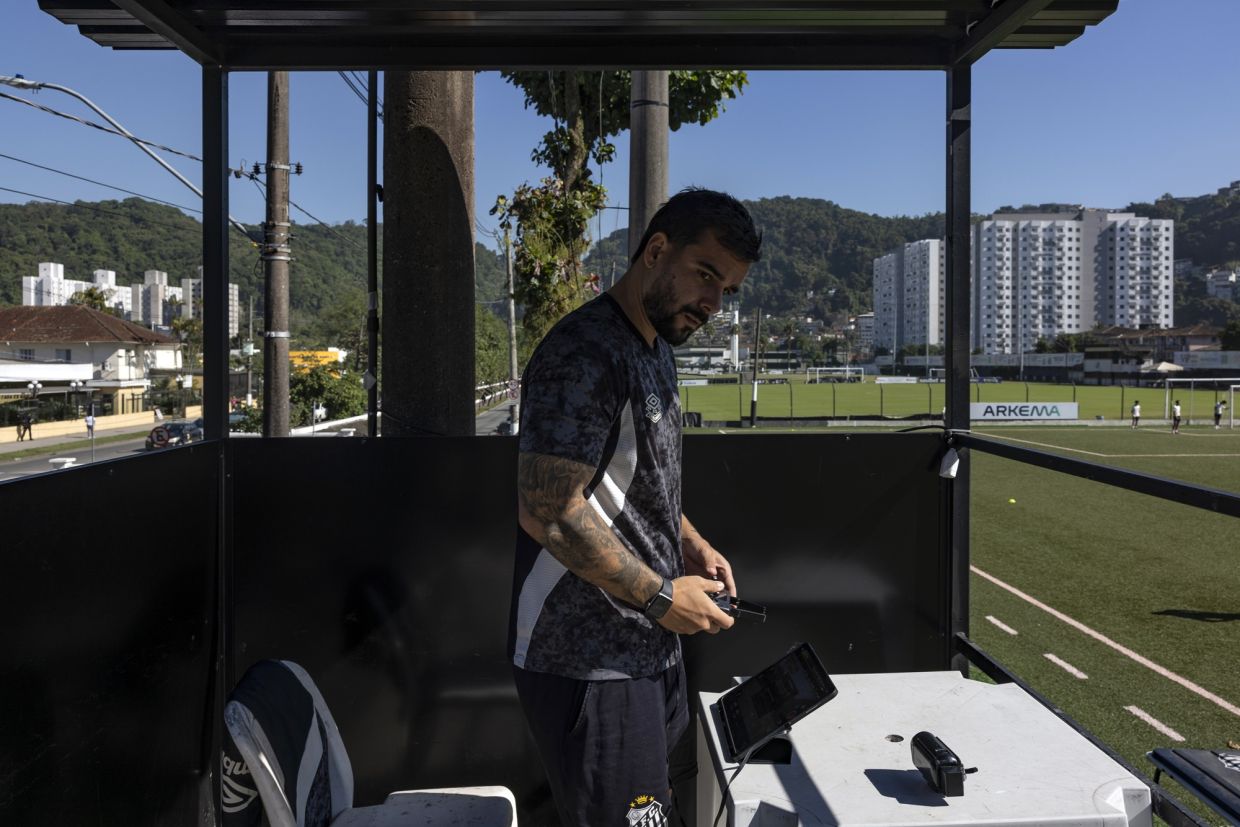
The expanding role of technology was on full display at the Santos FC training facility on a recent morning. The club’s youth team sprinted up and down the field as a drone hovered above. The footage it recorded could be analysed by AI, then used to measure player performance.
Santos, where Brazilian legends like Pelé and Neymar Jr. got their start, has forged a partnership with Footbao, aiming to use the app to recruit talent and keep it a step ahead of competing clubs.
“We can’t be everywhere at once,” said Carlos Antônio Anunciação, the club’s athlete recruitment coordinator. “Today, with the help of technology, we can go much farther.”
Still, he was preparing to travel more than 600 miles the following day just to see a promising player in person. Anunciação got the tipoff, he said, via a WhatsApp message from a veteran scout. “I can’t resist watching live,” he added.
Back at the tryout in rural São Paulo, the last match wound to a close just before noon. The teenagers leaned against a rusty chain link fence, sweaty and exhausted, as they waited to find out whether they had made the cut to join the local team.
Barossi and Moraes were in, among six players to be selected for the squad. The rest, shoulders slumped, began to scatter.
The new recruits, beaming, headed to the locker room. “This is the opportunity I’ve been looking for,” Barossi said. – ©2026 The New York Times Company
This article originally appeared in The New York Times.