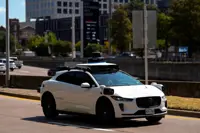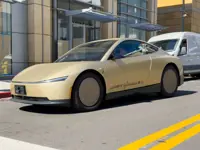
LONDON: Chinese tech giant Baidu will start testing its autonomous vehicles in London "in the coming weeks", US ride-hailing platform Lyft, its partner on launching the capital's robotaxi service, told AFP Wednesday.
It comes after Wayve, a British startup specialised in artificial intelligence for self-driving vehicles, said Monday it was ready to launch its robotaxi service with Uber in London as early as this summer.
Lyft executive Jeremy Bird told AFP that his company's "autonomous vehicles will be on the (London) streets soon, in the coming weeks" after already arriving.
"They need to get inspected and pass (tests)... and then they'll be out on the streets," Bird said, adding that the company hopes to launch commercial operations this year.
Self-driving taxis are already in operation in the United States and in China, but a commercial deployment in London would be a first for Europe.
Customers will have to wait a little longer for fully driverless taxi rides in the British capital, however, as Wayve plans to launch its vehicles with an operator behind the wheel.
The American giant Waymo, a subsidiary of Google parent Alphabet, hopes also to launch its driverless vehicles in London by the end of 2026 after mapping the capital for several months.
The world leader in driverless cars currently operates in eleven US cities, while Baidu's autonomous vehicle subsidiary – Apollo Go – operates in 27 Chinese cities and in Dubai.
The exact timeline for London's rollout depends on the implementation of the UK framework for automated vehicles and on approvals by authorities.
Bird said Lyft will manage the fleet, and marketing on its app, for the London vehicles, while Baidu is producing the vehicles and their technology.
He said the taxi fares will "probably start as pretty similar" to rides carried out by human drivers.
Apollo Go provided 3.4 million driverless rides in the final quarter of last year, up 200 percent compared with the last three months of 2024, the company has reported.
It has a fleet of more than 500 autonomous vehicles in Wuhan, central China. – AFP