
One of the cardinal features of the Dark Souls games is the ability of players to leave messages for those who come after them. These notes can offer warnings, provide directions or deliberately mislead. In Death Stranding, players can leave items in storage for others to find and create buildings and roads that are shared with unseen players.
The new eco-adventure Tides of Tomorrow adds to the possibilities of asynchronous gameplay by inviting you to explore a world shaped by the actions of previous players. After I was fished out of the water and heaved onto a boat, I declined a character’s final dose of medication so the next person could use it – just as the person I was following had left it for me. I wagered that if they could live dangerously with a depleted health bar, why not I?
This game, an admirably finite communal project, is set more than two centuries after a great flood reduced the world’s landmass to a clutch of small islands and eradicated almost all wildlife. What little remains of the human population must contend with an environment ravaged by carcinogenic plastics. A chronic disease known as Plastemia, the result of plastic contamination in the body, is slowly killing off all but the lucky few who can get their hands on Ozen, a short-lasting medication that slows the condition.
Two factions control the supply of Ozen: the Mystics, a religious cult that believes that the toxic state of the environment is evidence of mankind’s sin, and the Marauders, an organisation that uses violence and intimidation to maintain its status. Caught in between are the Reclaimers, who eke out a living as they wait to die.
Standing apart from these three groups, with the ability to help or hinder each of them, are emissaries from the antediluvian world known as Tidewalkers. It’s into their suits that players are zipped up and given the chance to cleanse the world. The beginning of the game effectively hints at the story arc to come, which revels in a bit of classic French anticlericalism. (The Mystics take the worship of tech to extreme ends, which makes bursting their bubble a nigh irresistible proposition.)

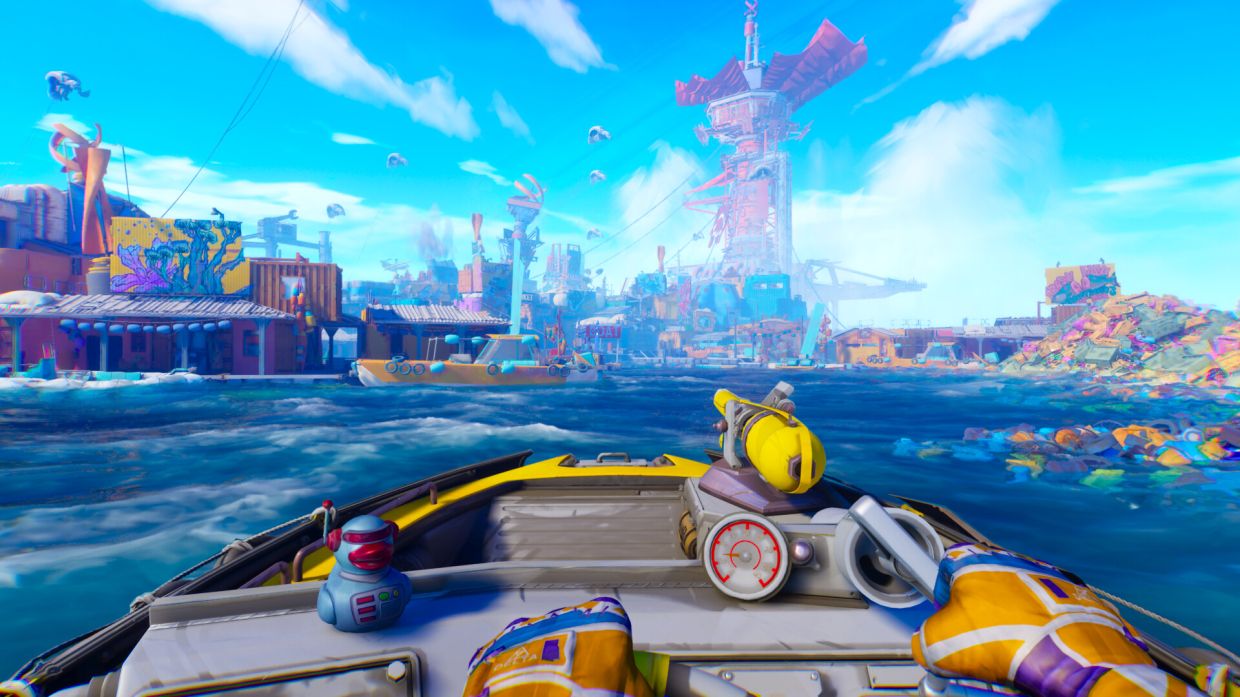
Visually, Tides of Tomorrow – the latest offering from French developer DigixArt, the creators of Road 96 – manages the remarkable feat of conjuring a beautiful seaside world that’s choking beneath plastic refuse.
At the start, players find themselves under heavily polluted water, floating amid others like them in hooded suits. They can then choose whom to follow from a list of other players who have played or finished the game. Players are distinguished by their in-game choices, which push them toward different categories: pro-nature, pro-mankind, cooperative, survivalist, troublemaker.
I chose someone who was cooperative and pro-mankind, and I generally followed along with that player’s choices until near the end. I could see traces of the other player moving through certain parts of the world and interacting with its inhabitants by entering “tide vision,” which gives hints about how to best manipulate one’s situation.
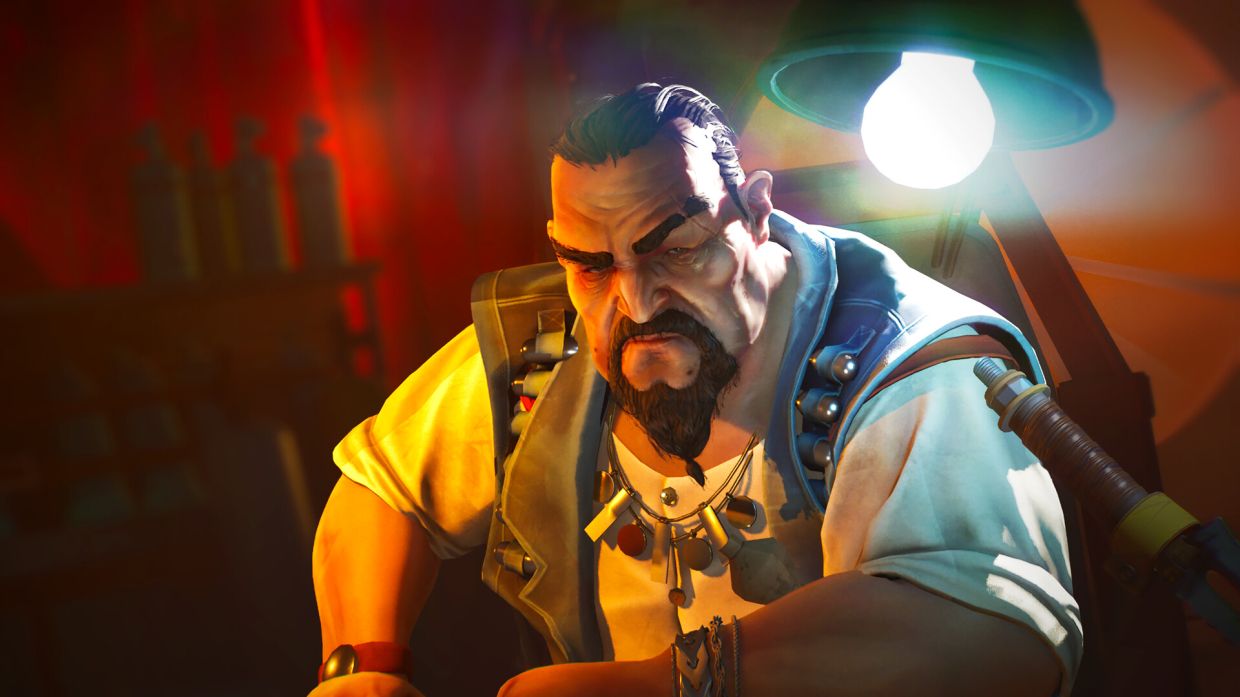
The fingerprints of other players can be felt elsewhere. If the player you are following antagonises or fails to deliver for one of the game’s major characters, things may be more challenging on your playthrough, with heavier guard patrols or a lack of available Ozen. The reverse is also true. You’ll feel appreciative when the person you are following has charmed someone so they’re less suspicious of you, or has paid a merchant extra, essentially helping to subsidise your Ozen – or, best of all, has left a can of the good stuff in one of the donation boxes on the islands.
The asynchronous mechanics are supported by smartly incorporated gameplay scenarios that will have players skulking their way past guards, dashing to get away from enemies in hot pursuit, racing seacraft and engaging in boat combat. None of these things are particularly challenging, which keeps the story going at a good clip.
Alas, the writing in Tides of Tomorrow is very video-gamey. Every conversation seems to be a means to an end, and feelings and motivations are bereft of subtlety.
This is tolerable because the gameplay scenarios are taut and never overstay their welcome. During the final acts, I was on edge: After going to a particularly grim place in the game, I had been warned that if I ran out of Ozen again I would be locked out of some (presumably more buoyant) endings.
That state of precarity kept me hooked.
Tides of Tomorrow was reviewed on the PC. It is also available on the PlayStation 5 and Xbox Series X|S. – ©2026 The New York Times Company
This article originally appeared in The New York Times.