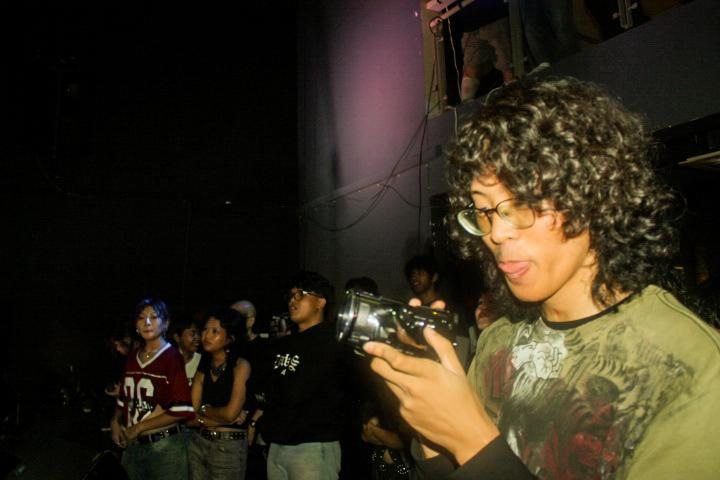
AS music blasts in a crowded venue, the audience captures the moment with their smartphones. Others whip out old-school camcorders and digicams, preferring the nostalgic charm of grainier footage and the tactility of physical buttons.
For 21-year-old Danish Firhan Mohammad Nizam, the imperfections and vintage look captured by his camcorders are a major part of the appeal, not just because of the aesthetic, but for what they represent.
He says the style harkens back to the early 2000s, when gadgets were mostly made for one specific purpose, unlike the all-in-one package of modern smartphones.
From his perspective as a Gen Z, the era feels like a much simpler time, with people in his age group yearning for a chance to experience what life was like before smartphones became widespread.
“Having dedicated devices like an e-reader or a camcorder makes you more focused on the task at hand, like recording videos,” he says.
His current gear includes a Sony DCR-SX65E and a Canon Legria HFS100, both of which are over 15 years old, which he paid around RM300 and RM450 for, respectively.
He now has his sights on getting hold of a model that shoots in Hi-8, an older analogue format introduced in 1989, after being inspired by an influencer.
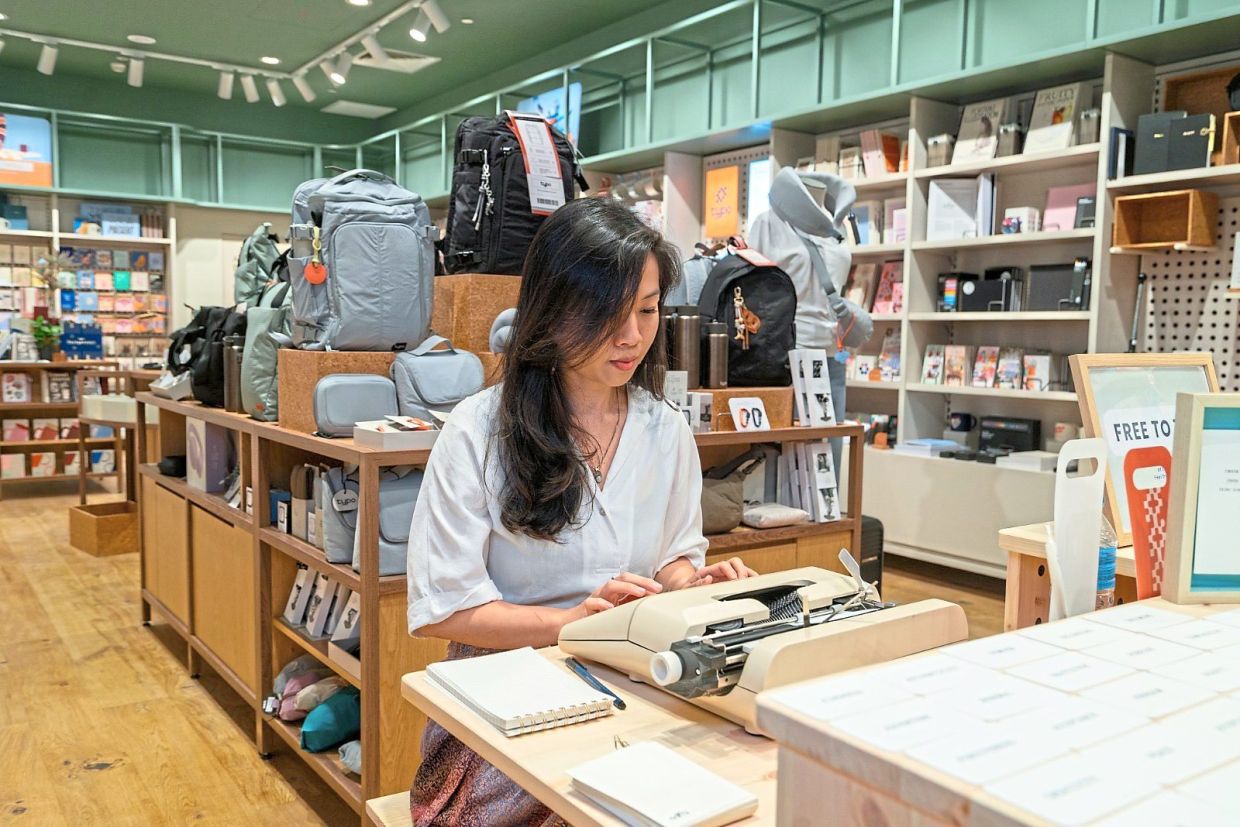
The trend of unplugging and being more present appears to be a common thread for those opting for retro tech. For 33-year-old poet Chloe Ling, this means bringing an old-fashioned typewriter to live poetry events to type out her pieces in real time.
“I think perhaps it’s the return to a slower, more intentional way of living. The typewriter, as compared to, let’s say, a laptop as a writing tool, is very tactile and intentional.
“No million tabs open, no YouTube in the background, just you, your thoughts and the rhythmic clacking of keys,” she says. The typewriter she uses is a hand-me-down from her father, an Olivetti Lettera 35 from the 1970s.
Both Ling and Danish Firhan note that while their pieces of tech history may be eye-catching, it is not just about aesthetics, as each requires a more methodical and intentional way of use, in contrast to the quick and easy simplicity of a smartphone.
“With most modern technology, everything is frictionless; you press a button, and it just works, or you bring it to a technician, and they figure it out for you.
“With a typewriter, you kind of have to get to know your own machine even if you have to bring it to a technician.
“Also, with the typewriter, it’s a very tactile experience using it. You actually feel the words being typed out, and there’s a tangible product right after.
“Perhaps for younger people who grew up around phones, social media and all this tech, the tactile feeling of it is very novel,” she says.
Retro renaissance
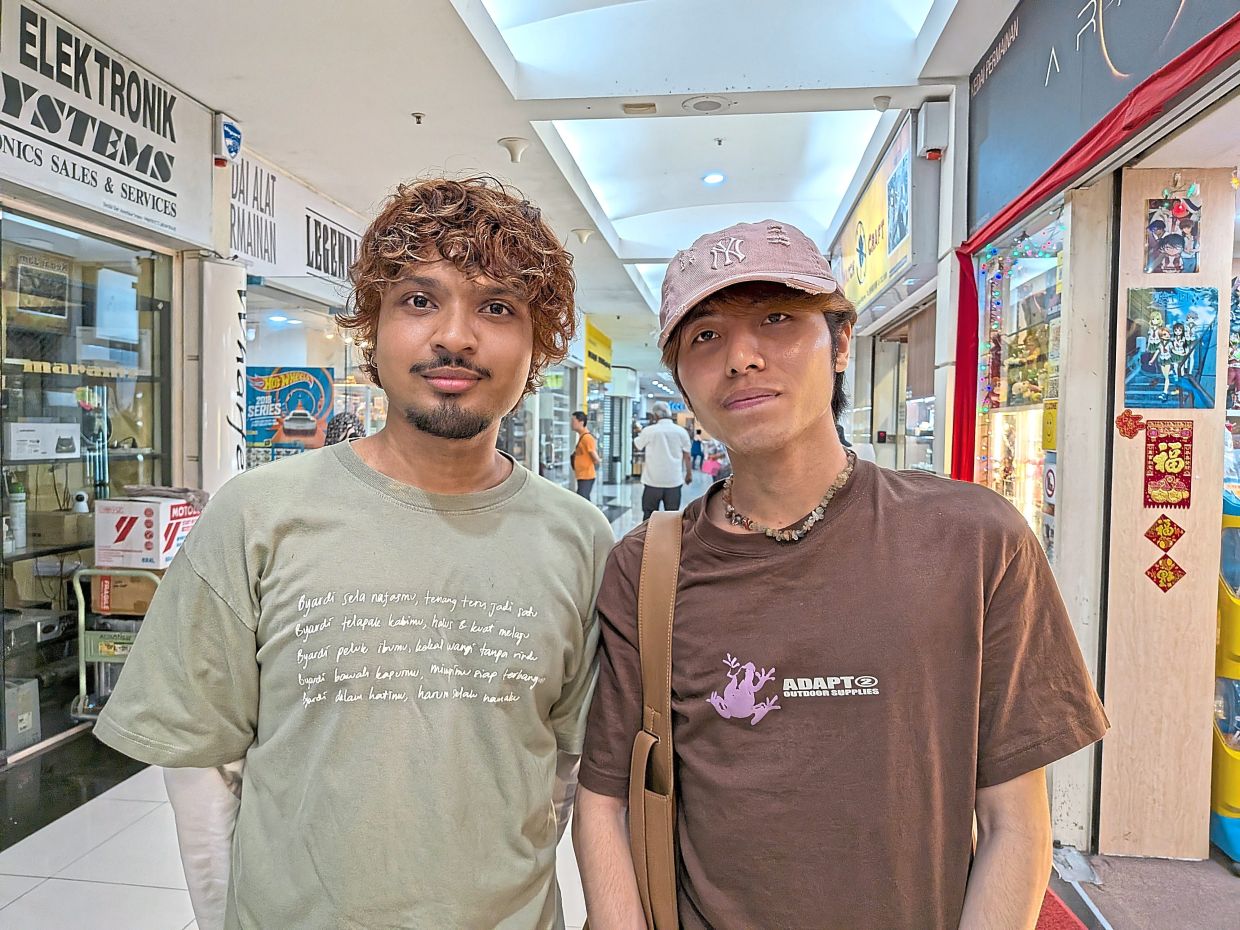
“On the topic of retro tech, I actually use a Microsoft Zune (a line of digital media players discontinued in 2012) as my primary device to listen to music, a Panasonic SL-VP47 as my CD player and a Sony Pressman TCM-400 as my cassette player.
“For the Zune, I got it because I actually was looking for an iPod classic, but I found a Zune for a similar price, and I bought it cause it looked really cool and I preferred the UI (user interface) compared to the iPod,” he says.
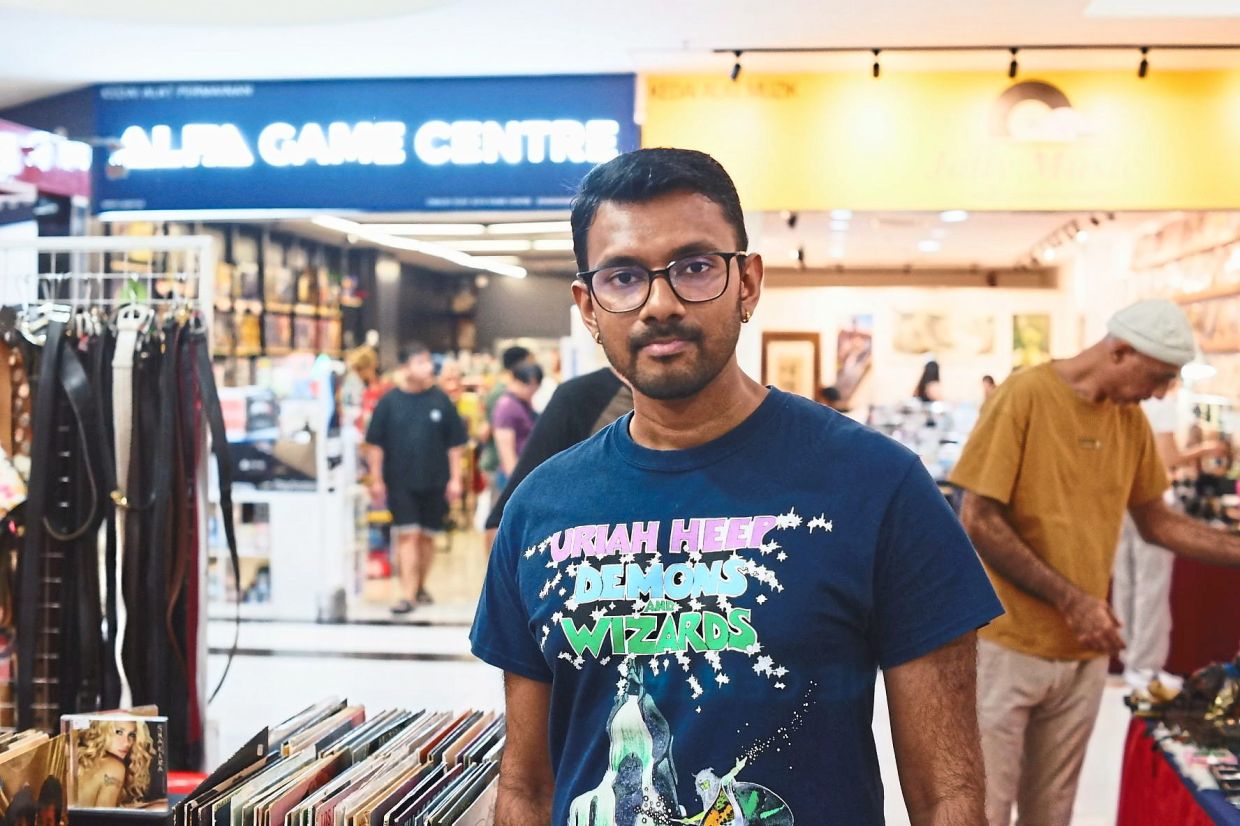
According to Ravin Kumar Vegasparan, a 32-year-old vendor at Selangor’s Amcorp Mall weekend flea market, there’s been a clear uptick in youngsters in search of vintage media, largely driven by their inclusion in pop culture.
“The new movies and TV shows these days have a lot of old music, and they show people using turntables, cassettes, and CDs as well. So it’s become a trending thing.
“What I’m seeing is that most of the young folks are still buying vinyl, because of the artwork, casing, and lyrics. But there is still some demand for cassettes and others,” he says, adding that there is still a market for media that people can actually touch and feel.
Ravin Kumar says that new vinyl releases typically cost between RM150 and RM300, though prices can vary widely for collectables or vintage records, depending on their condition and the state of the sleeve and cover art.
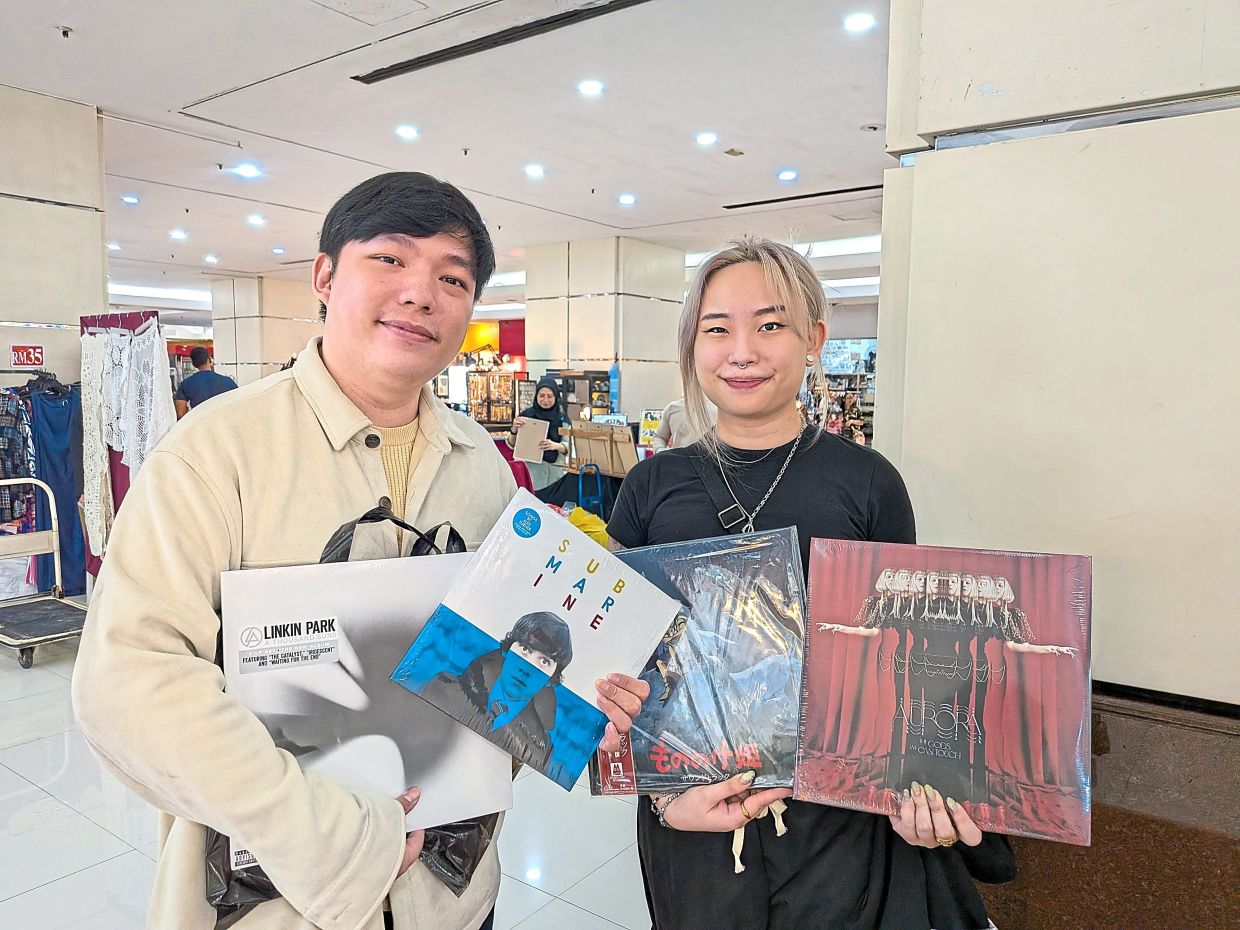
Among those browsing was Beatrice Bock, a 29-year-old tech startup co-founder, who picked up the vinyl release of an album by Aurora, a Norwegian singer-songwriter, alongside the soundtrack to the 1997 Studio Ghibli anime film Princess Mononoke.
With her was 33-year-old esports commentator Aaron Chan, who added a Linkin Park album and the soundtrack for the film Submarine to his collection.
Bock says the medium’s intentionality is a big part of what makes listening to vinyl special, especially compared to streaming services.
“I don’t need batteries. I don’t need an Internet connection. I don’t need an expensive subscription for the kind of quality that I’m getting. It’s very deliberate, too. You can’t just pull it up on your phone and start blasting something.
“You’ve gotta take it out, and then sit down somewhere, and then you have to swap the sides. It’s a very meditative experience,” she says, adding that she was introduced to the hobby after encountering vinyls at a vintage bookstore and being intrigued by the album art.
Chan points out that such mediums offer a chance to fully immerse listeners in the music, without being able to easily skip tracks or deal with ads.
“Basically, you just focus and listen to what the artist has to deliver from start, all the way to finish, and I think that’s the beauty of it,” he says, adding that he’s made it a point to pick up at least one local album as a souvenir when travelling overseas.
Old-school cool
For students Afiq Amrin and Harith Haikal, both 24, physical media acts as a tangible reminder of events in their lives in a way that digital files cannot.
“I think it’s a curated experience,” Harith says. “It’s the packaging – most newer artistes include booklets and extra inserts inside. This is something you can only get with buying physical media.”
Afiq agrees, pointing out that some artists may include differences in their music across formats, potentially the “demo version of a song, or a slightly different arrangement on vinyl compared to what’s on streaming”, he says.
Both say it’s worth going the extra mile for vinyl, as it offers a richer experience than being glued to their phones and relying on streaming platforms.
This perspective is shared by 20-year-old Luqman Hakimi Norhisam, who was sifting through stacks of cassettes at one of the stores.
“I think that we’re face-to-face with technology for way too long now. It’s so easy to access everything now, including digital music, but it’s different from actually having it in physical form.
“Some people will ask us, ‘Why do you buy when you can listen to it for free?’, but it’s because we can touch it and we can feel it. And more importantly, we own it.
“If it were only digital, we could listen to it, but once it’s removed, then it’s gone forever. Physical media stays with us as long as you still have it, even stuff from the ‘90s and ‘80s.
“It’s also good because we can put things off the screen by setting aside some dedicated time for listening,” he says.
Luqman Hakimi has been in the hobby for a little over a year and has amassed a collection of over 80 cassettes since starting.
While he feels that vinyl produces a higher fidelity sound, he also believes that nothing beats the mechanical noise and tactile clicks that a cassette tape makes when it starts spinning up.
He estimates having spent around RM1,000 on the hobby so far, noting that cassette players typically range from RM100 to several hundred ringgit, depending on the brand and specific features.
Preserving the past
Danish Firhan says caring for his camcorders requires extra attention, especially due to how sensitive the hardware can be.
He has previously attempted to repair one of his units, which required him to import a specific part from overseas, but during the attempt, he ended up damaging a different part that now needs to be replaced.
When it comes to her typewriter, Ling says that due in part to the good condition it was in, repairs have not been particularly expensive.
Luqman Hakimi says that those who are lucky can hit the jackpot with an older high-end player at a thrift shop for cheap, but that’s not the end of the story. Then comes the effort involved in keeping a collection in good shape.
“Cassettes need quite a bit of effort to take care of, since even if you aren’t playing them, they can degrade. Even improper storage can result in mould growing, which will ruin the tape and its sound,” he says.
On the other hand, Ravin Kumar says that when looking to buy a vinyl, the first thing is to closely inspect the disc itself.
“One thing you look at is whether there are any scratches or if there are any dents,” he says, as significant warping or dents can make them unplayable on a turntable.
“If it’s just scratches, they will still be playable, but it may affect the sound quality,” Ravin Kumar adds.
Chan similarly says that those in the market for vinyl need to be careful when purchasing items being sold as “vintage” or second-hand.
“If you are a collector and really want to ensure that what you are buying is from a first press, and that you’re not being scammed since some of these can sell for RM10,000 and above, there are proper ways to check it.
“I think Discogs (an online database of physical music releases) is one of the more commonly used platforms used to check the codes and stuff to identify if something is legit.
“At a simpler level, there’s a lot to do with maintenance. You have to clean the records, take care of the needle, and ensure you do not simply store your vinyl. There are all these procedures, and for me, it’s a way to learn how to take care of things. That’s the most important part,” Chan says.
“People are recognising that you don’t really own something unless you have it physically. There’s so much lost media now because we don’t have a physical version of it,” she says.
Bock adds that this retro resurgence has given her and her peers a chance to experience an era they were not born into.
The sentiment is echoed by Ling, who sees the newfound interest by the younger generation as shining a new light on items that would have otherwise been forgotten.
“At my last typewriter poetry event, an uncle came up to me and told me he still had his father’s old typewriter at home. He then turned to his daughter and said it was still in good condition and that they should fix it up.
“I remember thinking that was really lovely, seeing the younger generation take an interest in older tools seemed to make him look at his own typewriter in a new light.
“Not just as something to keep tucked away in a closet, but as a machine that is still treasured today, and a piece of history he can pass on,” she says.