
The idea came to Masafumi Kouki, the energetic mayor of the Japanese city of Toyoake, on a summer day as he pondered rising truancy rates at local schools. Toyoake’s nearly 68,000 residents, especially children, seemed increasingly addicted to their digital devices, he thought, so why not try to reduce the amount of time they spent staring at screens?
Within a few days, Kouki and his staff had drafted a 2,400-character ordinance limiting the use of smartphones, tablets, game consoles and computers to two hours per day for Toyoake’s residents, not counting work and school hours. The ordinance, which goes into effect Oct 1, will make Toyoake one of the first cities in Japan to attempt to use the platform of the government to get its citizens to put down their phones.
“It’s so sad to end your day looking at your smartphone all the time at home,” Kouki, said in an interview this week in Toyoake, an industrial suburb of Nagoya. “I hope that citizens change their behavior.”
Toyoake’s ordinance, which was approved in a 12-7 vote by the city assembly last week, is largely symbolic. Authorities will not track residents’ smartphone use and there will be no penalties, city officials say, for exceeding the two-hour recommendation.
But in Japan, there is heavy social pressure to follow official guidelines. And Toyoake’s leaders hope residents will voluntarily reduce their use of digital devices – and choose to get more sleep and spend time with family members instead.

Some residents are pushing back, saying the government is intruding on the lives of its citizens. City authorities have received about 400 phone calls and messages about the ordinance, mostly negative. Critics circulated a petition calling for the ordinance to be rescinded, and local politicians denounced it on social media.
“In just one sentence: It’s none of your business,” Mariko Fujie, a lawmaker in Toyoake who voted against the ordinance, said in an interview.
Fujie distributed a newsletter to constituents railing against the smartphone limit, with bullet points like “not based on scientific evidence” and “the perspective of children’s rights is missing”. She said she worried that residents would feel pressure to follow the ordinance.
“Many of my supporters are saying that it’s condescending for the city to say such a thing,” she said. “This ordinance is total nonsense.”
Efforts to regulate screen time are not new in Japan, one of the world’s most connected societies and the birthplace of technology giants like Nintendo and Sony. A government study last year found that Japanese elementary and secondary school students use their phones on average for about five hours each day.
In 2020, Kagawa prefecture on the Japanese island of Shikoku moved similarly to limit the amount of time young people spent playing video games, prompting protests and a lawsuit, which failed to overturn it. The results of a study into the experiment’s success has not been released.
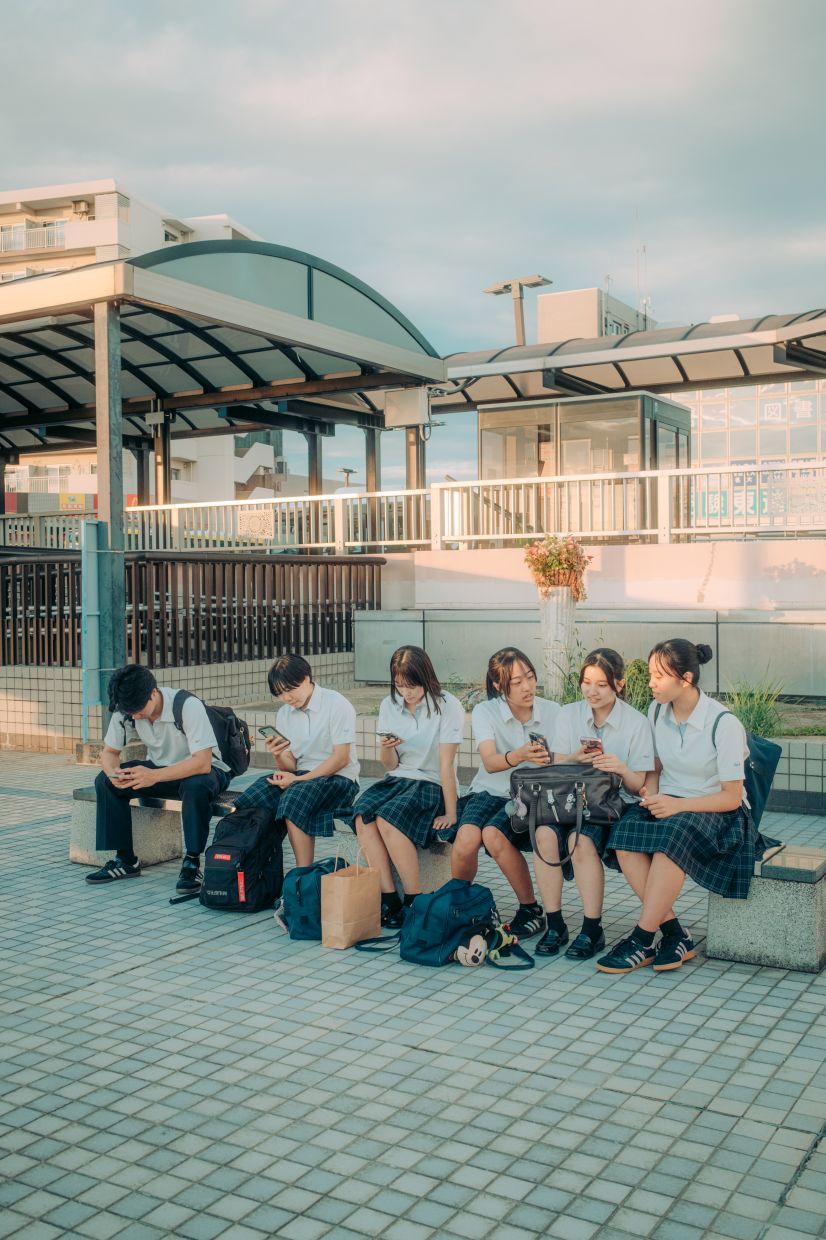
In Toyoake, as in most places, smartphones are a fixture of daily life – on buses, in parks and restaurants, and at schools.
Kairi Tani, 20, a university student, sat on a bench outside a train station this week playing the popular game Puzzles And Dragons. He said it would be difficult for the city to counter the gravitational pull of smartphones; he spends about five to six hours daily on his devices.
“My brain and my phone are connected through a root,” he said. “I can never let it go.”
At a community center Monday afternoon, a group of mothers watched as their children ran around and snacked on Pocky sticks and sweet-and-sour candies.
Asami Sahara, 38, described her five-year-old son as a “heavy gamer” who spends as many as four hours on his devices on the weekends. She said the ordinance could help raise awareness about the negative effects of smartphone use.

“Citizens should watch how it goes rather than protesting,” she said.
Sahara said she might invoke the rule to get her son to put down his device.
“I could probably say, ‘You will be caught! The ordinance says not to play!’” she said.
Kouki, who has children aged seven and 10, said that he has stopped using his phone at dinner at the urging of his wife, and he now opts to watch baseball highlight reels rather than full innings. (His daily screen time averages around three hours, including city business, he said.)
He said he thought the ordinance would prompt a long-overdue discussion in Japanese society.
“When you get on a train in Japan, most of the passengers are looking at their smartphones and not doing anything else like looking at the scenery outside the window,” he said. “Many people point out this is abnormal.”
Kouki said he hoped to set an example for cities in Japan and beyond. He said he was contemplating other regulations, including finding ways to stop residents from using their devices while they walk.
“I don’t mind facing criticism at all,” he said. “I just want families to have more time to communicate, and more people to have more sleep.” – ©2025 The New York Times Company
This article originally appeared in The New York Times.