A Los Angeles-area startup is using artificial intelligence and robotics in an unlikely way: making sashimi and other fish dishes taste better, last longer and more humane.
El Segundo, California-based Shinkei Systems wants to bring a traditional Japanese method of handling fish to fine dining in America, using technology to replace the labour-intensive process historically handled by practitioners on board ships. Investors have just bet millions that it will succeed.
The company's AI-driven robot – called Poseidon – has been designed to do a traditional form of fish handling called ikejime in Japanese. It is a method of killing fish that enthusiasts say enhances flavour, texture and shelf life.
Although fish processed in this way is found in some of the best restaurants in Japan, it hasn't been promoted in the US because it is generally too expensive. Automating the process will make it more readily available to Americans, said Saif Khawaja, the company's chief executive.
"My end goal is that you're walking into your local grocery store and can buy fish that lasts three times as long, tastes better and is handled humanely," he said.
The company raised US$22mil (RM94.10mil) in a funding round last month, co-led by Founders Fund and Interlagos, bringing total funding to US$30mil (RM128.32mil) since its inception. It has four Poseidons working on ships in the Pacific and Atlantic and hopes to have 10 more working in the coming year.
The ikejime process involves taking live fish that has just been caught and quickly putting them out of their misery by killing them with a spike through the brain and cutting their gills. This stops the stress hormone and lactic acid buildup that can hurt flavor and texture when fish are left to asphyxiate.
Although traditional practitioners sometimes add a step in which the spinal cord is destroyed, Poseidon just does the first steps of the ikejime technique.
The method has remained largely artisanal even in Japan, where only some fishermen will make the effort to process batches of fish in this way to sell to specific sushi chefs who are obsessed with having the highest-quality ingredients.
Even in Japan, the method "is still too labour-intensive to replicate at a high speed without damaging the fish," Khawaja said, adding that, "It's impractical and unsustainable for fishermen to adopt methods that require significant hands-on work," in the US.
Shinkei says it also has a higher calling than just better-tasting fish. Khawaja said one of the motivations for developing the technology was to try to find a kinder, gentler way to kill fish than letting them die gasping for air.
During childhood fishing trips with his father in the Red Sea, he remembers it being "very hard to watch" fish suffocating after they were caught.
While he was in graduate school at the University of Pennsylvania, Khawaja was moved by an essay that argued that fish suffer inhumane deaths because they cannot vocalise pain. He even once considered developing sensors to make fish's pain audible.
Shinkei provides Poseidon machines to fishermen, who then sell fish processed through the machines back to Shinkei at a premium. Shinkei in turn sells the fish to restaurants and other retailers under its fish company Seremoni.
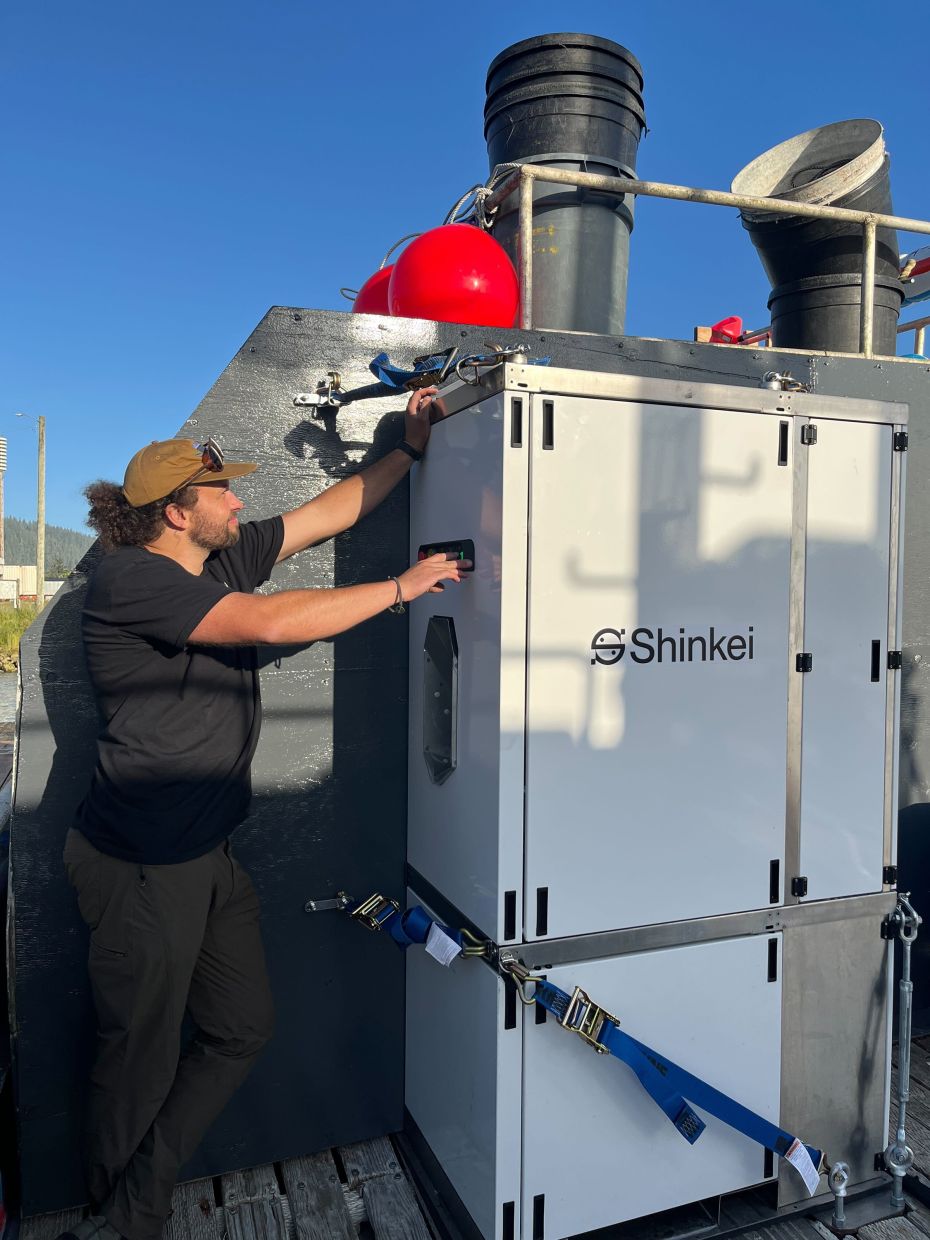
Poseidon is roughly refrigerator-sized and sits on fishing boat decks. It processes fish within seconds of being caught. The fish is fed through an opening in the machine and into a small vinyl cavity. The machine then uses AI to identify what kind of fish it is and where exactly its brain and gills are.
Fish emerge with a hole in the head and incisions near the gills before being placed in an ice slurry for blood drainage.
Quickly killing the fish, bleeding it and chilling it without freezing leads to fish that is noticeably better, Khawaja said.
"There's going to be a flavour profile difference and there's going to be texture profile difference," he said.
The company chose Los Angeles for its headquarters and production because it has the right mix of potential employees as well as customers. It has the mechanical engineering talent as well as a major fishing fleet and lots of high-end restaurants.
"The best mechanical engineering talent in the world, in my opinion, is in Southern California," said Seremoni co-founder Reed Ginsberg.
The city is also a major health and consumer products hub as well as a trend setter for cutting-edge food fads.
Chef Michael Cimarusti, co-owner of the Michelin starred Providence restaurant in Los Angeles, says he tries to buy local ikejime fish when he can because it preserves the quality and color. The fish preserved using ikejime look as if they "were just pulled from the water minutes ago," he said in an interview posted on YouTube by the American Fishing Tackle Co.
Shinkei currently processes thousands of pounds weekly across operations in Washington, Central California and Massachusetts, with expansion to Alaska and the Gulf of Mexico planned this year. After feedback from fishermen that the bots took up too much deck space, the company developed "Block 2" robots that have roughly half the footprint while processing fish twice as fast.
Currently, black cod and black sea bass processed through Poseidon are sold under Shinkei's brand Seremoni at retailers such as Happier Grocery and served at upscale restaurants including Atomix and Sushi Zo. This summer, the company plans to add salmon and red snapper to its offerings. – Los Angeles Times/Tribune News Service