A photo of two tourists allowing their child to urinate on a path near a sacred site in Thailand has sparked an online debate.
The Chakri Maha Prasat Throne Hall is a part of the Royal Grand Palace in Bangkok, a former residence of the Thai Royal family, which is now frequently used for ceremonies and national events.
It is one of the country’s most popular and most important tourist attractions.
The image, which went viral on Douyin as well as Facebook and TikTok, shows a little girl of about four or five years old, squatting in front of a low concrete wall and lifting her dress to urinate.
Her parents were standing closely behind her, and the father was carrying a backpack with the logo of the Chinese smartphone brand Xiaomi.
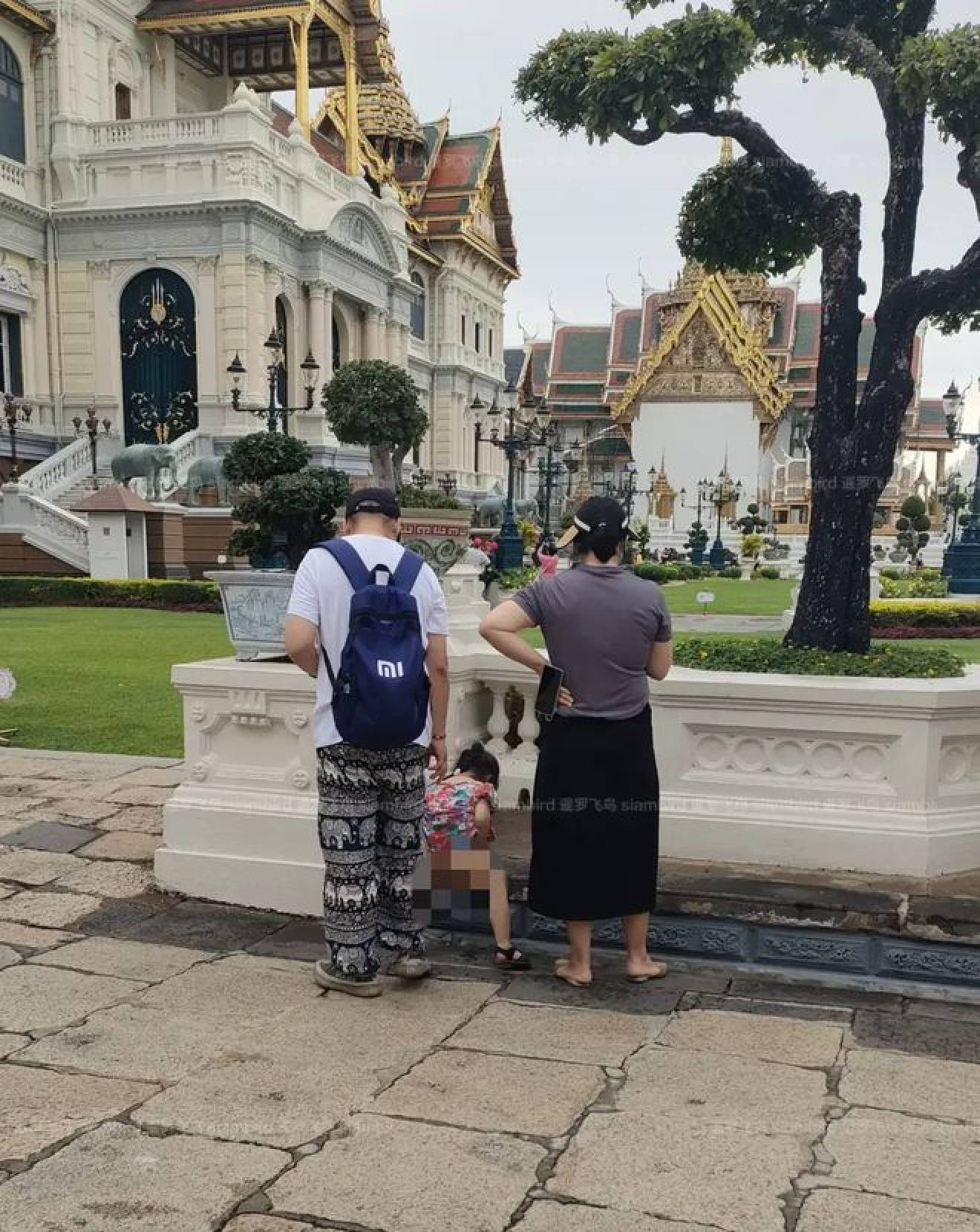
The photographer believed the family was from China, according to Thailand’s Morning News TV3.
“This is truly the nature of this nation. I saw it when I went there. Letting a child pee on the roadside like a dog,” an online observer in Thailand wrote.
On May 8, the newly appointed Tourism and Sports Minister, Sermsak Pongpanit, described what happened as “inappropriate”.
Previously, a 24-year-old local man was arrested for spray-painting on the wall of the Temple of the Emerald Buddha in Bangkok. He was later charged with two offences.
One offence was violating the Cleanliness Act, which carries a penalty of up to one month in prison and/or a fine of 10,000 baht (US$270). The other was under the Ancient Monuments Act, which can bring a prison term of up to seven years and/or a fine of up to 700,000 baht (US$19,000).
One online observer suggested the family’s behaviour could also be punished under section 112 of Thailand’s penal code, which states that anyone convicted of insulting the monarchy could be imprisoned for between three and 15 years.
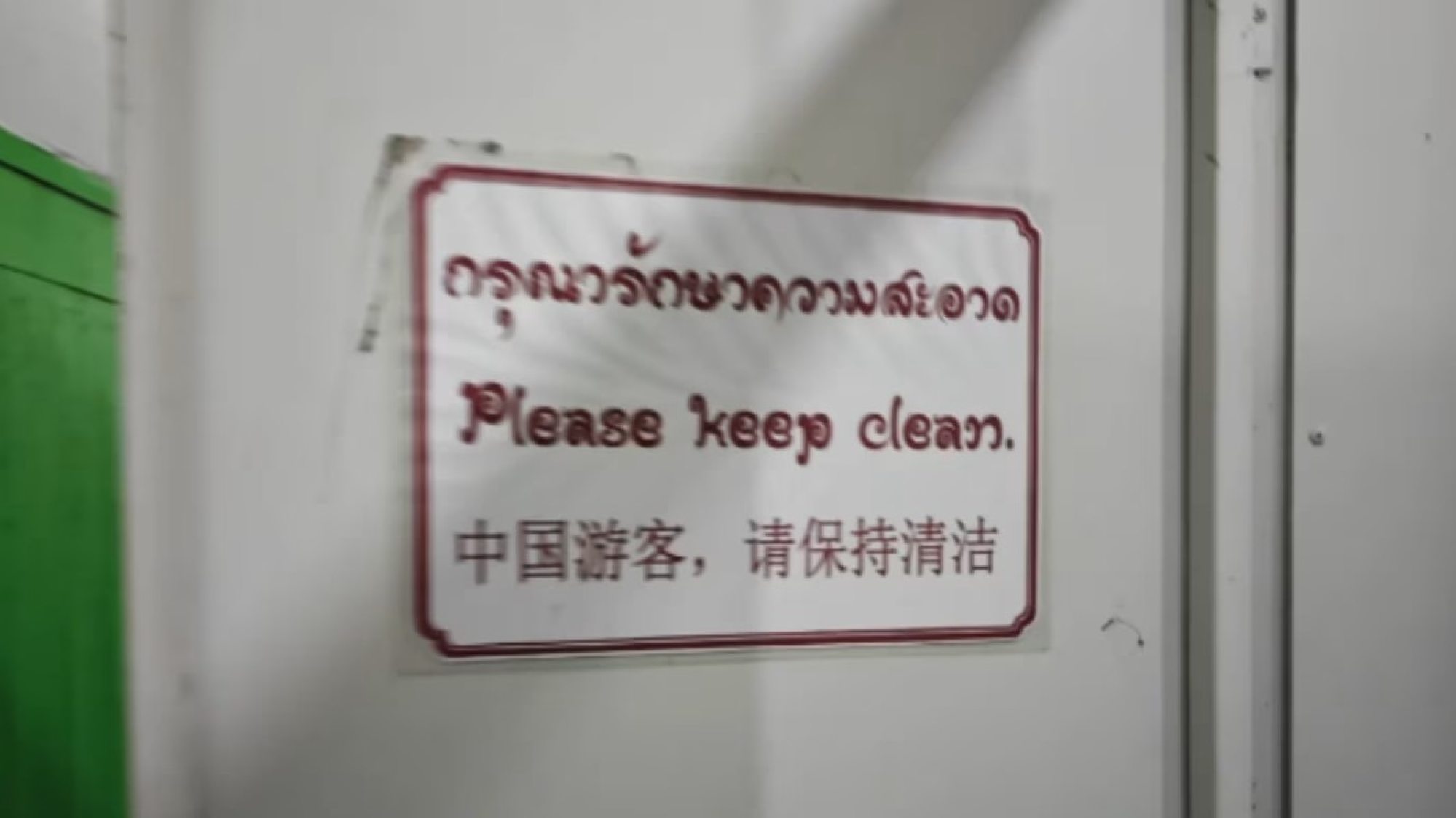
The incident follows an earlier controversy about a “racist” sign in a Thai temple toilet.
The sign, in Thai and English, said: “Please keep clean” but the Chinese version read: “Chinese tourists, please keep clean”.
Some online observers viewed this as discriminatory, while others said they understood the necessity for specific wording.
“As a Chinese person, I also despise some of our tourists who do not flush toilets, spit on the ground, speak loudly and litter everywhere,” said one.
Tourists from China have a reputation abroad for uncouth behaviour.
In mid-March, an incident in which a Chinese tourist swapped a used water bottle for a new souvenir flask at the British Museum, disgusted some people on Chinese social media.
Chinese tourists have also been accused of kicking ancient bells at Thai tourist sites to hear the sound, spitting on pavements or jumping queues, as reported by Thai news media in 2015.
China’s Foreign Ministry has frequently issued notices to remind citizens to pay attention to their manners while travelling abroad. – South China Morning Post
Already a subscriber? Log in
Get 20% OFF The Star Digital Access
Cancel anytime. Ad-free. Unlimited access with perks.