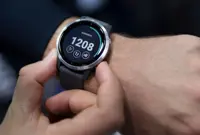
Smartwatch sales spurred by pandemic


Users want smartwatches to help reduce bad practices that may negatively affect their wellness in the long run. — AFP Relaxnews

Smartwatches are increasingly becoming popular as they offer more health monitoring features, even in basic models.

US tech research firm Counterpoint released a report titled Global Smartwatch Model Tracker which reported that wearables had seen a 27% increase in global shipments in the second quarter of this year, compared to the same period last year.

Its senior analyst Sujeong Lim said the Covid-19 pandemic has pushed consumers towards being more health-conscious, making them seek out features such as oxygen saturation (SpO2) and heart rate monitoring, especially in devices in the sub-US$100 (RM415) segment.

“Looking at the success of Apple Watch, more OEMs have entered the smartwatch market with a relatively less advanced operating system (OS) but comparable fitness and health-related features, and stylish designs at affordable prices targeting hundreds of millions of potential users globally,” said Lim.

She said demand had trickled down to the affordable smartwatch segment, which grew a massive 547% annually, highlighting its mass-market reach worldwide.

These budget smartwatches were particularly important in high growth markets like India, where customers snapped up affordable but feature-rich smartwatches from Chinese brands.

Analytics firm Research and Markets reported a similar trend in its “Smartwatch Market As Per Products, Application, Operating System And Geography Global Forecast”, attributing the sector’s growth to the evolution of technologies which drove people to be more health conscious.

It forecasted the sector to grow at a compound annual growth rate (CAGR) of 19.5% by 2026.

The firm reported that users wanted smartwatches to help keep a record of their daily activities and reduce bad practices that may negatively affect their wellness in the long run.

However, it warned that the lack of awareness about all of a smartwatches’ features was expected to restrict the market growth.

Entire ecosystems

In an earlier Counterpoint report from May, the firm’s vice president (research) Neil Shah said wearable devices and services were going to become important for tech giants as they increasingly expand their reach in healthcare, pharmaceutical and insurance markets.

This can include offering services that cross-sell medicines and healthcare solutions, or attract marketers to their ad platforms based on the health profiles built with the enormous amount of data generated via the sensors on these wearable devices, he said.

Lim said the OS of the smartwatch also mattered, as users preferred devices that worked within a brand’s ecosystem.

“The smartwatch attach-rates for smartphones have been steadily rising. Apple’s ecosystem is seeing a greater attach-rate as the brand continues to bake in attractive designs, health features and related services around it,” she said.

Attach-rate is a metric for measuring the sale of a secondary product based on the success of a primary product.

For example, razor blades are often sold together with razors, and a smartwatch with the same brand of smartphone which assures better integration.

Lim said the Apple Watch crossed the 100 million user mark for the first time as of June, with the US continuing to be its main market, accounting for more than half the user base.

Its top competitors were Samsung and Garmin, which saw a shipment growth of 43% and 62% year-on-year, respectively.

Samsung’s sales, it said, were driven by models such as Galaxy Watch 3 and Watch Active 2 models.

Get 20% OFF The Star Digital Access

Monthly Plan

RM 13.90/month

RM 11.12/month

Billed as RM 11.12 for the 1st month, RM 13.90 thereafter.

Best Value

Annual Plan

RM 12.33/month

RM 9.87/month

Billed as RM 118.40 for the 1st year, RM 148 thereafter.

Follow us on our official WhatsApp channel for breaking news alerts and key updates!

Others Also Read