Local eSports industry adapts to new normal during pandemic


Though it’s possible to practise with teammates via online matches, most trainers feel coaching is best done face to face. — AFP

As online play helps eSports chart a path forward through the pandemic, pushing tournaments and fans into the virtual realm, the industry weighs in on where the offline aspect fits in and what this holds for its future.

Esports Darul Khusus Club (ESDK) talent scout Ashraf Abdul Hadi said the mushrooming online tournaments were attracting fresh, young talent who had never joined serious competitions before.

He added that while returning professional players still made up a majority of participants, he now saw that upwards of a fifth of participants were new players.

“Competitive gaming has become more attractive for younger players. People who previously wouldn’t dare are now trying out and some are surprisingly good,” he said.

Ashraf explained that online tournaments lowered the barrier of entry for newbies, removing travel and accommodation costs so that a loss in a game didn’t translate to a monetary loss too.

He noted that while the prize pools weren’t as large as major offline tournaments, the sheer volume of online tournaments meant teams had more chances to win something.

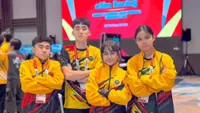
ESDK’s team Reviens were formed just in August, picked out of players talent scouted at various solo tournaments. — Esports Darul Khusus Club

The fresh talent hasn’t gone unacknowledged either, with ESDK running talent scouting since July and now having nine teams under their wing – all chosen from participants of solo tournaments.

Like the ESDK teams formed during MCO, Ezzy eSports manager Muhamad Fadhil Hishamuddin said his teams had the unfortunate timing of coming together right in February and March, just as pandemic lockdown measures were going into full swing.

“We had approached the players and been planning to form a team earlier, but ended up starting at the same time as MCO and were forced to do only online tournaments,” he said.

Asked if the shift online impacted his teams’ careers, he replied that without the offline spectacle of podiums and meeting fans, it was harder to get viewers’ and sponsors’ attention for a new team.

Two teams under Ezzy eSports, including its Mobile Legends squad, formed just as the MCO started, have been competing entirely online. — Ezzy eSports

“I thought eSports would die without offline play, but many new opportunities did come up online,” he said.

A new direction

A report by eSports brand Fnatic in April stated that between Jan and May 31.6% of major eSports events went online, while 23.5% were cancelled and 44.9% postponed.

“Even if the bulk of spectators are viewing online, closing the doors of a major eSports event wasn’t a step to take lightly. As well as a platform to sell merchandise and activate the eSports community, live eSports events offer an opportunity for sponsors to speak directly to fans, and for teams to showcase the passion of their communities to those sponsors,” the report found.

Speaking about online contests, Muhamad Fadhil commended the Youth and Sports Ministry’s efforts to host tournaments with no entry fees that still paid out prize money, giving new teams a chance to earn and raise their profiles.

The ministry organised a number of online events with the Malaysia Electronic Sport Federation (MESF) during MCO, including the MyStay@HomeChallenge 1.0 and 2.0.

“The response was overwhelming. Registrations were full all across the country for every game title,” said MESF communications director Muhammad Farouq Abdul Patah.

It was reported that over 16,000 gamers signed up for the MyStay@HomeChallenge 1.0, back in April.

Muhammad Farouq said the number of local gamers increased over the MCO period, which contributed to the birth of more competitive eSports athletes in Malaysia.

At the recent announcement of the Ministry’s agency Esports Integrated (ESI), Youth and Sports Minister Datuk Seri Reezal Merican Naina Merican said that though traditional sports like football would have to be postponed, eSports could continue on, online and in adherence to social distancing.

Reezal engaging with eSports enthusiasts. — LIM TEIK HUAT/The Star

More recently, the ministry hosted the Esports Integrated Challenge: Merdeka Edition PlayerUnknown’s Battlegrounds (PUBG) tournament on Aug 31, offering RM5,000 in prizes.

He said such events organised by the ministry had been well received, while more were in the works in collaboration with ESI.

In real life

Though eSports’ popularity had surged online, ESDK’s Ashraf said there were parts of the game that still needed an offline element, especially coaching teams.

He favoured a classroom setting for coaching on competition trends and techniques as well as bringing players out of their comfort zones.

“I feel purely online training is no better than scrims,” he said. A scrim, short for scrimmage, is slang for practice matches that are not competitively ranked and do not affect a team’s professional standing.

Wulf eSports CEO Kevin Wong Yew Joon pointed out that while online training had its weaknesses, there were now many tools like digital meeting rooms and live chat services like Discord, which made it easier to do remote coaching.

“The biggest hurdle with going online was the practices. MCO restrictions meant teammates cannot be side by side when brainstorming and studying opponents,” he said.

Kevin, who also manages the Yoodo Gank eSports team, said professional athletes had to be committed to sticking with their coaching schedules and would reserve meetings to train for crunch time right before big tournaments.

Aiman Amirul, who goes by ManParang, said offline group training was essential to give the team an edge. — Yoodo

Yoodo Gank captain for its PUBG division, Aiman Amirul Mohd Sahid said while day to day gaming was work-from-home for him even before MCO, the team preferred to meet up to train.

“It does have a big impact, being able to communicate in person,” he said, crediting it with the team’s success at the recent PUBG Mobile Pro League Malaysia-Singapore grand final, where they placed second behind fellow Malaysians Team Secret.

Competitor and Team Secret Malaysia member Raymond Tan Boon Sheng, 25, said he did miss bootcamps, which he felt had a better environment.

“At the beginning of MCO, when we couldn’t travel between states, bootcamps were not an option,” he said, adding that his team were scattered in different locations: two in Melaka, one in Kuala Lumpur and one in Thailand.

Tan, who lives with his family in Melaka, travels to KL to play major tournaments with his team in person. — Maxis

He said offline training helped the team bond and learn about each others’ play-styles. It was also important to point out each others’ mistakes, as it was hard to notice one’s own errors.

Asked if they only spent time together professionally, Tan replied that the team were also friends and made it a point to hang out in their free time when they met up for tournaments.

Market research firm Niko, in a report for Google released in September, found that 60% of South-East Asian gamers prefer to play with friends, with many of the region’s top-grossing titles featuring social elements and team-based gameplay.

Tan’s teammate Asyam Allam Hafiz Syayuti said he missed postgame discussions, which were often done casually at a nearby eatery like a “lepak” session.

Before moving to KL, he said the team used to book an Airbnb for crunch time training.

“The timing online is also more difficult. There’s sometimes distractions and things to do at home, which get in the way of setting aside time for work,” he said.

Tan said though he lived with family, including two younger sisters and a brother who could get noisy at times, his family gave him space and quiet to work.

“Once I started playing professionally, my family gave their full support and accepted that it’s a job and I’m working from home,” he said.

Livestreaming lifeline

Yoodo Gank’s Kevin pointed out that a major component of eSports athletes’ job could still be done online without issue, referring to livestreaming, where players broadcast their matches to fans on services like Twitch and Facebook Gaming.

He said gaming entertainment saw a big viewership increase during MCO and many players’ popularity grew alongside too, with a captive audience at home following eSports athletes via online tournaments and social media.

The Niko report stated that in April 2020, the grand finale for Indonesia’s Mobile Legends Premier League (MPL) Season 5 peaked at 1.1 million concurrent views, while Indonesian streamer Jess No Limit became the first Asian YouTube game streamer to reach 15 million subscribers.

In Malaysia, streamer Maharaja Soloz – real name Mohd Faris Zakaria – reached more than 1.2 million subscribers on Facebook Gaming, the highest for a game streamer locally.

Kevin said as some gamers started to work from home without access to production equipment in their offices, there was a need for infrastructure work to install faster, more stable Internet and high-quality recording equipment.

“As players realised viewership was a big deal, they upped their game, from the time commitment to investing in cameras and recording equipment,” he said.

Asked if this edged out new faces without sponsorship, he admitted that a professional setup could cost a fair amount, though it was still possible to stream in decent quality even with a lower investment.

Natasha Hashim, who goes by the handle TashBunny, got back into streaming during MCO after finding she had extra time on her hands. — Natasha Hashim

Streamer Natasha Hashim, who goes by the handle TashBunny, said she got back into streaming during MCO after taking a break last year.

“Streaming growth during MCO was huge, I saw a lot of new fans and even some old fans returning,” said the streamer, who broadcasts lifestyle content as well as eSports matches for multiplayer online battle arena PC game League Of Legends and its updated version for mobile, League Of Legends: Wild Drift.

Natasha added that in addition to local viewers, she saw a lot of traffic from other countries affected by lockdown measures, especially the Philippines and the United States.

She streamed three to four hours a day for up to four days a week, something she admitted was a big commitment for someone who still had a full time job, though she had more free time when MCO started.

Asked if the viewership was as high now the recovery movement control order (RMCO) was in effect, she said there was a slight drop, though the momentum of followers built before that meant streamers were getting more attention than ever.

Love the player, and the game

Geek Fam manager Wong Kok Wheng said to compensate for fewer in-person meetings with fans, players were doing more online interviews, while managers also had to ensure their online presence was kept up.

“When they stream online, it gives them continuous contact with fans. They’re probably more in touch now than before, when there was downtime while travelling for tournaments,” Kok Wheng reasoned.

Geek Fam player for the Mobile Legends Bang Bang division, Nik Aqieff Nik Muhd Muhyyiddin said streaming did lack the hype of offline tournaments where people cheered their support.

“It’s not the same kind of pressure online, which is a benefit for players who have stage fright. Eventually if we do go back offline, players need to get used to the stage, being cheered or booed at,” he said.

Kevin, who was an eSports athlete himself nearly two decades ago, said online gaming on this scale wouldn’t even have been an option with the infrastructure limitations then.

“No one wished for this situation, but through the technology now, online eSports has helped us keep in touch and stay sane during this pandemic,” he said.

Get 20% OFF The Star Digital Access

Monthly Plan

RM 13.90/month

RM 11.12/month

Billed as RM 11.12 for the 1st month, RM 13.90 thereafter.

Best Value

Annual Plan

RM 12.33/month

RM 9.87/month

Billed as RM 118.40 for the 1st year, RM 148 thereafter.

Follow us on our official WhatsApp channel for breaking news alerts and key updates!

Others Also Read