As making money with drone photography gets tougher, pilots are flying into new uncharted territories.
What goes up must come down. This rule applies to both flying drones, and now unfortunately, to making a buck off them.
With more affordable models entering the mass market, any enthusiast with a few thousand ringgit to spare can try his hand at aerial photography.
While the lower barrier to entry may be good news for newbies, the increased competition is driving down remuneration.
As the commercial aerial photography market becomes saturated, some entrepreneurial drone operators have found other fields in which to ply their skills, says Drone Cult co-founder Siddiq Rafee Ramli.
Drone Cult has a history of stumbling into opportunity. Initially Siddiq and his fellow founders Amir Hamzah Abdul Halim and Abdullah Azzam Jamal bought a DJI Phantom 3 drone to film themselves.
They uploaded their first video of them hiking up Bukit Tabur on the outskirts of Kuala Lumpur to YouTube and it went viral and landed them a wave of job offers.
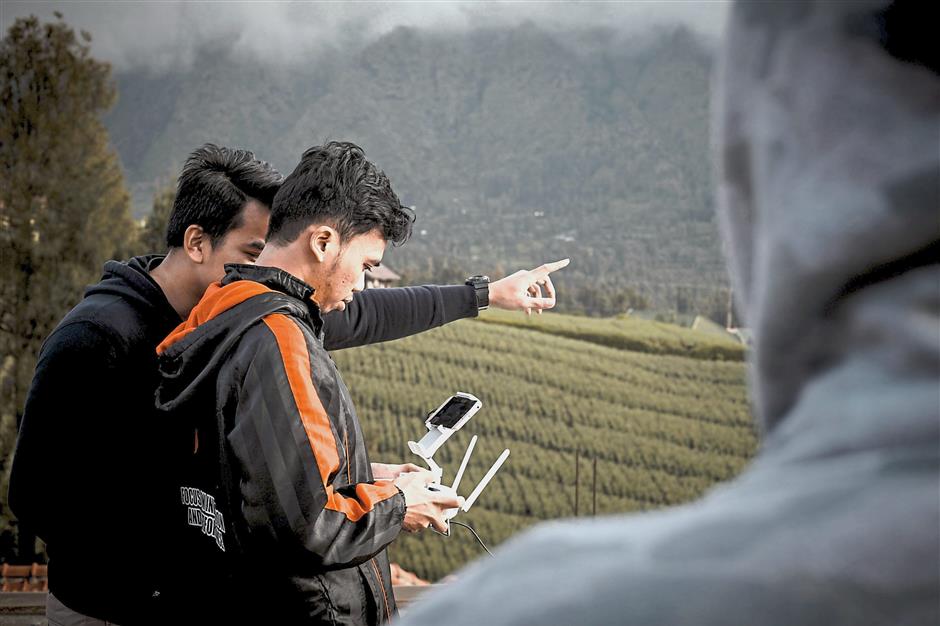
The duo then set up a company in 2015 as there were plenty of job opportunities that paid anything from RM5,000 to RM10,000 for a day’s work.
Nowadays, a similar job pays between RM4,000 to RM8,000 a day but the competition is much more intense so landing a job is the tricky part.
He says this is similar to what photographers faced when cameras became more common with the advent of affordable digital “prosumer” models.
“When we started, we only did general aerial photography and videos. But after a while, companies started to approach us to do mapping and land surveys,” says Siddiq.
However, the barrier to entry is higher because you will have to invest in extra batteries to cover larger areas and software to automate the flight.
The Phantom 4 Pro, for instance, can only fly for about 20 minutes before the battery needs a recharge which can take about an hour. The solution? More batteries – the team has 10 batteries, each costing around RM800.
“It’s easier than creative work, but takes lots of planning because the drone has to be on autopilot so you have to make sure the flight path is clear of obstacles,” he says, adding that even though it’s a one-day job, the team will most likely have to recce the place several times before the actual flight.
Also it usually takes about two weeks to get permits from the Department of Survey and Mapping Malaysia (Jupem) and the Civil Aviation Authority of Malaysia (CAAM).
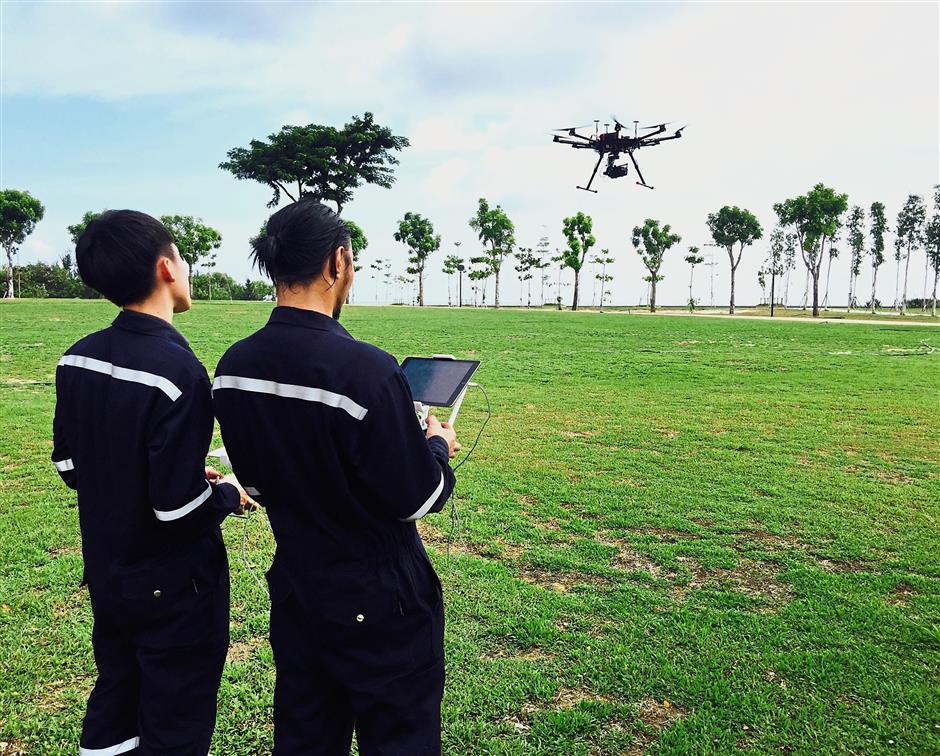
With extra effort comes better pay as even low-end mapping jobs pay better than producing one-off videos.
That said, the Drone Cult team still enjoys making videos and has found a better way to get more mileage – it now shoots stock footages which can be sold to multiple clients.
For Avetics operations director for Malaysia Jimmy Chung, serving clients in the oil and gas industry means answering to much more stringent regulations.
Firstly, its pilots have to undergo a programme done in collaboration with Curtin University in Sarawak and Universiti Teknologi Malaysia in Kuala Lumpur, and vetted by CAAM.
And its custom Ursa Octodrone needs to have multiple redundancies for propulsion, GPS and IMU (inertial measurement unit) so even if the rotors or proximity sensors fail, the drone won’t be compromised.
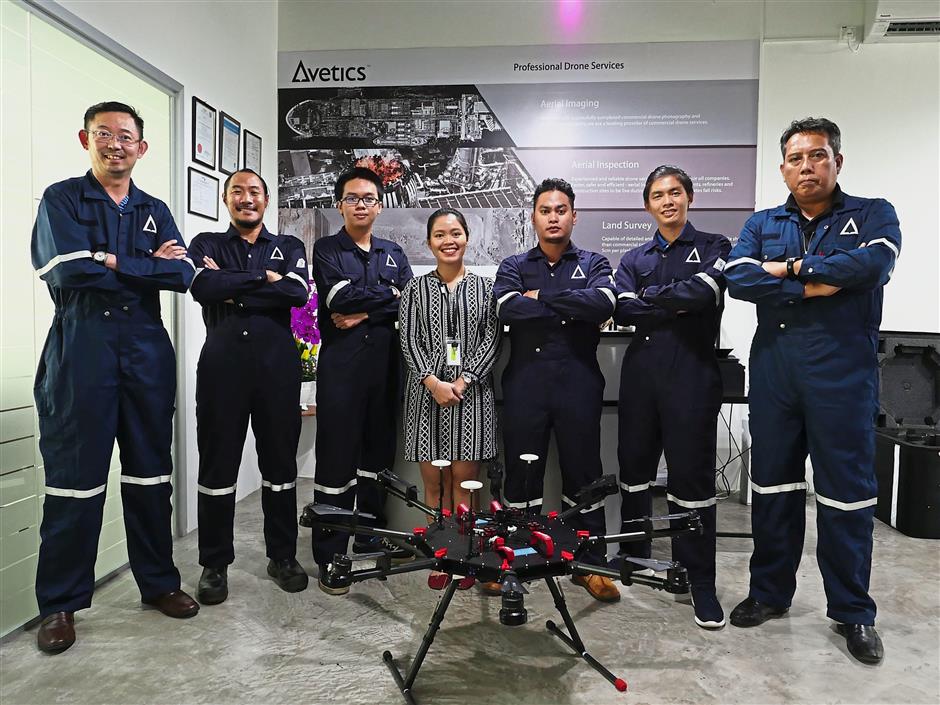
The Ursa Octocopter, which looks like a large black spider, is also stable enough to withstand wind speeds of up to 15m/s (metres per second).
It also has to be heat resistant because it’s used to inspect flare stacks – exhausts that burn off unusable waste gas – which are extremely hot.
In the past the inspection was carried out by engineers but the flare stack had to be turned off so scaffolding can be built but this could take up to a week and cost the O&G company millions of ringgit as work will come to a halt.
In comparison, Avetics could inspect the flare stacks in just a few hours without any extra setup.
To avoid being melted, the drone has to maintain a distance of 15m and still needs to withstand up to 70Cº.
“To test the drone, we put it in an oven for over three hours at that temperature. It didn’t melt,” Chung jokes.
However, scaffolding is still required if repairs are needed. “But drones can make a first pass to identify exactly where repairs are required,” he says.
Avetics also uses a custom program – ExMaps – to manage the images captured by the drones because they tend to look the same.
“Easy to capture, hard to manage because oil rigs all look the same,” says Chung.
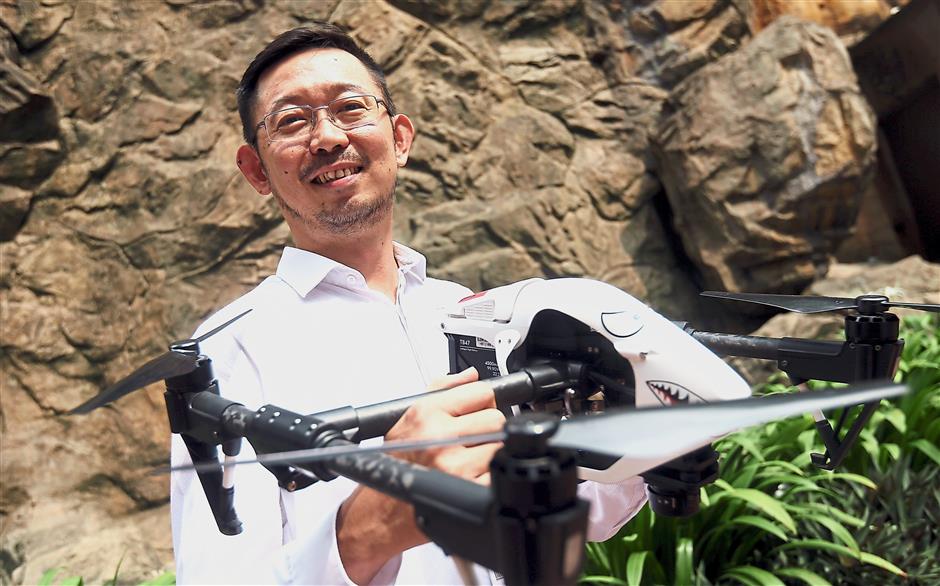
By using GPS coordinates, pilots can tell where the image was taken and can program the drone to do a follow up inspection at the exact spot.
As drone technology continues to advance, commercial clients will demand increasingly specialised technology and pilots, he adds.
While mass produced drones may cut it for basic aerial photography, you’ll need a much more expensive drone if you wish to operate in a niche market.
For instance, Avetics’ custom drone costs around RM100,000 a unit – in comparison the Phantom 4 Pro used by Drone Cult retails for RM6,780.
The market is evolving fast even if we are at infant stage. Demand for drones is increasing in the O&G industry, and telcos and others are exploring it too, says Chung.
For example, drones are becoming invaluable in the heartland of Sarawak where it’s hard to deploy skylifts to inspect power lines as some areas lack roads.
Already a subscriber? Log in
Get 20% OFF The Star Digital Access
Cancel anytime. Ad-free. Unlimited access with perks.