
Will being connected allow our privacy to be breached and give rise to security issues?
Most automakers approach the autonomous vehicle from a strictly manufacturing standpoint. Ford, however, also recognises that autonomous vehicles raise a different set of concerns for the public, such as the issue of data privacy in the age of the Internet of Things (IoT), where the car is quickly becoming another connected Thing.
To answer these questions, the company has collaborated with a number of Silicon Valley heavyweights such as HP, SAP and startups like Carbon3D.
Data privacy
What happens if you’re uncomfortable with the thought of someone somewhere knowing where you went in your connected or autonomous car and when? Jaap Suermondt, HP Labs analytics lab vice-president and director, knows how you feel.
“There was a lot of talk about IoT in CES. The first reaction was ‘Wow that’s really cool, look at the cool stuff.’ The second reaction was, ‘I’m not sure I like the fact that you know that I had McDonald’s and parked my car for eight days, that’s kinda scary.’ That’s kinda creepy,” he agreed.
To him, the question to ask is not whether one can opt out entirely of the analytic process but whether one can engineer the IoT process so that you get the full benefit of all the analytics without the risk of exposing any identifying features in user data.
“For example, we can know that 8% of cars are in a parking lot on a cold winter morning without knowing that your car sat there last Monday morning. So we’re gonna protect the raw data, your privacy is protected, but we still get the benefits of the conclusions or the reasonings across all this,” Suermondt said.
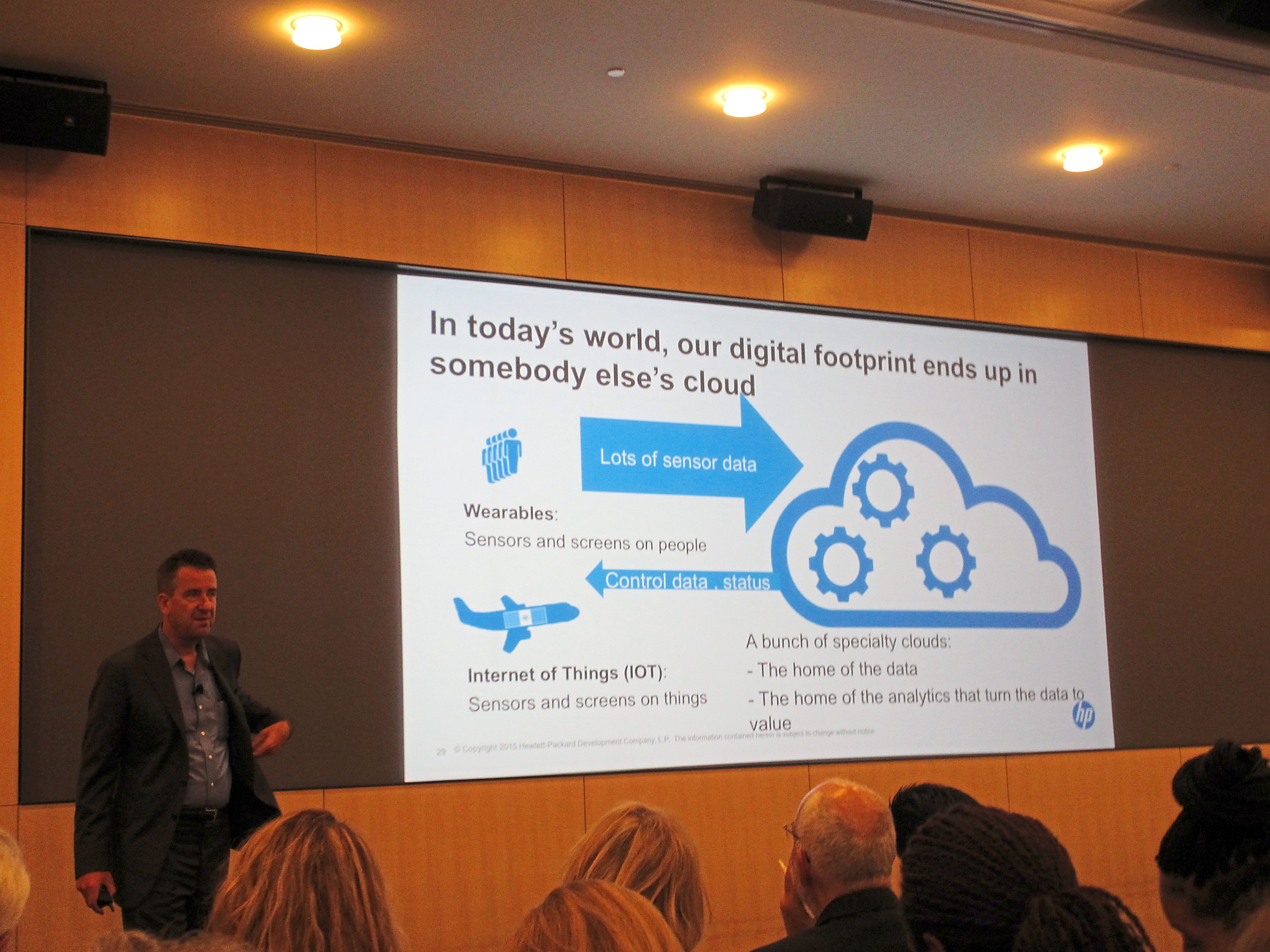
He then went on to use the example of the fitness tracker, where basically anyone who wears one has to resign themselves to the fact that the wearables send lots of data into the Cloud.
“You keep your fingers crossed and you hope that they’re being good to your data. You keep your fingers crossed that the company that sold you the fitness tracker doesn’t get acquired by another company that then gets acquired by another company that then sells your data to your health insurance provider, which is the monetisation mechanism,” he said.
Suermondt acknowledged that with the current state of IoT right now “there’s a reason, yes” you should be a little bit worried about your data privacy.
But all is not lost – HP believes there is a way to “flip the Cloud” so that raw data truly is protected by engineering. The answer lies in Distributed Mesh Computing.
“Think of this in the automotive setting, where you can have sensors on cars and they can communicate directly with each other, to a conclusion. Like if they detect that the wheels are slipping, if enough vehicles get that at a certain location, then you can conclude it’s slippery (at that stretch of road),” he said, adding that these sensors can placed anywhere on the car – on the wheel, on the edge of the bumper, even on the road – and all these different types of sensors form a mesh where the analytics happen in a completely distributed way.
“What’s unique about this is none of the data goes into the Cloud. So if you use today the popular phone-based mapping system, the price you pay for seeing whether a highway is red or green or orange is that your trip is now recorded in the Cloud. With this system we can get that stuff locally, without actually having to upload the raw trip data,” Suermondt claimed.
Connected cars
Ever wished your car could talk to the parking garage to automatically pay for parking without your having to fuss with parking tickets, locating autopay machines or worrying about the balance on your Touch ‘N Go card?
How about the convenience of being able to pump petrol into your car without having to worry about potentially cloned credit cards or carrying large amounts of cash, especially at night?
Or how about when you felt peckish on the drive home but didn’t want to face long queues at drive through fast food joints?
SAP has thought about all that and come up with a solution for your every driving need.
The SAP Connected Vehicles package delivers seamless and integrated vehicle-centric services to enable folks on the move to find the best parking spot and pay for it without leaving the car, locate the optimal gas station, fill the tank, and grab their favourite drink quickly and conveniently – all without ever having to leave the car (disclaimer: petrol stations are self-service in Malaysia but not necessarily in Europe, where it will soon be rolled out). You can watch a video on it at goo.gl/KQqTmb.
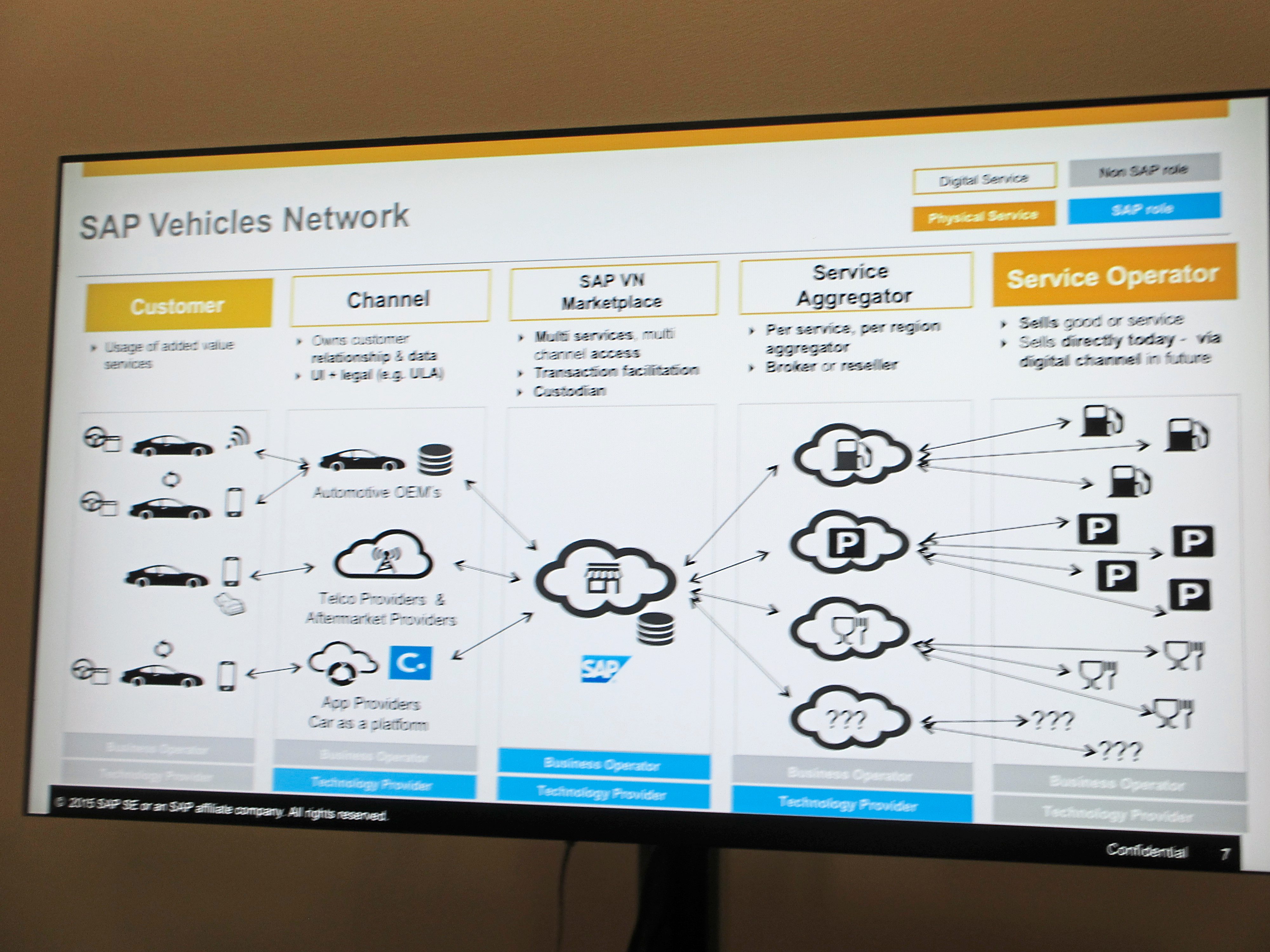
SAP’s Global Technical Lead Connected Vehicles products & innovation development vice-president Timo Stelzer believes connected services remain a largely untapped area.
“Every year, around US$577bil (RM2.17tril) is spent by consumers in the United States on fuelling, fast food drive through, and parking – all activities involving a car. The automotive industry is currently not part of this market. It has yet to figure out how to monetise connected services,” he said.
To that end, SAP is building a business model where automotive companies can participate in these transactions, thus enabling them to monetise connected services.
“We already work with oil and gas companies, carmakers, and other related industries, and can bring them together in a business network,” said Stelzer.
SAP foresees that this will be the next major trend and that automotive companies, including Ford, will want to get into the connected services business.
“This will open a large market for them and build an ongoing relationship with the consumer beyond the sale of the car,” he added.
SAP will launch its Connected Vehicle Business Network toward the end of summer 2015, including connected parking, fueling, and food/QSR, in the United States and Europe to start.
Printing parts
But Further with Ford wasn’t just about showcasing the thus far hypothetical research and development sectors. Since December 2014, Ford has also committed to concrete collaborations with startups like Redwood City-based Carbon3D.
It developed the Clip (Continuous Liquid Interface Production) technology – a 3D printing technology that grows parts from UV curable resins at speeds as much as 25 to 100 times faster than conventional 3D printing processes.
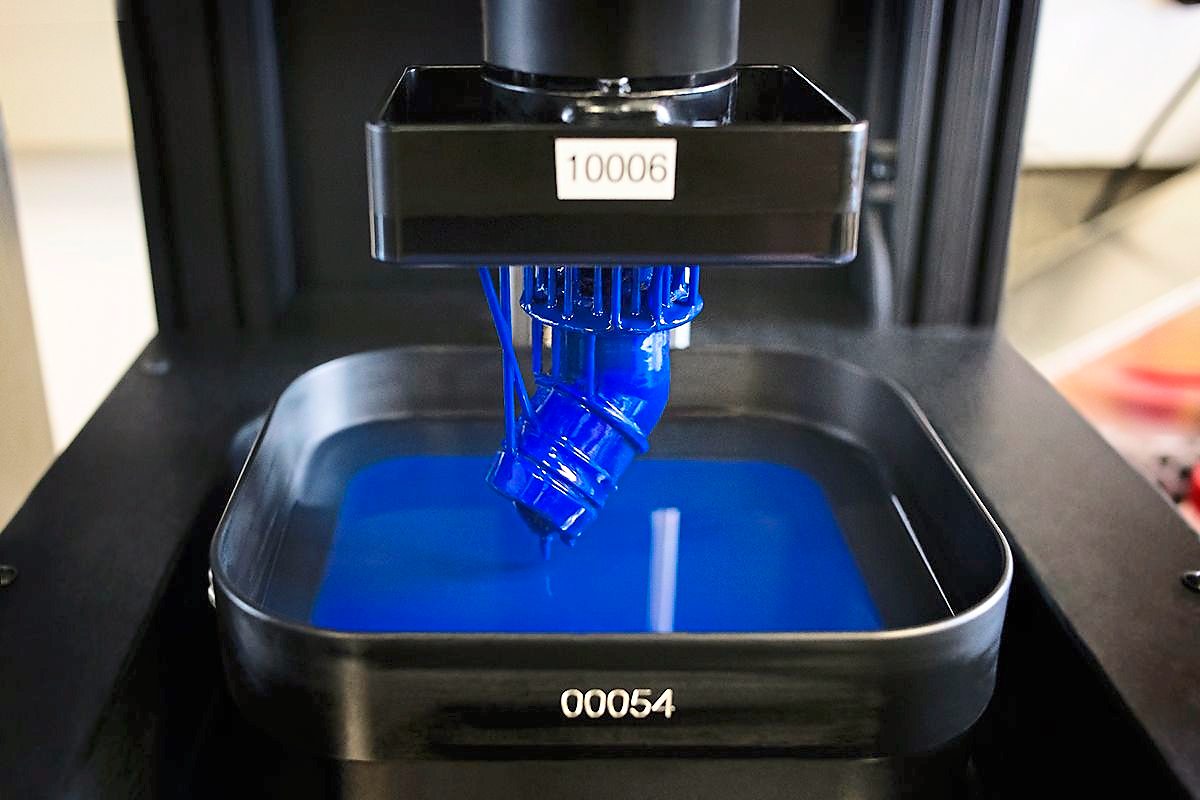
The resulting parts boast mechanical properties that are applicable for a range of needs for Ford vehicles, including high-quality automotive-grade parts.
“Our ability to innovate depends on how quickly we can move from idea to production,” said Raj Nair, Ford group vice-president, global product development.
“This technology enables us to quickly create automotive-grade parts for product design prototypes – and perhaps even production parts – faster than ever before, so we can deliver new vehicles to customers even sooner.”
Carbon3D technology uses engineering resins able to damp vibrations, support loads or withstand high temperatures.
Using the technology, Ford produced elastomer grommets for the Ford Focus Electric and damping bumper parts for the Transit Connect.
Related story:
Driving into the future
Already a subscriber? Log in
Get 20% OFF The Star Digital Access
Cancel anytime. Ad-free. Unlimited access with perks.