
Self-driving cars may not be on the market just yet but they’re certainly on everyone’s minds this year.
Autonomous vehicles have been monopolising the headlines lately.
With the likes of Audi, Mercedes Benz, BMW and Toyota all showing off working prototypes, conducting successful tests of autonomous long distance drives, and whipping the media into a frenzy with sleek concept cars – like Mercedes’ radical F015 Luxury in Motion – at the Consumer Electronics Show (CES) in January this year, the natural expectation was that six months later, Ford was about to put pedal to the metal on its own autonomous vehicle.
While there may not have been an autonomous vehicle as such on display at the Further With Ford 2015 showcase in Silicon Valley, Ford has in fact been testing its own autonomous vehicle prototype – called the automated Ford Fusion Hybrid research vehicle – since 2013, and conducting various experiments around the globe to further research the intersection between technology and transportation.

According to the company, this autonomous technology is now one step closer to production, as the carmaker is ready to transition from its research stage to an advanced engineering programme.
“It’s a really exciting time for us. This means autonomous technology is absolutely possible and we’re well on our way to making that a reality,” said Ford Motor Company research and advanced engineering vice-president Ken Washington, who added that this was going to be a reality within the next five years.
What’s next
“The next question in this advanced engineering phase is what are the combinations of hardware and software tech that needs to be advanced and integrated, designed and tested to bring this to a product?” said Washington.
Simply put, he said the company thinks of autonomous technology as three increasingly capable levels of technology.
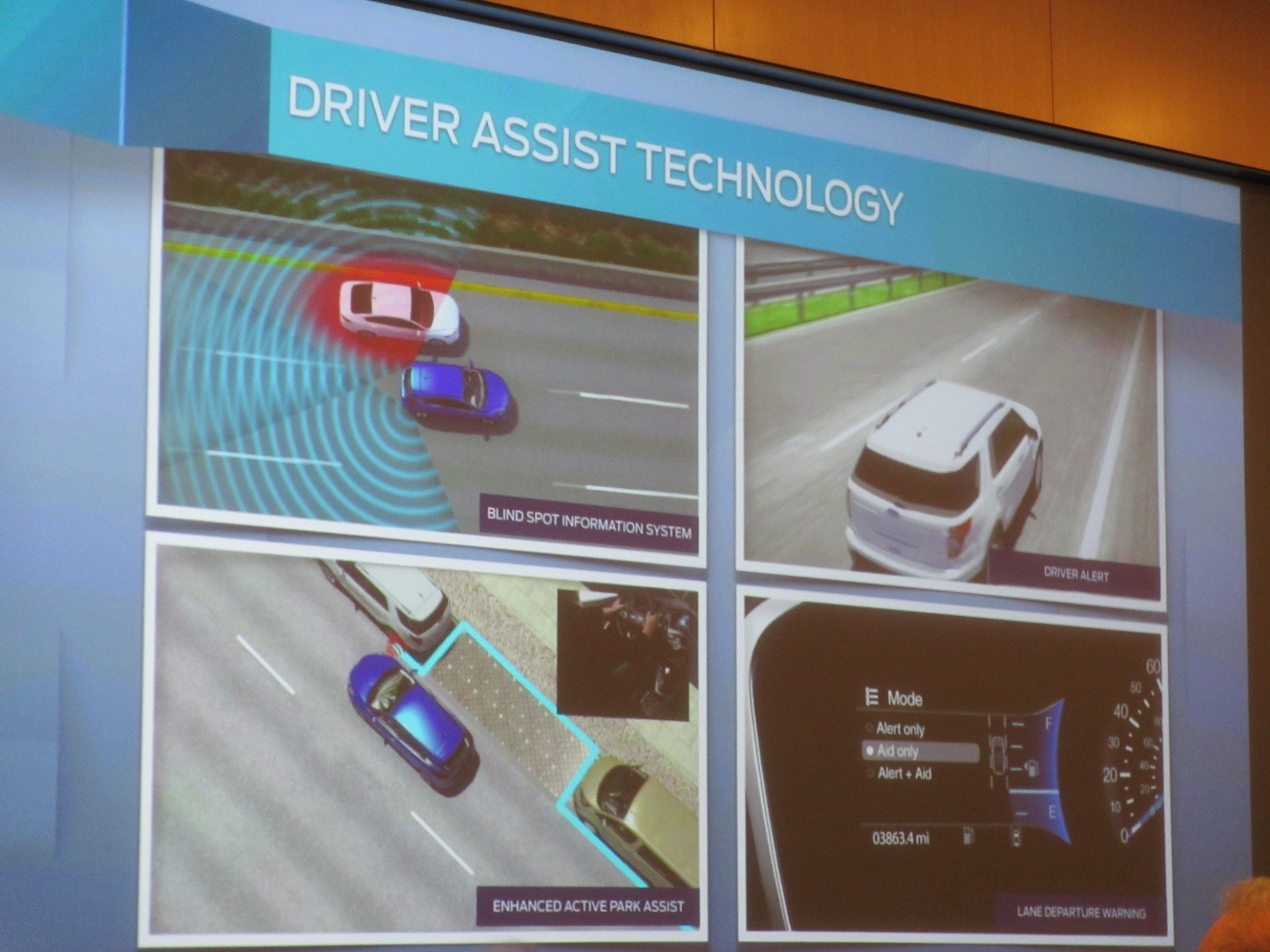
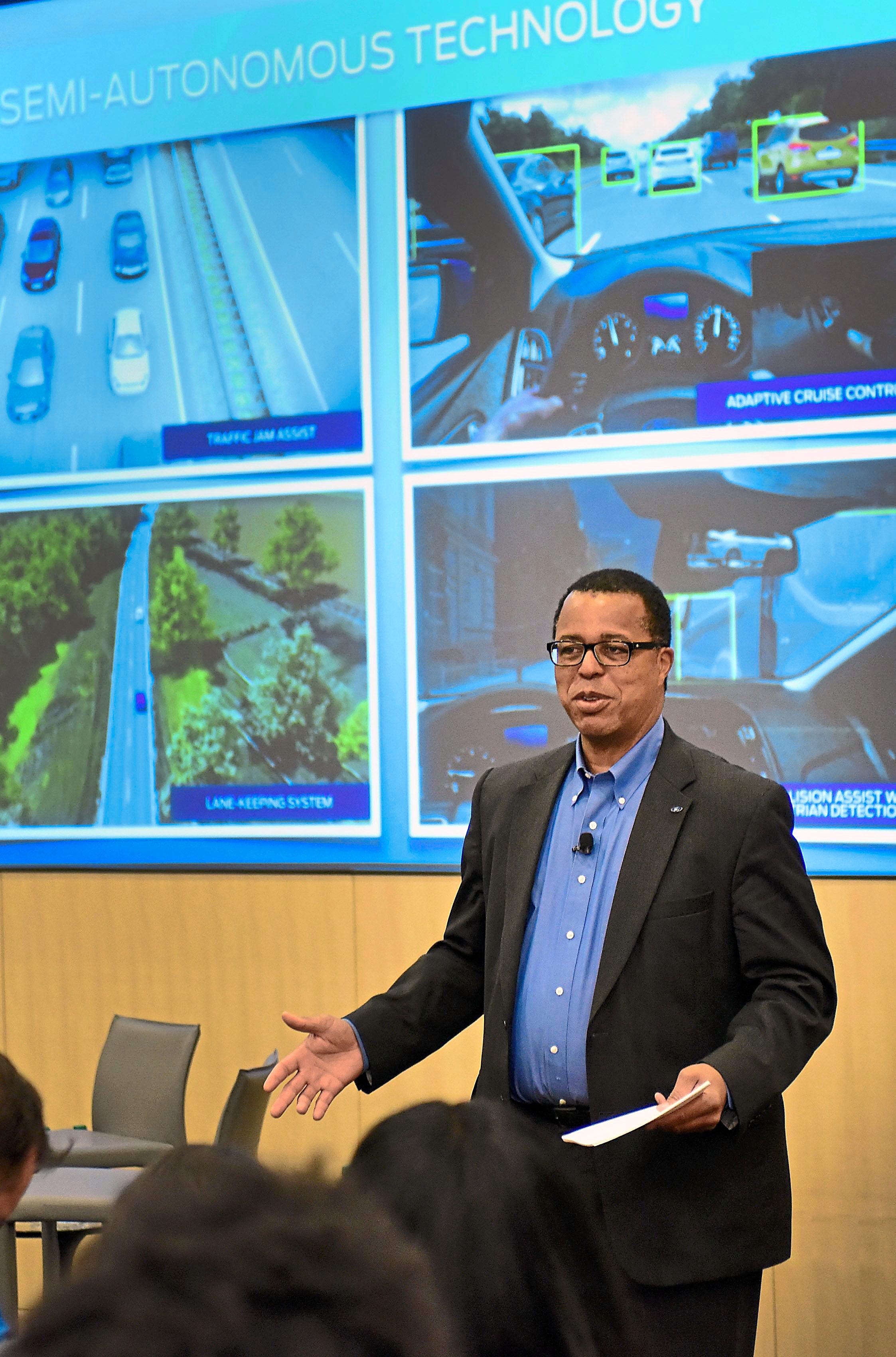
The first of these is Driver Assist-technology (including Blind Spot Info System, Lane Departure Warning, Forward Collision Warning, all of which provide audio and visual alerts), which then segues into the second level, Semi Autonomous technologies, in which the car progresses from merely providing alerts to directly assuming control of some aspects of steering, throttle or braking without driver input. The third and most advanced level would be fully autonomous tech, in which the car fully controls all three aspects of steering, throttle and braking without any driver input or supervision.
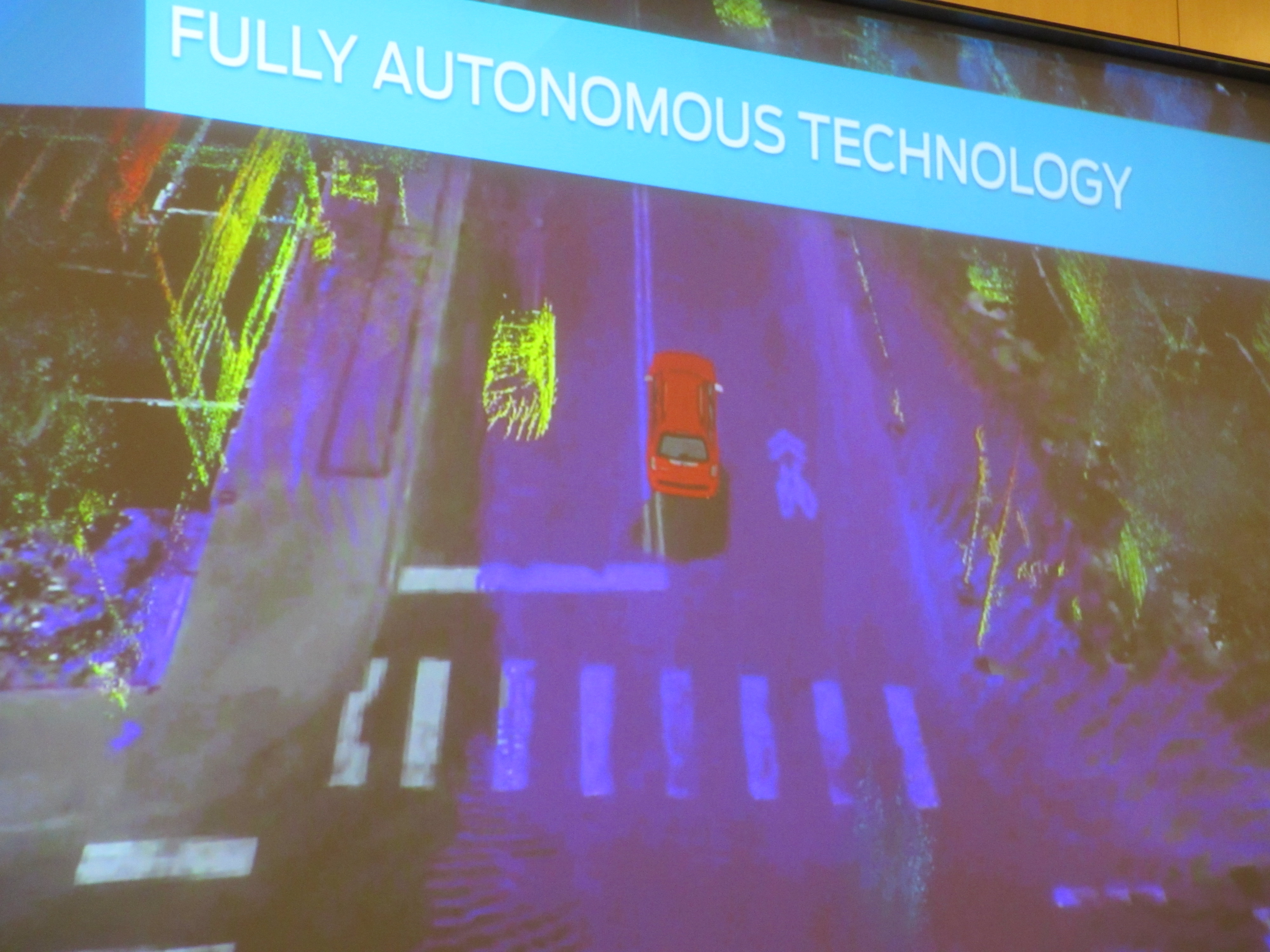
Essentially, Ford views fully autonomous technology as a progression from its existing semi-autonomous tech available in its vehicles today, but with the addition of four LiDAR (Light Detection and Ranging) sensors to generate a real-time 3D map of the surroundings which allows the car to sense objects around it and predict where other vehicles and pedestrians might move.
According to Washington, the next phase requires six ingredients for creating an autonomous vehicle, the first of which is a suite of sensor technologies on the vehicle.
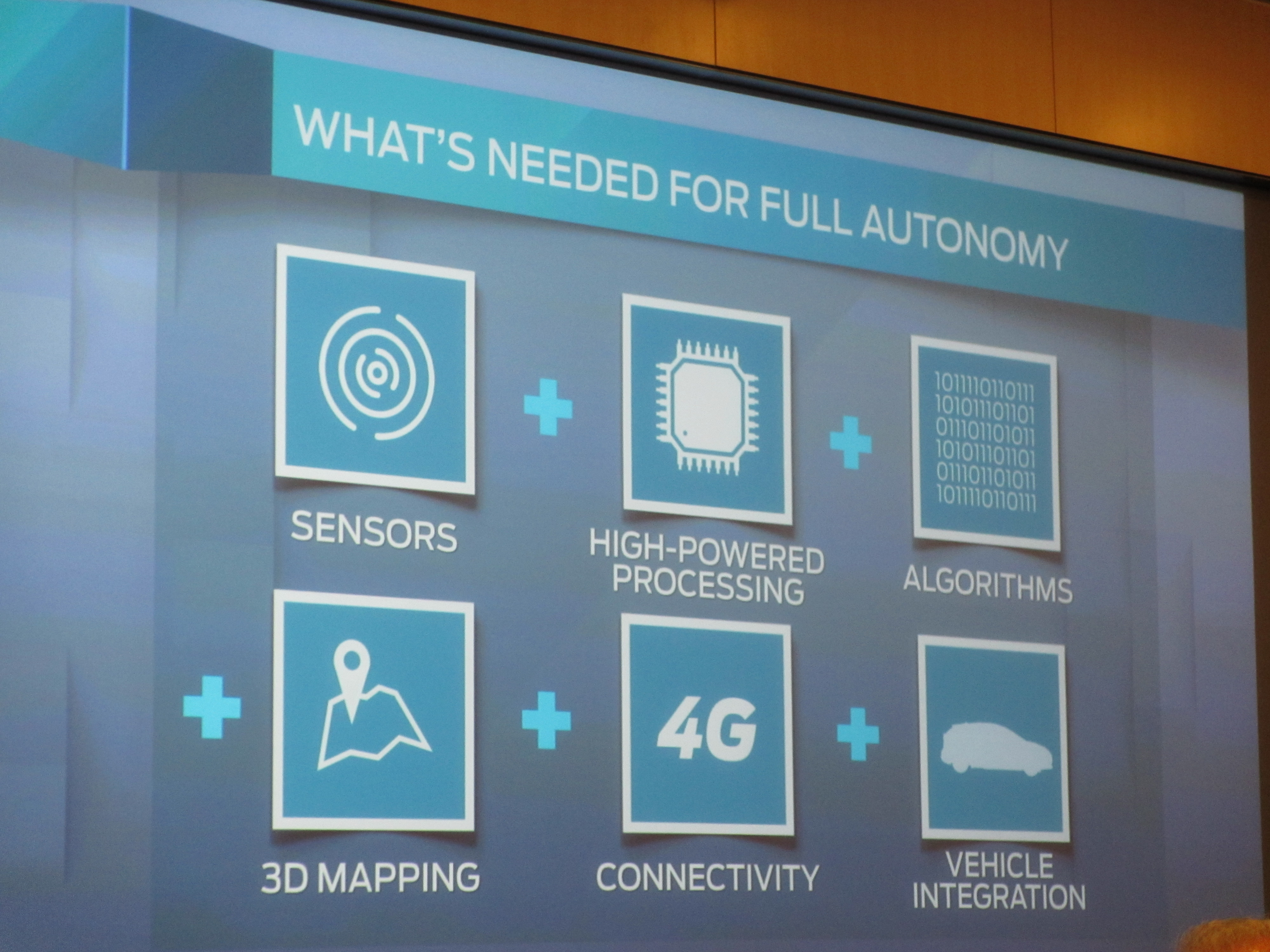
“We have cameras, we have radar, we have ultrasonic sensors, and we augment that with high resolution LiDAR sensors and they need to be affordable. That’s one of the challenges,” he said.
“Second, you need high performance computing capabilities to process the data, and it’s gotta be in the vehicle.
“Third, you need to have the algorithms and highly developed software to knit together the signals that are coming out of the sensors.
“Fourth, you need high resolution mapping and that’s gotta be also embedded on the vehicle so that it can be compared with what the vehicle senses in its environment.
“Fifth, all these things have to be wired together. You need high speed connectivity on the vehicle.
“And last but not least, all of these sensing technologies and algorithms have to connect to the vehicle itself to pull it all together so you can have autonomous technology navigating the vehicle safely,” he elaborated.
To show that it’s going all in the driverless car segment, the company has also announced the appointment of a director of autonomous vehicle development – 29-year Ford veteran Randy Visintainer – as well as created a global team to work on the advanced programme.
Even with all these factors in place, Ford believes that fully autonomous vehicles will only be possible within five years in “well-defined or geo-fenced areas in an environment that is optimal for sensor performance”, such as in “the correct weather conditions”.
“During the next five years, we will move to migrate driver-assist technologies across our product lineup to help make our roads safer and continue to increase automated driving capability,” said Raj Nair, Ford group vice-president, global product development.
However, Ford predicts that no discussion about autonomous vehicles is complete without one missing piece: the people that autonomous technology will impact.
Human factor
As the automotive industry transitions to a new era that will see wider availability of transportation-as-a-service, including automation such as self driving cars, Ford believes that it will profoundly affect the way that people interact with cars and transportation, and fundamentally shift the role of the passenger and the driver.
“We have to rethink the user experience when autonomous technology and vehicles become a reality and the vehicle ecosystem, because this will usher in a new class of mobility services.
“It’s gonna open up new services, such as autonomous ride sharing, autonomous package delivery, valet services – you can just imagine the new ways we can have vehicles and integrate them into our lives and our communities. This is all on top of redefining our daily commute and redefining how we take long trips and road trips,” said Washington.
The advent of autonomous cars also poses a fundamentally game-changing question for automakers: without a driver, who then will be the primary customer?
“Is it the driver? Or is it the rider? And what about these pedestrians that interact with our vehicles?” asked Washington.
Pedestrians are another potential point of contention for autonomous vehicles, which – advanced though they may be – are as yet incapable of reading the nuances of the human facial expression or body language.
Washington defines it as the reading of intent, where a driver can make eye contact with pedestrians, read their gestures or facial cues to predict what they intend to do next.
“How would an autonomous tech vehicle deal with and translate the intent of the pedestrian? Hey, was that someone waving for an emergency situation or am I just saying hi to my buddy?” he pointed out.
Connected car insurance
Another point of contention in the rise of the autonomous vehicle is the debate raging around who is to be held accountable when a collision occurs.
These thorny issues were one of the many addressed in Ford’s 25 global mobility experiments, with datadriven insurance coming to the forefront as a potential solution.
After creating driver profiles based on behaviour behind the wheel, Ford researchers concluded that people like receiving a score as it allowed them to track their progress and improve their driving, that the carrot works better than the stick as people don’t want to be told how to drive, but are more amenable to improving driving habits if they are rewarded for doing so.
This data was then shared with insurance providers and rental car companies for more personalised, potentially discounted rates – hence the incentive for drivers to clean up their act.
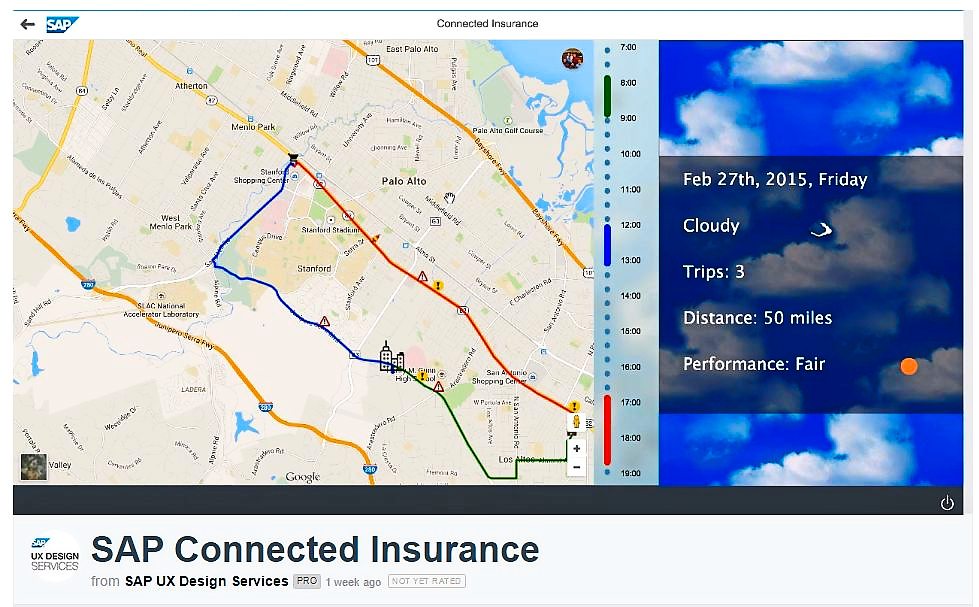
At SAP, the connected car insurance demo showed how sensors in the car can provide data on how fast a person drives, if they made hairpin turns or sudden brakes, as well as driving conditions.
Drivers can then use this information to get a better read on their driving risk and benchmark performance against other drivers, while insurers get better insight into drivers’ performance so they can more accurately calculate premiums.
How then would this scenario apply to autonomous vehicles?
In the case of autonomous vehicles, there’s no industry standard as yet “but there will most likely be a one-size-fits-all insurance policy with a flat rate payout in the event of collisions,” said Mark Lazarus, a development architect at SAP.
Some US insurance providers already have incentive schemes in place where they send a cheque every six months to reward good driving habits, somewhat similar to Malaysia’s NCB (no claim bonus) scheme. This is made more attractive by the fact that in the state of California, for now at least, it is illegal to penalise drivers for bad driving, meaning insurance providers cannot hike up insurance premiums if one’s data paints a less than favourable picture.
Moreover, the scheme is purely voluntary as participants must opt in to be tracked. “Additionally, if for whatever reason you plan on making a trip that you don’t want tracked, you can also turn off the tracking device,” said David Chambers, senior UI engineer at SAP Labs.
However, Chambers said that this was all still in development.
Going mobile
Ford also has been working to extend connectivity innovations to wearable technology, with an app extension for its existing MyFord Mobile app coming soon for smartwatches – including Android Wear.
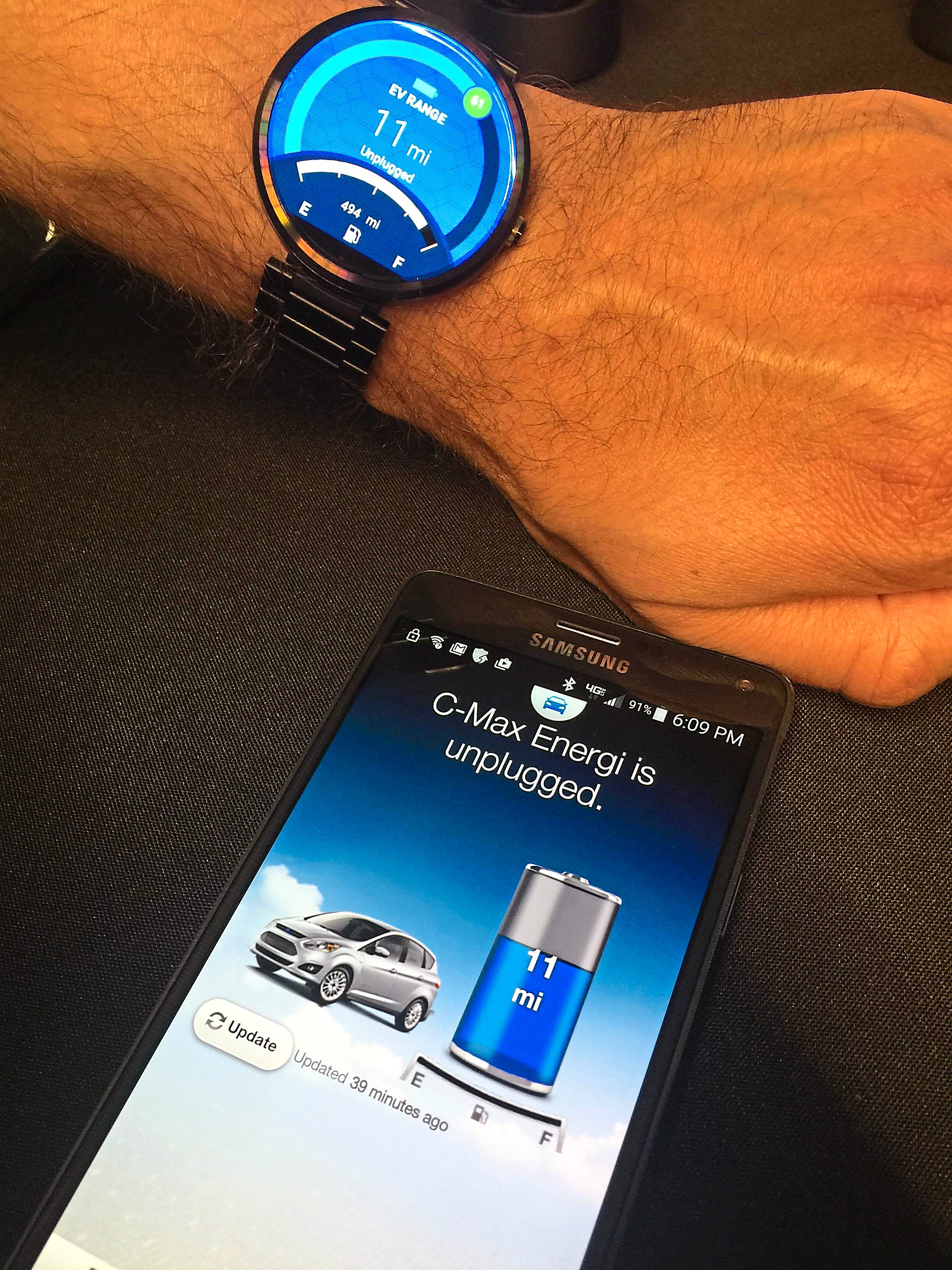
The MyFord Mobile application, already available for smartphones, will provide customers the ability to check the driving range and battery charge for its plug-in hybrid or electric vehicle quickly from their wrists before they leave on a trip, and to even find the location where they last parked.
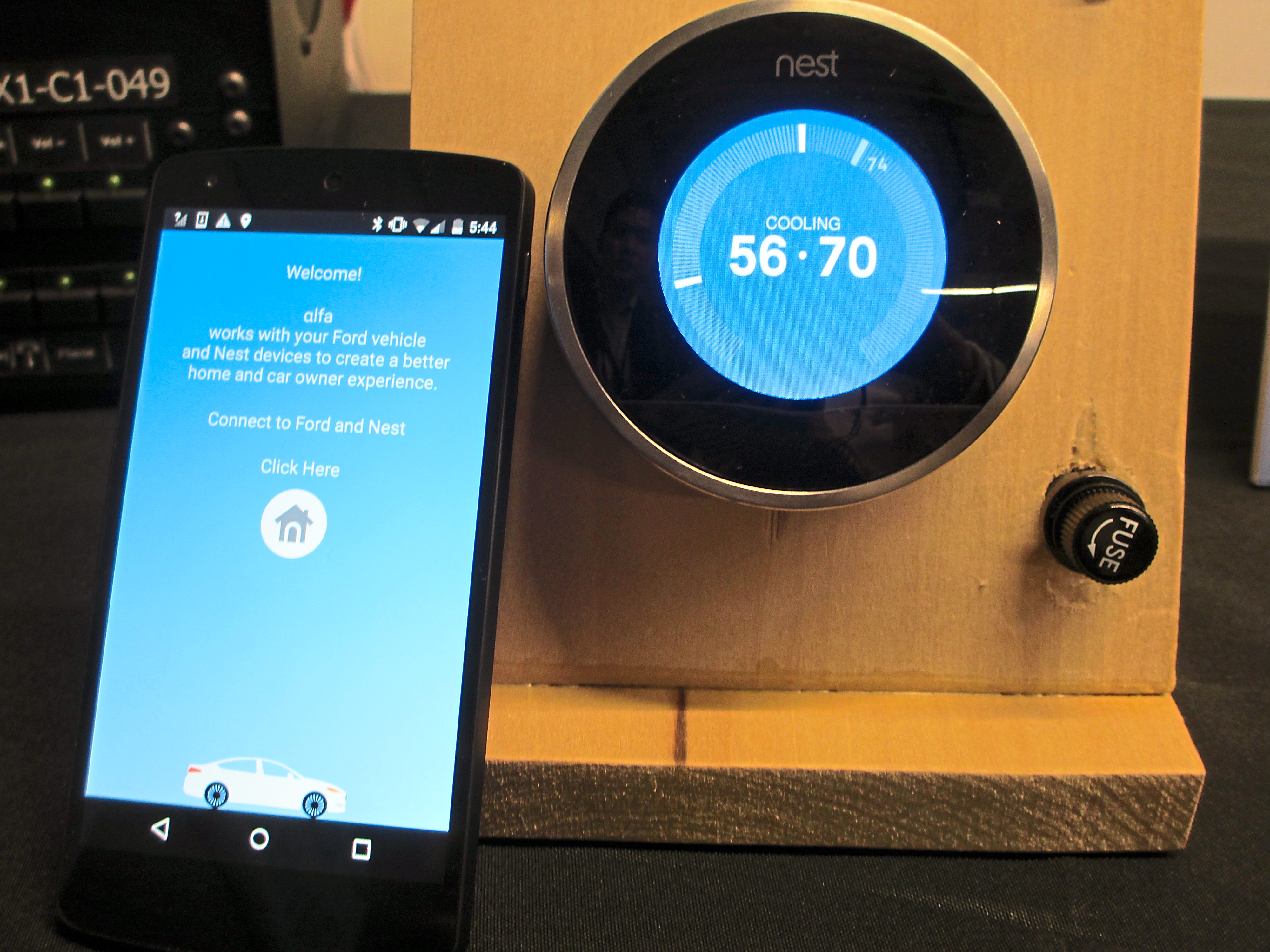
In addition, Ford is also working on connecting their cars to smart homes, for example the Nest Smart Learning Thermostat, so that your car can communicate with Nest to set the home temperature on your commute home.
Ford also recently announced its all-new Sync 3 communications and entertainment system that will debut in the United States on the 2016 Ford Escape, Fiesta, F-150, Mustang and Transit. Sync 3 is claimed to have faster performance, conversational voice recognition, intuitive smartphone-like touchscreen and easier-to-understand graphical interface. The first apps to launch with the new Sync 3 experience are Spotify, Pandora, Glympse, Accuweather and iHeartAuto.
Ford has also contributed its software components to the open-source community in the hopes that it will help in the creation of standardised solutions for integrating smartphone apps into vehicles. It says one of the car companies that is looking to take advantage of it is Toyota.
Bringing it home
By now you’re probably wondering: when can you expect to see one of these autonomous rides in Malaysia?
Alas, there are no plans to bring autonomous vehicles to this part of the world within the next two years.
“We do not have plans at this time for fully autonomous vehicles in Malaysia. However, Ford is already leading the way in Malaysia when it comes to offering vehicles that feature a number of semi-autonomous driver assistance technologies, including software and sensors that allow the vehicle to steer itself into parallel parking spaces, to adjust speed based on traffic flow, and apply the brakes to help avoid frontal collisions,” said Ford Motor Company Malaysia and Asia Pacific emerging markets managing director David Westerman.
However, Ford does have other plans in store for Malaysian consumers in the near future. “We will continue to expand our showroom in Malaysia this year by introducing even more global Ford vehicles, including the new Ranger pickup, the all-new Everest SUV and the iconic Mustang,” said Westerman, in what must be exciting news for muscle car lovers in the country.
As for the self-driving car arms race, in which other automakers have made significant headway with prototypes, increased automation in self-parking and smartphone-app remote control, Ford is confident they still have a place at the table.
“Our priority is not in making marketing claims or being in a race for the first autonomous car on the road. Our priority is to make the first Ford autonomous vehicles accessible to everyone and truly enhance our customers’ lives,” said Westerman.
Related story:
Partnering with Silicon Valley
Already a subscriber? Log in
Get 20% OFF The Star Digital Access
Cancel anytime. Ad-free. Unlimited access with perks.