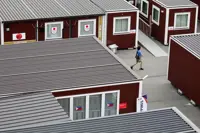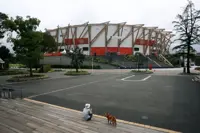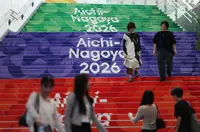
NAGOYA: The Olympic Council of Asia are attempting to quell complaints about lodging for athletes and officials at the Asian Games, which includes the use of converted wooden containers.
The OCA said on Friday that all “17,000-plus athletes and officials” that registered by the entry deadline in July have been provided “games-appropriate accommodation.”
The games open officially today and run through Oct 4 in and around the central city of Nagoya, and feature at least 11,000 athletes, more than the Summer Olympics. They showcase 43 sports and 45 countries and regions.
Japanese officials decided against building a dedicated athletes villages and opted for accommodations on a cruise ship, in hotel rooms and in temporary wood containers.
Several countries have complained openly about the lodging, some basketball players have said the beds are too short, and hundreds of athletes had to be evacuated last week after heavy rainfall in the region.
“We don’t want to leave a white elephant after the games here,” Tayyab Ikram, deputy chairman of the Olympic Council of Asia athletes commission, said on Friday at a news conference.
“So it was not easy discussions, but it was also not a compromise, because then we find a very unique kind of alternatives.”
Cost saving is a major issue in Japan, which spent an estimated US$13bil to organise the 2020 Tokyo Olympics, which were delayed a year by the pandemic. A government audit office suggested the real costs were probably twice that high.
The Italian cruise ship “Costa Serena” is docked at a port in Nagoya and will lodge up to 5,000 athletes and officials.
Many athletes will be rotated in and out as events end and new events begin.
Cruise ships have been used before a large international sports events. Part of the problem seemed to arise after the July deadline when late entries surfaced.
In addition, new sports like teqball, mixed martial arts and padel were added.
“It’s very easy, you can insist on the athletes village,” said Husain Al Musallam, the director general of the Olympic Council of Asia.
“And then you build the athletes village, you spend such amount of money, and then we need to see what’s going to happen after the games.”
“(Considering) the cost and size of the Games, we need to be a little bit flexible.
“Yes, the Athletes’ Village is good to look at. But at the end of the day, we need to be practical.”
Organisers also said that they had plans in place to cope with any emergencies with a typhoon potentially threatening the Aichi-Nagoya coast.
“Under normal rainy conditions, the Games will carry on as usual,” Nagoya Mayor Ichiro Hirosawa, who also serves as deputy president of the Games.
“However, in the event of torrential rain that triggers emergency alerts, we will arrange for the athletes to evacuate temporarily. Additionally, if we encounter typhoon-level strong winds, the cruise ship will move offshore. We already have clear protocols in place for situations like these.” — Agencies