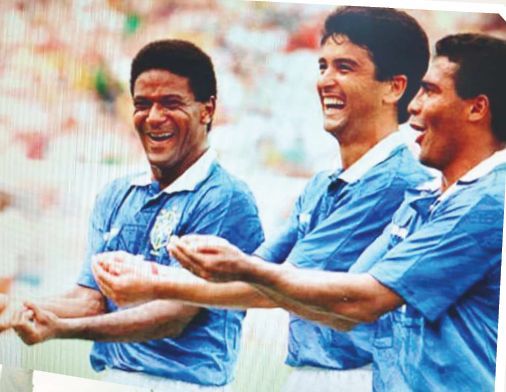
IT was July 9, 1994. Bebeto ran past the goalkeeper and scored into an empty net in the World Cup quarter-final against Holland.
Then, with Romario and Mazinho by his side, he “rocked the baby” - a celebration that will stay in the minds of spectators forever. Just two days earlier, his son Mattheus had been born.
A few days later, Romario scored against Sweden in the semi-final and rocked the Rose Bowl in Pasadena, Los Angeles.
Brazil erupted in joy - they had qualified for the World Cup final for the first time after 24 years. The last time they had been in a final was in 1970 when a Pele-led squad beat Italy 4-1.
For the Brazilians, the excitement was over-the-top.
As the final loomed, their supporters, decked out in their national colours, swarmed all tourists spots near Los Angeles. Long Beach, California Disneyland and San Diego Seaworld all became green and gold.
Besides Bebeto and Romario, they had heroes like Dunga, Taffarel and Rai but in all these tourist spots, the fans were not chanting the names of these stars.
Instead, they were singing the name of a 17-year-old boy who was never used in any game in 1994. They even carried life-sized pictures of the lad. His name? Ronaldo Nazario - the man who would go on to become El Fenomeno.
The 1994 World Cup had it all, controversy, excitement, disillusion and disappointment - and great expectation. Expectation that would later be fulfilled by Ronaldo.
Now, soccer showtime is back in North America. The 2026 World Cup in the United States, Mexico and Canada is only days away.
Obviously, there will again be lots of glitz and glamour. There will be Hollywood-style shows at games, in a sport they call soccer.
There is really so much to look forward to. This World Cup is going to be fiery hot, with matches at midday to cater to European audiences. And with 48 teams in the fray, it is going to be a long, tiring tournament.
Even half-time shows are being lined up in L style to bring in more crowds. I am guessing pom-pom girls might be there too, what with showbiz man Donald Trump being the president and all.
While there’s much to look forward to, there’s also lots of history, even among the hosts. The US and Mexico, for one, are bitter rivals in the sport and for many reasons.
The US had long harboured dreams about the World Cup. Back in 1975, Brazil’s legendary icon Pele and “German Kaiser” Franz Beckenbauer were among those who joined New York Cosmos in the North American Soccer League (NASL).
The idea was to sell football to the United States and bring the World Cup there in 1986 when Colombia pulled out.
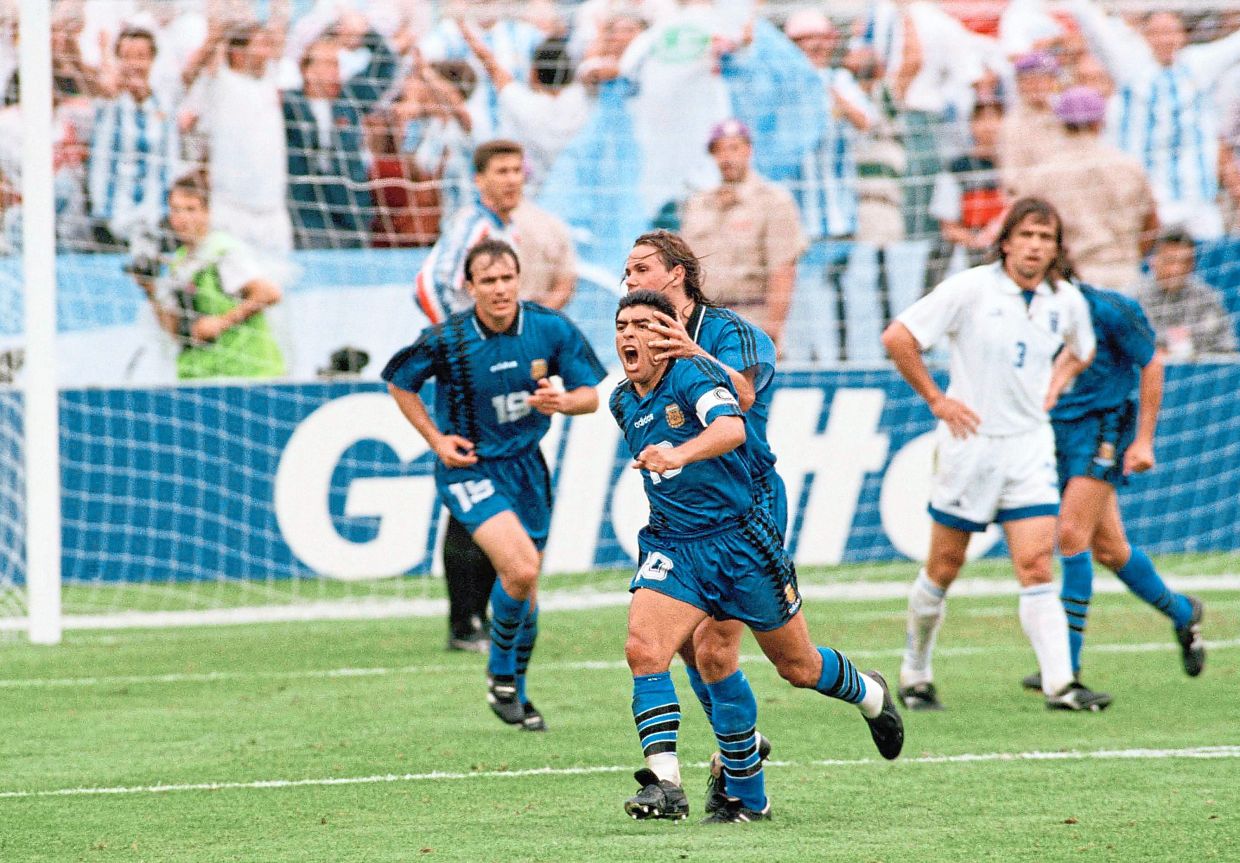
FIFA, however, handed it to Mexico instead. And Argentina captained by the 25-year-old Diego Maradona – with his Hand of God goal against England - won the title.
Immediately after that, the NASL collapsed. The Americans, who were never in love with the sport in the first place, gave up.
It was, in fact, the 1994 World Cup that brought football back to the US, with the league being reborn as Major League Soccer (MLS).
That World Cup was indeed a watershed event. Pele was there at the final, walking in with Whitney Houston during the closing ceremony. But it was Maradona who again stole the show – he tested positive for drugs and was thrown out of the tournament.
Argentina were bundled out in last 16, by unheralded Romania.
It was the deepest disgrace for the defending champions.
It wasn’t just Maradona who left with his head hung low. The “Little Buddha” Roberto Baggio did, too, after a disaster in the final.
The final, held at 12.30pm under the searing Los Angeles heat at the Rose Bowl in Pasadena, was an anti-climax.
These were the days before water breaks, and the dehydrated players could only slug it out, sluggishly. At the end, the final ended goalless.
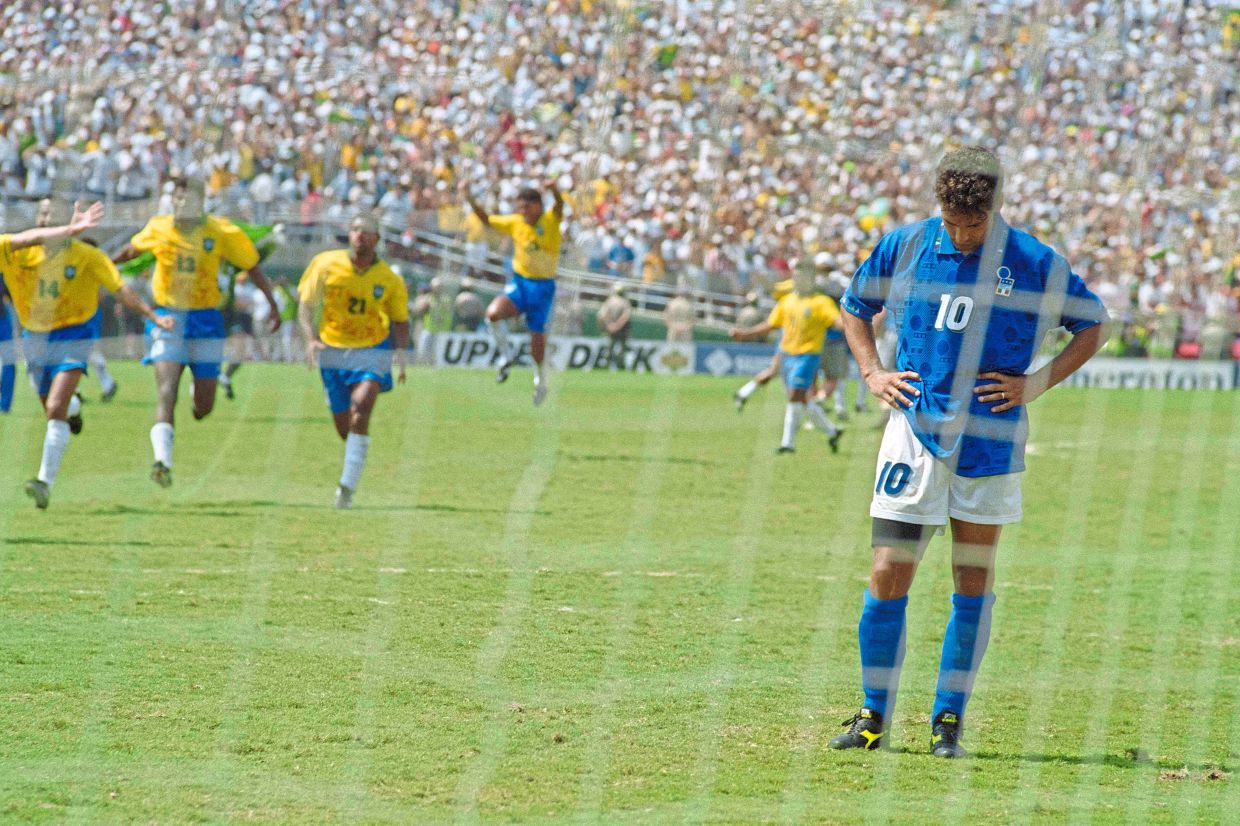
And Baggio, also known as the Divine Ponytail, skied his final shot from the spot to give Brazil the title.
Baggio was back for the next World Cup in France, but without his ponytail. He had cut his hair short.
The 1994 World Cup is also remembered for other reasons. England and France failed to qualify, thus hooliganism was not a big thing.
But there were other problems. Ever the capitalists, the US TV stations had apparently asked the officials to blow for more fouls and to have longer delays. The reason? They could then slot more commercials into these non-playing seconds.
The hosts did get into the knockout rounds, beating Colombia, with Andres Escobar scoring an own goal. Days later, Escobar was shot dead in his home town of Medellin.
Despite all that, the 1994 World Cup was a major success. It is said to have drawn more than 3.5 million paying spectators, an average of about 69,000 per match.
It remains the World Cup with the highest turnout in history.
It was also a huge financial success, with sponsors coughing up millions. It generated about US$50mil surplus to kickstart the rebirth of football in the country. The MLS was born and it has gone from strength to strength. Almost 50 years after Pele joined New York Cosmos, a new star, as big as Pele or even bigger, came to the US.
Lionel Messi joined Inter Miami in 2023 and he has made soccer a huge thing in the country, making Mexicans go pink with envy.
The 2026 World Cup, with Messi and the United States team playing a sterling role, could take the game to an unprecedented height in the Americas.
Yes, heat or not, it’s going to be a cracker.