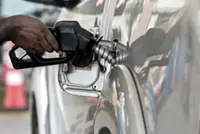
When commercial diesel prices shot up recently, lorry drivers were the first to sound the alarm. But the real victims aren’t just transport companies - it is you and me, the everyday consumers.
The math of daily life is simple: when diesel prices jump, transport costs jump. When transport costs jump, the price of almost everything we buy at the supermarket goes up.
Instead of shocking our economy with sudden cuts to diesel subsidies, we need a gentler approach. Rather than letting the cost of transporting goods skyrocket, we should spread the burden more evenly by slightly increasing RON95 petrol.
To understand why this is urgently needed, look at the silent crisis happening between Peninsular Malaysia and East Malaysia. Every day, ships carry our goods across the South China Sea. But there is a huge gap in what goes out and what comes back. For every five ships that arrive fully loaded with goods from the Peninsula, only one ship has enough cargo to bring back.
Because these ships are forced to sail back empty, shipping companies charge much higher fees just to cover their losses. Now, add the sudden spike in Peninsular diesel prices to this "empty-ship" problem. The lorry sending vegetables from Cameron Highlands to Port Klang already pays more for diesel. By the time those vegetables reach a family in Sabah or Sarawak, the transport costs have multiplied, making basic goods unbearably expensive.
We must face reality: as a responsible nation, we cannot simply print money to keep everything cheap. It is fiscally impossible for the government to freeze RON95 at RM1.99, subsidise Peninsular commercial diesel back down to an acceptable RM3.50, and simultaneously maintain East Malaysian diesel at RM2.15. The pressure on our national treasury would be catastrophic.
Right now, the government is trying to design a complicated system to remove RON95 subsidies for the top 15% of earners, known as the "T15". This will likely be a confusing and difficult system to manage.
I propose a simpler, more responsible alternative: what if we implemented a marginal increase on RON95 petrol—perhaps 20, 30, or 40 sen—across the board?
To protect our lower-income B40 families, the government can easily provide direct cash aid (such as the STR) to cover their additional petrol costs. But the revenue generated from this slight RON95 adjustment must be used to cross-subsidise commercial diesel, bringing it down to a reasonable and acceptable rate, such as RM3.50 per litre.
At this point, a driver might ask: "Why should I pay more for my petrol just to help transport companies?"
The answer is that expensive diesel is already secretly taxing you.
You might end up paying an extra RM100 a month to fill up your car for work. But what you gain in return is a powerful shield against skyrocketing grocery bills. If we don't keep commercial diesel reasonably priced, the RM100 you "saved" at the petrol pump will be easily wiped out by the inflated prices of your rice, cooking oil, and daily necessities.
A slight bump at the petrol station is a visible, predictable cost you can plan for. However, hidden inflation caused by expensive transport costs is a heavy burden that sneaks into every receipt.
Good policies should solve problems without breaking the bank. By sharing the load with a slight RON95 adjustment to keep commercial diesel affordable, we protect our supply chain, relieve fiscal pressure on our nation, and prevent our grocery bills from spinning out of control.
Datuk Chong Sin Woon
MCA secretary-general
Already a subscriber? Log in
Get 20% OFF The Star Digital Access
Cancel anytime. Ad-free. Unlimited access with perks.