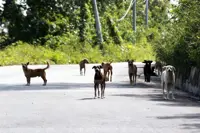
KOPI, a stray dog living in Kuala Terengganu, caught the nation’s attention when videos of her gentle nature as she played with a kitten went viral. Hence, many Malaysians were heartbroken and outraged when Kopi was shot during a city council stray culling operation (“In shock over stray’s death”, Sunday Star, Oct 13; online at bit.ly/4f45HXy).
This violent act has sparked widespread condemnation, and even an online petition urging a reevaluation of the council’s approach to managing strays.
Shooting stray animals is not only a brutal approach but an ineffective one to managing strays, but this is not an isolated incident. There have been multiple cases of strays being inhumanely killed. Kopi’s death should serve as a wake-up call for authorities to rethink their approach to the management of strays.
I believe the solution lies in the implementation of sustainable and humane practices such as trap-neuter-release-manage (TNRM). With this proven method stray animals are trapped, neutered, and released back into their environment, allowing the population of strays to naturally decline over time as reproduction is curbed.
Neutered animals are generally less aggressive, thus posing less of a danger to people; the method also allows for vaccinations, reducing the spread of diseases among stray animals and the wider pet and human community.
Local communities can play an active role in monitoring and caring for neutered strays. Programmes can foster a sense of responsibility and compassion, shifting the narrative from eradication to coexistence.
In the long run, TNRM is more cost-effective than culling. Killing stray animals is a short-term fix that does not address the root issue of overpopulation, meaning councils will have to continually repeat the process. With TNRM, however, there is a gradual, long-term reduction in stray populations.
A successful TNRM programme requires public awareness as well as support from local authorities. It is crucial to educate the public on the benefits of TNRM and debunk myths that killing strays is the only viable solution.
Government policies must align with humane stray management practices. Local councils should be encouraged, or even mandated, to adopt TNRM as their primary method of managing strays. Offering veterinary support for TNRM programmes, and ensuring long-term community- based management of stray populations are essential steps in the right direction.
Kopi’s story should serve as a catalyst for change. No stray should have to suffer such a fate again. It’s time to adopt TNRM and create a future where humans and animals can coexist peacefully.
By advocating for TNRM, we not only honour Kopi’s memory but also move towards a kinder, more compassionate society for all living beings.
TAN SRI LEE LAM THYE
Animal welfare advocate
Kuala Lumpur
Already a subscriber? Log in
Get 20% OFF The Star Digital Access
Cancel anytime. Ad-free. Unlimited access with perks.