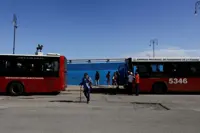
“AUTONOMOUS Rapid Transit”, or ART, is the buzzword right now among planners and municipalities in several cities. It’s marketed as being cheaper and faster to build than railways and traditional tracked trams.
However, it’s what’s known as a “gadgetBahn” (ie, an English/German portmanteau word meaning transportation concepts that seem infeasible or unnecessary), and the following are the reasons why I believe that this system is all marketing hype and shouldn’t be chosen.
Firstly, it’s crucial to highlight that despite being labelled as “autonomous”, ART systems still require a human driver to oversee operations. This raises questions about the accuracy of the term “autonomous” and the extent to which these systems truly eliminate human error.
For example, with the vehicle running autonomously, drivers may not be fully engaged, potentially affecting their reaction time in emergencies. The continued need for a driver diminishes the perceived benefits of full autonomy and may not deliver the expected improvements in safety and efficiency.
Secondly, one of the significant drawbacks of ART is that travel is slow due to the cautious nature of autonomous vehicles. They also often face delays due to factors such as traffic congestion and pedestrian interactions. This contradicts the notion of “rapid” transit. These delays can undermine the efficiency and effectiveness of ART as a viable alternative to traditional transit modes.
Furthermore, implementing an ART system isn’t as cost-effective as touted. ART vehicles run along a guideline painted on the road, and repeated passes of heavy vehicles over the same part of the road will cause tire grooves in the surface. The road will need frequent resurfacing, causing disruption to the service and longterm costs.
There’s also the cost of maintaining and replacing batteries in the fleet, which isn’t cheap.
Lastly, I have read that there are concerns about the environmental impact of autonomous vehicles. While proponents argue that ART systems could reduce traffic congestion and emissions, the production and disposal of electric vehicles still contribute to carbon emissions and environmental degradation. As previously stated, batteries will need to be replaced and disposed of several times during the vehicle’s service life.
In conclusion, I believe that the “benefits” of ART are only skin deep. Before widespread implementation, thorough assessments of safety, speed, affordability, and environmental impact must be conducted to ensure that ART systems serve the best interests of our community.
LIM ZI YANG
Kuala Lumpur
Already a subscriber? Log in
Get 20% OFF The Star Digital Access
Cancel anytime. Ad-free. Unlimited access with perks.