

This first started in March last year when the MBike automated system used by thousands of motorcyclists, crashed after the Malaysian government decided to change its vendor of eight years.
The new vendor was unable to maintain the custom-built infrastructure, resulting in the failure.
The system used a radio frequency identification device (RFID) sticker attached to the passport, requiring riders to place their thumb on the reader for the gantry gate to open.
The sticker is only issued to Malaysians.
The crash − a huge embarrassment to Malaysia − also brought about chaos and long lines at both the land check-points with Singapore for weeks as Immigration officers had to manually clear motorcyclists.
During this time, motorcyclists zoom past Immigration counters by just stopping briefly and waving their passports, with no proper scanning.
Sadly, there has not been a viable alternative to the crashed MBike system which was a multi-million ringgit project.
Subsequently, within weeks the government announced that a new QR clearance method will be tried – three vendors were appointed to carry out trial runs under the proof of concept period (POC), namely MyTrip, MyRentas and MyBorderPass.
It involved about 300,000 Malaysians using motorcycles, buses and pedestrians.
Finally in December last year, MyBorderPass was picked as the vendor to be used at both the checkpoints.
Their system also provided facial recognition using artificial intelligence (AI) cameras, which sped up clearance.
So far, all the applications under the POC were only for Malaysians.
However, as people were getting comfortable using MyBorderPass, another bombshell was dropped.
The government introduced a new QR Code application known as the National Integrated Immigration System (MyNIISe) beginning September.
This time it started with passenger cars, a segment of travellers which was never addressed in the past.
Each QR was able to handle up to 12 people in a vehicle and within days, the application was extended to motorcyclists too.
Meanwhile, those using the existing MyBorderPass QR code could temporarily continue to use the bus and motorcycle lanes.
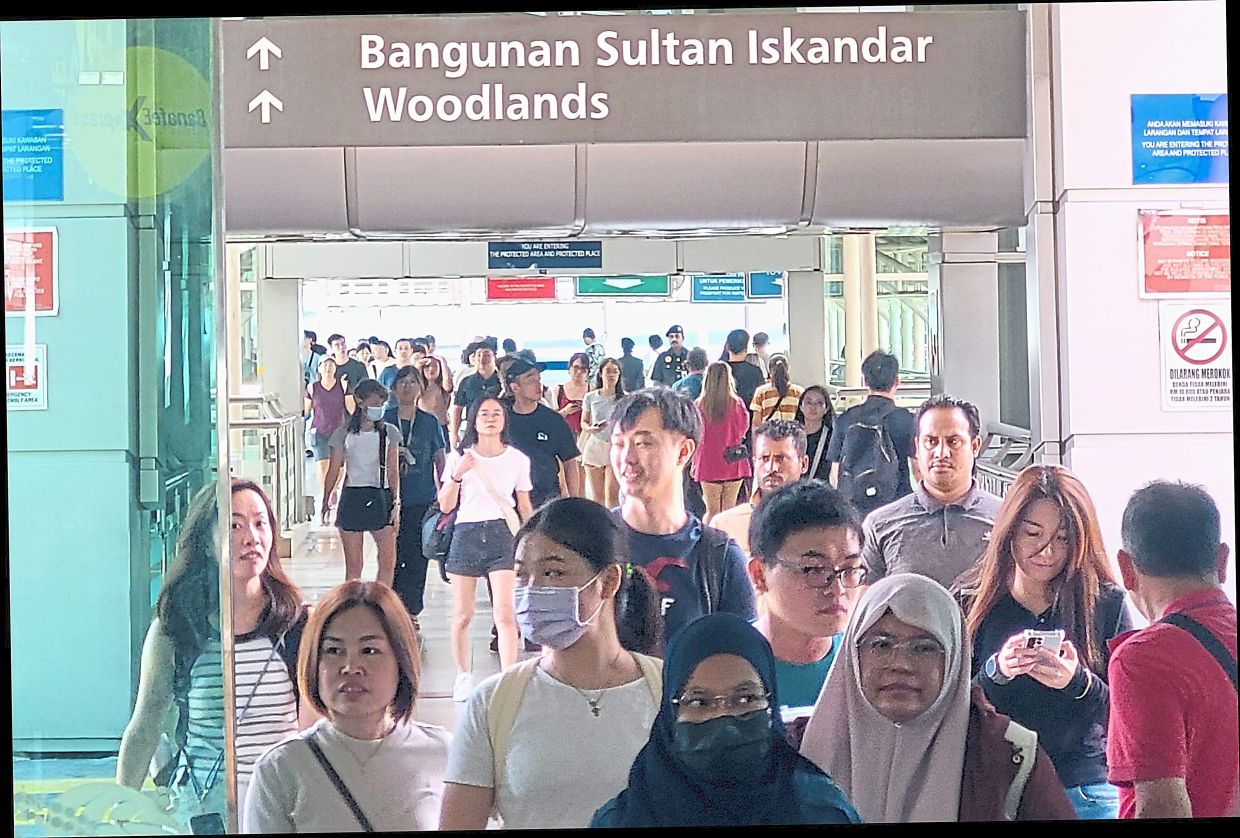
The government touts the MyNIISe system as the way forward as it is not restricted to only Malaysians and Singaporeans, but to all foreign nationals.
Travellers from 63 countries may use the QR code to enter Malaysia, while citizens of 71 countries can use it for departure.
Recently, Home Ministry said the trial would continue in stages at five key international airports across the country, namely Kuala Lumpur International Airport Terminal 1 and Terminal 2, Penang International Airport, Kuching International Airport and Kota Kinabalu International Airport.
The exercise will run until Feb 28 next year.
During the trial period, the current QR code system and MyBorderPass app will remain in use for entry and exit procedures.
Valid travel documents or passports are still required for Immigration clearance as stipulated under the Immigration Act.
However, the MyNIISe system has been marred by teething issues since it started last month, including people not being able to generate the QR code from Singapore and that the system has been deemed sometimes “unstable”.
Many people, including Singaporeans, have taken to social media to lament their frustration and anger and also about the lack of publicity about the new QR code.
A frequent commuter between Johor and Singapore wondered why it was so difficult for the Malaysian government to come up with one single QR system for one of the busiest border crossings in the world.
Are taxpayers paying for all the trial and errors?
I am sure it runs into millions of ringgit as it does not just involve software development, but also installation of scanners and gantries.
I pity the Immigration officers and Malaysian Border Control and Protection Agency officers who are pushed around to manual counters each time a system fails or has problems.
How are vendors for sensitive projects like this get selected?
How does the government vet companies on whether they are able to ensure one single system can be used at entry and exit points nationwide over a period, without the need to change vendors frequently?
I am sure our government officers can ask for tips from their Singapore counterparts about these QR code implementation, as the island republic was the first to roll it out in stages.
It is time for our Government to seriously look into having one efficient, convenient and user-friendly system instead of going for trial and errors.
After so many years of border management, we should know what the country needs and not simply waste money.
As we get ready to welcome millions of visitors into the country for Visit Malaysia or Visit Johor 2026, Malaysia cannot afford another embarrassing system crash.