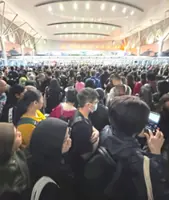
AT about noon on July 18, more than 200 Immigration autogates nationwide suddenly went offline for foreigners, causing chaos in almost all major entry points whether air, sea or land.
For more than 24 hours, over 500,000 foreign passport holders, unable to clear Immigration using the autogate facility, were forced to undergo slow and time-consuming manual screenings.
Since June 1 last year, visitors from 63 countries, as well as diplomats stationed in Malaysia and their families, have been eligible to use the autogate facility for quicker clearance.
The disruption did not affect Malaysian passport holders, who continued to use the autogates without issues, while the QR code-based MyBorderPass system also operated smoothly.
The Star was the first media outlet to report on the chaos.
Images of long queues at major gateways such as KL International Airport Terminals 1 and 2, and Johor’s Bangunan Sultan Iskandar (BSI) Customs, Immigration and Quarantine (CIQ) and Sultan Abu Bakar CIQ (KSAB), circulated widely.
Some of the visitors at BSI were forced to queue up for more than five hours to clear Immigration because weekends are the busiest with many Singaporeans coming into the country for food, leisure and shopping.
Hundreds of visitors who were unable to endure the long waits, mainly the elderly, decided to turn back to Singapore.
At the BSI complex, there are 39 autogates for exit and 29 for entry, while KSAB has 12 in operation.
Hundreds of immigration officers nationwide were forced to work long hours during the weekend to clear the backlog of visitors.
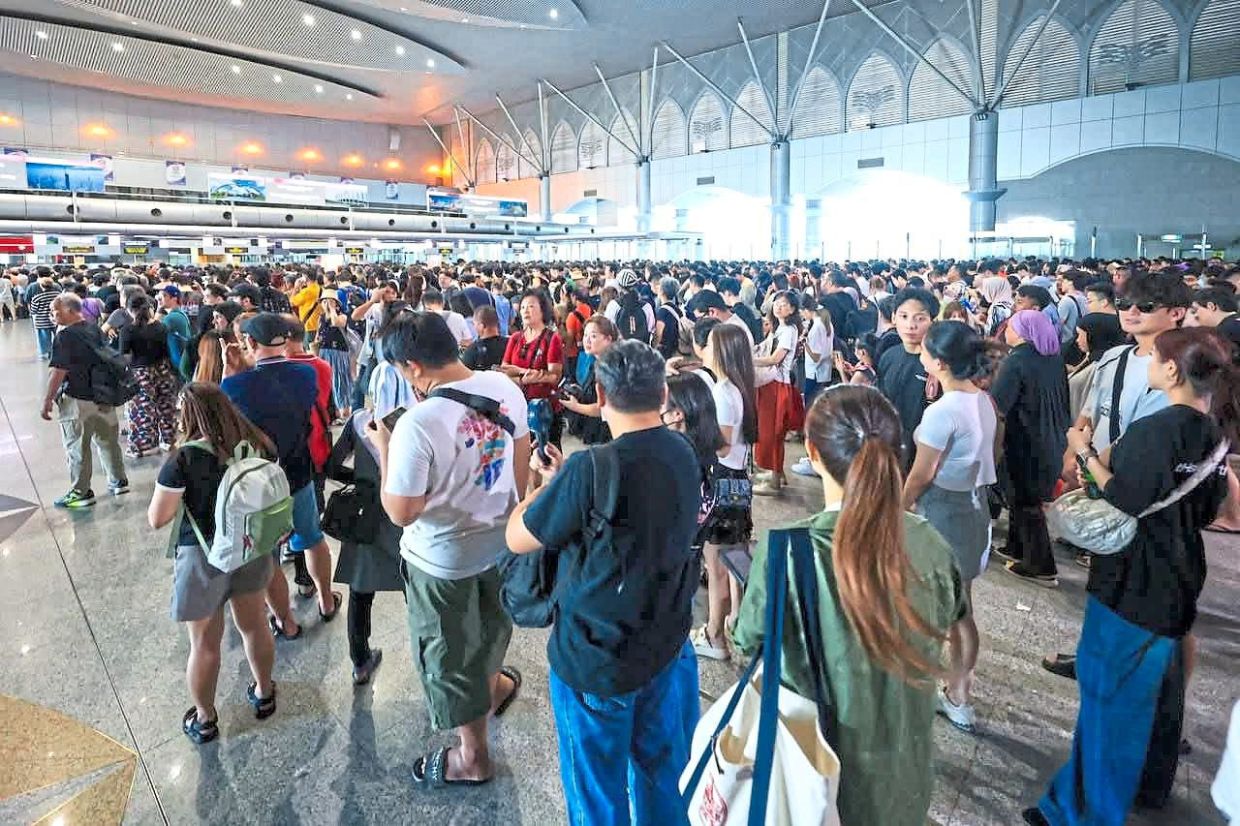
Malaysian Border Control and Protection (AKPS) director-general Comm Datuk Seri Mohd Shuhaily Mohd Zain reported that approximately 380,000 people were affected at the BSI checkpoint alone due to the autogate malfunction.
AKPS said the breakdown was due to a data integration disruption, leading to cross-checking delays within MyIMMs, the Immigration Department’s application system.
Checks also showed that the glitch, the worse in Malaysia’s history, was linked to the Interpol screening system used for foreign nationals.
This server, based in Putrajaya, is used as a screening tool to check visitors if they have any red-flags or notices for criminal or terrorist activities.
This incident raised critical questions: How could such an embarrassing failure occur?
What has happened to the maintenance of our sensitive hardware and software?
Does this mean that, for over a day, Malaysia’s borders were vulnerable to international criminals or terrorists entering without proper screening?
Authorities have been quick to assert that there was no element of sabotage or cyberattacks involved.
This incident underscores the urgent need for agencies like AKPS and the Immigration Department to have robust backup systems or contingency plans for major system failures.
It is essential to ensure that funds are properly allocated for system upgrades and maintenance, and that competent vendors and contractors are appointed to manage these systems.
There should also be a postmortem to identify system weaknesses, and the agencies need to update their standard operating procedures (SOP) when it comes to crisis management.
Our National Integrated Immigration System (NIISe), which is set to replace the archaic MyIMMs, also needs to be operating at top form without any hiccups.
The first phase of the new system is expected to be completed next year, hopefully in time for Visit Malaysia and also Visit Johor 2026 tourism campaigns.
As we get ready to welcome millions of visitors into the country, Malaysia cannot afford another embarrassing system crash like this.