



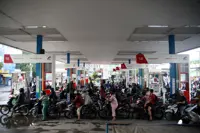
Free shipping from China to Malaysia is often seen as a threat to local online sellers. But this view misses the bigger picture. What appears on e-commerce platforms as a simple “free delivery” label is actually the result of deep changes in regional digital trade. For many Malaysians, buying phone accessories, household tools, or lifestyle items directly from China has become normal. Cross-border online shopping is no longer a niche activity. It is now part of everyday life.
This integration reflects years of coordination among manufacturers, logistics providers, digital platforms, and customs systems. As Southeast Asia’s digital economy expanded, China’s e-commerce infrastructure naturally extended outward to meet growing regional demand. Free shipping, therefore, should be understood not merely as a pricing tactic, but as a marker of how regional supply chains have adapted to digital commerce.
China’s ability to offer free shipping is often mistaken for aggressive subsidisation, but the reality is more structural. Decades of investment in large-scale manufacturing, warehouse automation, and integrated logistics networks have driven delivery costs down. High order volumes allow shipping costs to be spread across millions of parcels, while streamlined customs clearance and coordinated transport reduce delays and inefficiencies.
For Malaysian consumers, these efficiencies translate into transparent and predictable pricing. Buyers often see a final price that remains unchanged at checkout, without additional delivery charges appearing later. Many low-priced items, where “low-value” refers to price rather than product quality, arrive without shipping fees, while similar local listings may still include delivery costs. In a period of rising living expenses, such clarity matters, enabling households to make more confident purchasing decisions. Access to affordable goods expands choice and reduces geographic limitations. Products that were once harder to find locally, or available only at higher prices, are now easily accessible. This widening of choice enhances consumer autonomy and supports household budgeting during uncertain economic times.
The removal of shipping costs has also changed consumer behaviour. When delivery fees no longer distort prices, buyers tend to focus more on product specifications, seller reputation, and customer reviews. Many Malaysians now compare multiple sellers offering similar products, reading feedback carefully before purchasing. This reflects a shift toward more informed and rational decision-making rather than impulsive spending.
Rather than encouraging excess consumption, free shipping has contributed to a more mature digital marketplace where information and transparency play central roles. Sellers are incentivised to maintain quality and service standards, while consumers learn to distinguish value from price alone.
Increased price sensitivity is often viewed negatively, but it can also signal market maturity. Clear final prices improve market efficiency and encourage fair competition. Sellers are pushed to price realistically, while platforms compete on service quality rather than locking users into opaque pricing structures.
Platform switching, frequently cited as a concern, should also be seen in this light. The ease with which consumers move between platforms reflects empowerment rather than instability. Buyers choose based on price, reliability, and service, encouraging platforms to innovate continuously through better interfaces, customer protection, and dispute resolution mechanisms.
E-commerce platforms themselves benefit from this shift. Removing delivery costs reduces friction at checkout, which has been shown across major platforms to increase page views, time spent per session, and repeat purchases. For example, when delivery fees are removed, users are more likely to browse multiple product listings, compare sellers, and complete transactions rather than abandon carts at the final step.
This higher level of activity generates more usable data, including search queries, click-through rates, time spent on product pages, purchase frequency, basket size, delivery locations, return rates, seller response times, and customer review patterns. With these signals, platforms can refine product recommendations, personalise homepages and search results, flag unusual transactions linked to fraud, and identify sellers with consistently poor fulfilment or misleading listings. Over time, this data-driven monitoring helps improve service quality and strengthens consumer trust in the marketplace.
At the same time, faster and more reliable cross-border delivery has raised expectations for domestic logistics. When parcels shipped from China arrive quickly with detailed tracking, consumers naturally expect similar reliability from local deliveries. This pressure has encouraged Malaysian logistics providers to upgrade tracking systems, improve last-mile delivery, and adopt digital solutions. In this sense, free shipping acts as a catalyst for logistics modernisation rather than a zero-sum competition.
For Malaysian sellers and SMEs, free shipping from China presents challenges but also opportunities. Many local sellers already source products or components from China, and closer integration improves supply chain coordination. By observing best practices in inventory management, pricing, and digital marketing, local businesses can enhance competitiveness.
Rather than competing solely on price, Malaysian sellers can differentiate through value-added services. Faster local delivery, customisation, local branding, halal certification, warranty support, and responsive customer service remain areas where proximity and trust matter. Some sellers position themselves as intermediaries who combine China’s manufacturing efficiency with local market knowledge and service quality.
At a broader level, free shipping reflects the deepening of China–Malaysia digital trade ties. Digital commerce has become an important pillar of bilateral relations, complementing traditional manufacturing and investment. Efficient cross-border e-commerce supports small traders, entrepreneurs, and consumers on both sides, aligning with regional efforts to strengthen connectivity and supply-chain resilience.
Free shipping is not without risks. Increased cross-border shopping may weaken certain local retail segments. Environmental concerns, such as packaging waste and carbon emissions from long-distance shipping, also deserve attention. In addition, the growing power of large platforms raises questions about fair competition and data concentration. These trade-offs need to be acknowledged alongside the benefits.
Seen in a broader context, free shipping from China reflects a more connected and efficient regional digital economy. For Malaysian consumers, it brings lower prices, greater choice, and better service standards. For platforms, it supports growth and innovation. For China, it demonstrates the strength of its digital ecosystem. When managed carefully, free shipping is not a threat but a sign of a maturing and increasingly integrated online marketplace in the region.
Dr. Foo Lee Peng is an Associate Professor at Tunku Abdul Rahman University of Management and Technology and Chairperson at Centre for Business and Policy Research.
The views expressed here are entirely the writer’s own. The SEARCH Scholar Series is a social responsibility programme jointly organised by the Southeast Asia Research Centre for Humanities (SEARCH) and Tunku Abdul Rahman University of Management and Technology (TAR UMT).
Already a subscriber? Log in
Get 20% OFF The Star Digital Access
Cancel anytime. Ad-free. Unlimited access with perks.



