A plague of pigeons


Out-of-control ‘sky rat’ population in Penang brings increased risks of fungal, bacterial infections and may trigger respiratory problems

IT’S best to hold your breath when a flock of pigeons takes flight near you, especially if you are downwind.

This health tip is especially vital if you are someone prone to asthma attacks, rhinitis, sinusitis or other respiratory problems.

It might make a pretty sight as they fly off in unison, almost picture-worthy, but the reality is that they create an invisible cloud of feather dust when they take off.

That dust, finer than the finest talcum powder, will settle on the food in nearby eateries, and pedestrian in the immediate area may end up breathing it in.

I am asthmatic, and since young I have been aware that breathing in the feather dust of pigeons can trigger an asthma attack.

But I was horrified to learn that there is such a condition known as pigeon lung, a hypersensitivity pneumonitis suffered by pigeon keepers.

Sad to say, owners of many premises, from shops to temples in the George Town heritage enclave, like to feed pigeons right outside their front door.

Maybe they honestly like pigeons. Maybe flocks of pigeons cooing and flapping enhance the visual impact of their premises. Who knows.

When I walk in the heritage enclave and see pigeons ahead, I quickly check the wind and reach into my bag to make sure I remembered to bring my inhaler.

I usually cross the road to avoid inhaling feather dust.

Originally rock pigeons, this is the world’s oldest domesticated bird. They were bred for their meat way back during the Mesopotamian times well over 5,000 years ago.

There are still places where pigeon meat is much loved, though chicken has overtaken it as the poultry of choice in most corners of the planet.

And although we have no chance of finding fried pigeon in any Penang restaurant or hawker stall, the bird remains fully domesticated.

Unlike the beautiful emerald doves that we can sometimes see in Penang’s hill range, pigeons, also known as sky rats, do not know how to forage for food in the wild.

That ability was bred out of them over centuries of domestication and they only know to get food from humans.

They do not roost in trees, much less in jungles.

Signboards warning people not to feed pigeons can be seen in many of the 28 hotspots on the island. — ZHAFARAN NASIB/The Star

They are genetically programmed to nest only in structures built by humans such as abandoned buildings, under our house roof or the tops of buildings sheltered from the elements.

Territorial instincts were also bred out of them, so they are fine with roosting together in large numbers and when that happens, the concentration of dropping they generate where they roost is a pathogenic red-alert zone full of E. coli, salmonella and almost every other known faecal bacteria.

The bacterial count is roughly 100 billion bacteria per gram of fresh droppings.

I am a staunch believer in animal rights – live and let live – and I know that these birds are not to be blamed.

Many people believe it a good deed to toss food on the streets for pigeons, but as they say: “The road to hell is paved with good intentions”.

In Penang, there are now many signboards telling the populace that pigeons can pass on infections like histoplasmosis, candidiasis and cryptococcosis, as well as bacterial infections like salmonellosis and E.coli.

There is a RM250 compound if you are found scattering food to feed pigeons in Penang now because that is the same as littering.

Penang Island City Council has to deal with the out-of-control pigeon population on the island, leading to them increasing enforcement with an ops carried out almost daily.

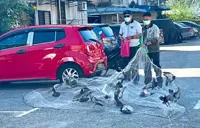
Council workers have to set traps at the island’s 28 pigeon hotspots where people like to feed pigeons.

The council has made it clear anyone caught littering the streets with food for pigeons will get that RM250 compound, so even if you cannot grasp the health hazards caused by these birds, you might want to avoid the hassle of dealing with the hefty fine.

Get 20% OFF The Star Digital Access

Monthly Plan

RM 13.90/month

RM 11.12/month

Billed as RM 11.12 for the 1st month, RM 13.90 thereafter.

Best Value

Annual Plan

RM 12.33/month

RM 9.87/month

Billed as RM 118.40 for the 1st year, RM 148 thereafter.

Follow us on our official WhatsApp channel for breaking news alerts and key updates!
Pigeon , penang , dust , lung , disease

Next In Columnists

The battle for political control
Federal funds and fiscal capacity
Chinese wind blowing in Johor
The incredible star power rising from the East
Make Penang AI plan a bridge for majority
Giants fall, England survive – World Cup quarter-finals take shape
Who shapes global AI rules: Asean-China cooperation role
Why the Johor election is good for Malaysian democracy
Confessions of a durian season sinner
Looming threat to social security

Others Also Read