We should be different


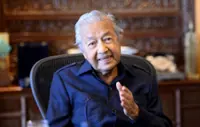
optional The Rohingya are one of the most persecuted minority groups in the world. —Agencies

I WAS possibly brought up the wrong way. When I was little, children were often seen but not heard. We had to call anyone older than us Aunty or Uncle or Kakak or Abang. We always had to mind our manners, lest it reflect on our upbringing and our parents. In fact, respect for parents was so great that to even say their names was difficult, because it implied that we were equal to them, an impossibility.
My parents taught us that we always had to be polite to everyone we met, regardless of who they were. We could not show off, brag about anything we had, or put anyone down. Humility was a virtue that was constantly impressed on us.

Of course, all these rules could be so strict that it sometimes meant that I could not react if someone was ever rude and nasty to me. In my schooldays I could not understand why a male schoolmate persisted in being horrible to me until I learnt many years later that it was a tradition in his family because his father had been the same to mine. As an adult, I once entered a crowded lift after an event when a male voice from the back began to insult the organisation I was with as well as my friend who led it. I replied in the most courteous way I could, but he continued. His wife tried to shut him up; it gave me the strong impression that she also often had to endure insults from him.

I realise that not everyone was brought up as strictly as I was, but generally I understood my parents’ parenting approach as a product of the environment they grew up in. Society was generally polite, tolerant, and considerate of everyone. Naturally there were occasional instances of rudeness, usually among individuals, but that rarely led to actual physical altercations.

Which is why I am baffled by the recent episodes of intolerance and – let’s just name it – racism that have recently surfaced.

But first let us recall the history of this land we call home.

We live on a peninsula that is situated on centuries-old trade routes. Not only did the winds bring goods from everywhere to our lands and vice versa, they also brought people. Many came to trade and having seen this beautiful and verdant land, settled down here. Others were brought here to work or came in search of a better life. In more recent times, still others were forced out of their homelands mainly because of conflict and scattered all over the world, including here.

Nobody chooses to leave the land where they grew up without good reason. Why leave the familiar where you are surrounded by people you know, who share the same language and outlook as you? Why go to where you will always be considered a stranger, an outsider? But people do. The lucky ones move out of choice, whether to study, work, or love. But a greater number are forced to leave because to stay is to die either at the hands of more powerful oppressors or by changes in the climate that make staying home untenable.

Other people have explained the situations that refugees face in their home countries. But what I am appalled at is the language that many Malaysians have adopted when talking about the Rohingya. Anyone who has been following the Gaza genocide will recognise the language. It dehumanises an entire ethnic group and blames them for all sorts of crimes which our police have said are untrue. Social media users have claimed that Rohingyas want to take over the country or demand an autonomous state of their own. Nobody has bothered to work out how that might be even possible. What possesses Malaysians to call on their fellow citizens to inflict violence on a defenceless and vulnerable people? Is that how their parents brought them up?

The thing is, we have other refugees in our midst, but the same ire has not been directed at Pakistanis, Yemenis, Somalis, Afghans, Syrians, and the people from some 50 countries who have also sought refuge here.

They are all subjected to the same rules as the Rohingyas, including prohibitions from working, going to school, and accessing healthcare. In our immigration detention centres, there are all sorts of nationalities and ages, including Palestinians and children. Are we much different from the Israelis and the American immigration agency ICE? I have even seen comments saying that we should set up our own ICE, ignoring the disaster that that agency has been in the US.

Despite being such a diverse country, somehow, we have developed very little empathy for people different from us. We have been lucky that most of us have never experienced war. Yet we can watch global conflicts virtually livestreamed and still have no empathy for the people who are bombed and strafed by killer helicopters every day. We refuse to understand why people would want to escape from such a thing, yet none of us would want to stay in a burning house. Perhaps it is because so many Malaysians only go abroad to find work, study or marry a foreigner that we assume those are the only reasons why people leave home.

Our responses to the Rohingya situation expose a very ugly side of Malaysians. Perhaps it is social media in its anonymity that seems to “liberate” us to say things we would never say to our neighbours. Or perhaps we are being encouraged to be as nasty as possible by some quarters for their own ends.

I half-believe that theory, that all this hate is being instigated by certain people for their own reasons, and that Rohingya prejudice is just low-hanging fruit that can be easily exploited. But then I see a totally unrelated case, where young women on a trip abroad behave in ways that any parent should be ashamed of, mocking the people of the country they are visiting as loudly as possible and then uploading their actions online. That’s not behaviour instigated by any party. Such uncouth behaviour must come from deep wells of prejudice. But it is also selective in its application. I doubt they’d try the same in Europe.

While this uncouth person has since apologised (after first threatening to sue critics of her behaviour), it is unsettling to find out that she is, in fact, a policewoman. I’m hoping that she is an anomaly, not at all representative of the entire police force. If she were, then there is only one solution, and that is to recruit more non- Malays into the force so that people like her would have to get to know real humans of different races.

Otherwise, because of one person, all our efforts at promoting the country this year will come to nothing. China is a big market for inbound tourists for us. Imagine if they assumed that all of us are like that woman.

Marina Mahathir thinks that progress and courtesy go hand-in-hand. The views expressed here are solely the writer’s own.

Get 20% OFF The Star Digital Access

Monthly Plan

RM 13.90/month

RM 11.12/month

Billed as RM 11.12 for the 1st month, RM 13.90 thereafter.

Best Value

Annual Plan

RM 12.33/month

RM 9.87/month

Billed as RM 118.40 for the 1st year, RM 148 thereafter.

Follow us on our official WhatsApp channel for breaking news alerts and key updates!

Next In Columnists

Sexpectations: The overlooked piece of the health puzzle
In the AI age, critical thinking becomes a career advantage
Mighty strange bedfellows
Realities of conflict matter
The waiter, the QR code and me
Longevity does not necessarily mean legitimacy
Talent we cannot afford to waste
Healing the healthcare system
Guideline on vet fees will help rescuers
A sport where you never walk alone

Others Also Read