Slow crawl to faster commute


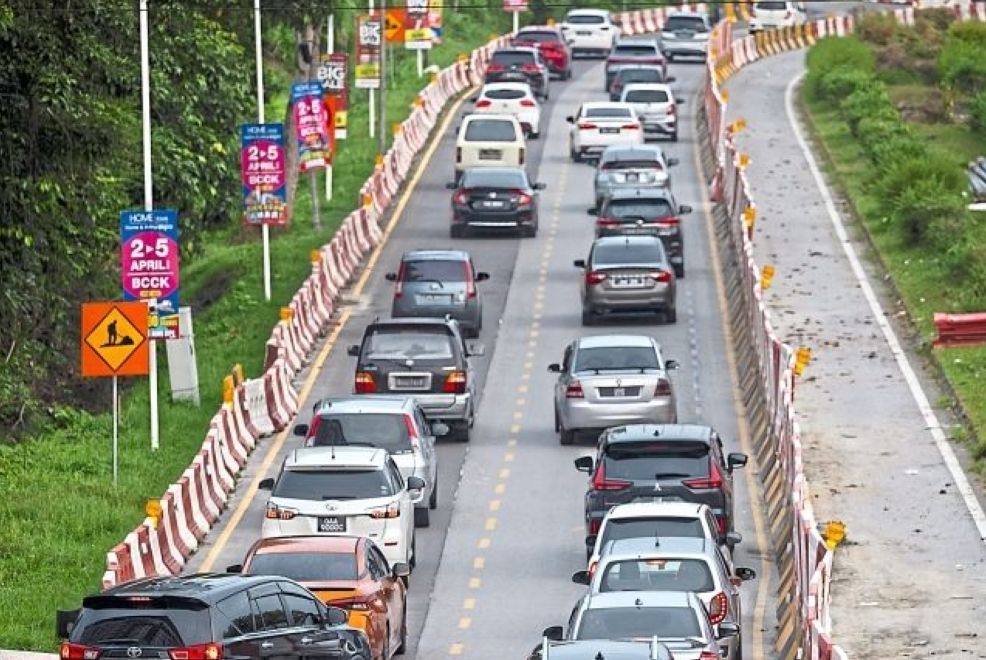
Traffic building up on Jalan Simpang Tiga along a partially closed road for the ART project in the morning rush hour in Kuching. —ZULAZHAR SHEBLEE / The Star

Navigating worsening jams a short-term pain for promise of modern transit system in Kuching

TRAFFIC in Kuching, Sarawak, was horrendous in the days leading up to Chinese New Year as many roads were choked with vehicles at all hours in the last-minute scramble to prepare for the celebration.

However, this has been a common occurrence lately even on normal days.

It’s not unusual to be stuck in a jam on major routes during peak hours. A journey that takes 15 to 20 minutes on clear roads can last an hour or more in the rush-hour crawl.

Ironically, one factor contributing to the current congestion is something meant to alleviate it in the future.

Parts of Kuching and neighbouring Kota Samarahan are experiencing road diversions and partial closures due to the ongoing construction of the autonomous rapid transit (ART) system.

Busy roads have become more congested as motorists navigate narrowed lanes and bottlenecks to make way for ART lanes and stations to be built.

The ART will form the backbone of the Kuching Urban Transportation System (KUTS), a public transport system implemented by Sarawak Metro Sdn Bhd to minimise congestion in the city.

Three ART lines are being built under Phase One of KUTS, covering about 69.9km in total from Kuching Sentral to Pending, Pending to Damai and Rembus to Hikmah Exchange.

The hydrogen-powered ART vehicles will run on dedicated lanes, while a feeder bus network will complement the system to provide first- and last-mile connectivity.

Phase One, which is estimated to cost RM6bil, is expected to commence operations in 2028.

As a rapidly developing state capital, Kuching urgently needs efficient and reliable public transport.

Of course, the immediate priority is to reduce congestion, which in turn will boost productivity and quality of life through smoother traffic flow.

Good public transport will also improve mobility and reduce dependence on cars, providing a convenient way to get around, for example to places with limited parking.

This is why it’s so important to get KUTS right. I’m sure I’m not alone in wanting it to work, if only to lessen the number of vehicles clogging the roads.

The authorities have to ensure that KUTS provides reliable and efficient mobility.

The feeder bus network will be crucial in providing first- and last-mile connectivity, particularly in residential areas not served by the ART lines, so that public transport will be a viable or preferable option to driving.

Without quick and convenient access to an ART station, people will likely opt to drive to their destination.

As the ART system continues to take shape in Kuching, let us hope that it will achieve its purpose to provide reliable public transport and reduce congestion.

It’s unfortunate that we have to put up with bottlenecks and traffic diversions during its construction, but the inconvenience will be worth it if we have an efficient and smoothly- functioning public transport system.

Get 20% OFF The Star Digital Access

Monthly Plan

RM 13.90/month

RM 11.12/month

Billed as RM 11.12 for the 1st month, RM 13.90 thereafter.

Best Value

Annual Plan

RM 12.33/month

RM 9.87/month

Billed as RM 118.40 for the 1st year, RM 148 thereafter.

Follow us on our official WhatsApp channel for breaking news alerts and key updates!

Next In Columnists

Asean-Russia Summit in Kazan: celebrating 35 years of unity in diversity
Strengthening China-Malaysia ties: A powerful boost for a shared future amongst neighbouring nations
Penang’s ‘kapcai’ culture holds key to rail future
La Roja reign supreme – why Spain’s World Cup win was no fluke
China’s Global Development Initiative and Malaysia’s rail transformation
Controversy over Melaka’s reps
Many Israelis' dual citizenship makes entry ban harder to enforce
Ice, ice, baby: Is freezing the answer to your biological clock?
Campaign season: The never-ending national sport
Asean meets in an uncertain world

Others Also Read