This allows drivers more time to react if the car directly in front suddenly stops – this additional time will also improve the likelihood of avoiding an accident.
In order to brake that early, drivers would need to have a clear view of the brake lights of the second car ahead, which should be visible through the rear window of the car in front.
When the regulations were changed to allow fully tinted rear and rear side windows in 2019, I wasn’t a fan.
I find it difficult to see anything beyond the car in front if it has a fully tinted rear window.
The current Motor Vehicles (Prohibition of Certain Types of Glass) Rules 1991 (Amendment 2019) states that the use of tinted windows is based on the percentage of permissible visible light transmission (VLT).
For the front windscreen, it is capped at 70%, while the front side windows are up to 50%.
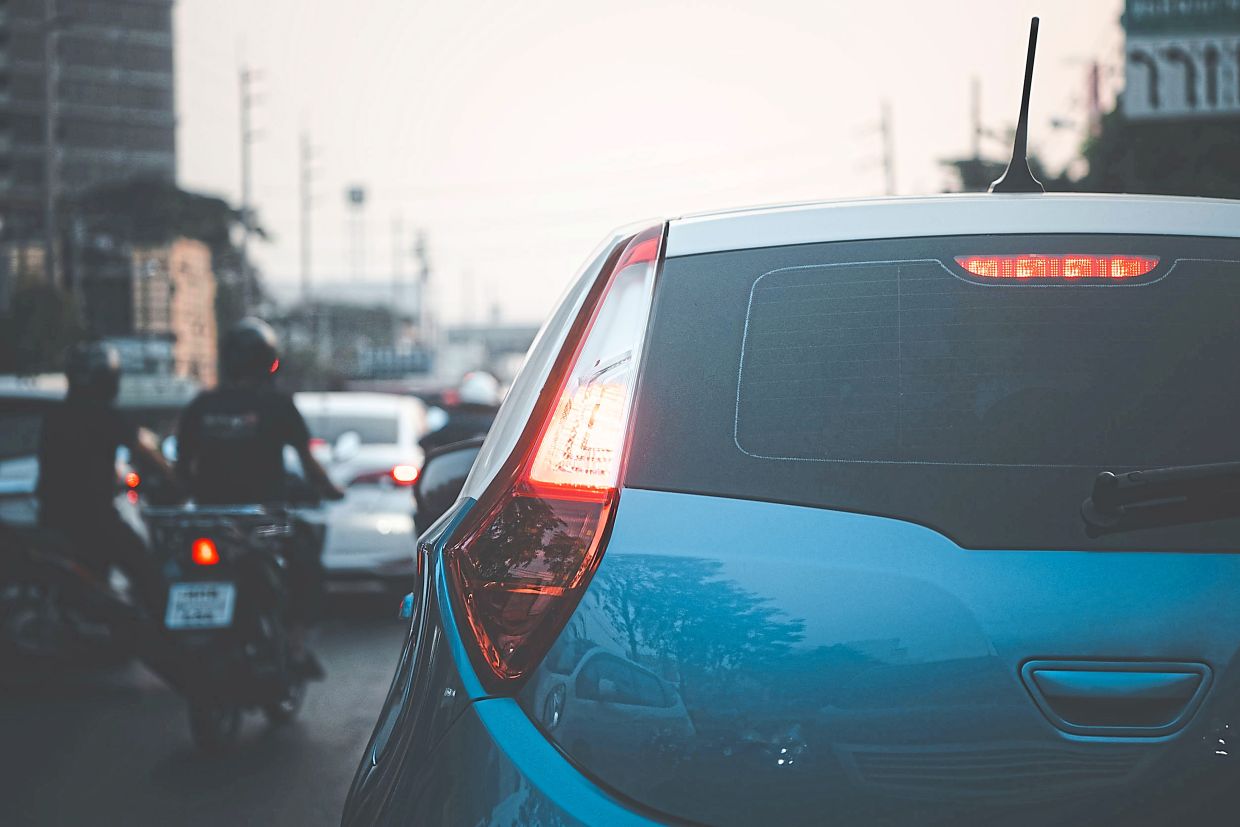
Meanwhile, vehicle owners are allowed to have the rear windows and rear side windows fully tinted.
Stakeholders have debated the pros and cons of these windows being 100% tinted.
Some highlight safety concerns, arguing that extremely darkened windows make it difficult to see inside the vehicle.
Others in favour of the regulation say it helps to keep the car interior cool.
However, some vehicle owners flout the regulation by having all their windows tinted beyond the allowed VLT for the front windscreen.
If caught with overly tinted windows, vehicle owners could be slapped with fines of between RM100 and RM250.
Yet, many vehicles still have tints exceeding the permissible VLT, especially on the front windscreen.
There have been instances where I could not see vehicles or the traffic situation ahead because the car in front was large and had a heavily tinted rear window.
Some crashes occur when vehicles fail to brake in time after the car in front applies the emergency brake, resulting in rear-end collisions.
Being able to see the traffic situation ahead of the car immediately in front of you is vital to ensuring a safe journey, allowing drivers to make informed decisions.
There is another annoying situation created by motorists having fully tinted front windscreens and front side windows.
Last month when I was looking for a parking space at a shopping mall carpark, I spotted a vehicle with its headlights on, so I presumed the driver was about to exit the bay.
I waited patiently but after three minutes, the vehicle didn’t move.
Normally, if one does not wish to exit a parking space, he or she would wave to indicate so.
I tried waving at the driver but could see no response from within, that I wondered if there was even a person in the vehicle. I drove off, feeling foolish.
There are definitely pros and cons to this tint policy.
Some drivers apply 100% tint to their rear window to lower the temperature of the interior, making it more comfortable under the scorching sun.
But dark tints can make it difficult to see through the car, especially at night or in low-light conditions.
In the event of a crash, emergency responders may struggle to see inside the car when trying to safely break darkened windows in a way that would minimise impact on the trapped motorist.
Perhaps a review of regulations is needed, or impose harsher penalties on those who flout the rules, to ensure better compliance with safety standards and reduce potential risks on the road.
Already a subscriber? Log in
Get 20% OFF The Star Digital Access
Cancel anytime. Ad-free. Unlimited access with perks.