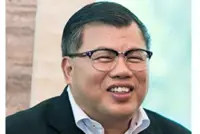

Those who have been following the MBI Group ponzi scheme saga believe this to be the case after Teow was extradited to China authorities in August last year.
"He has probably been singing like a canary to the China authorities," said Sin Chew Daily columnist Jeff Ooi.
Teow’s fraud syndicate, which was conceived in Penang before going big among China nationals, was a brazen scam that defrauded millions of investors of a reported sum of RM300bil.
The MBI mania was all the rage in Penang during its "golden years" between 2010 and 2015.
China nationals who invested in MBI, which stands for Mobility Beyond Imagination, would descend on Penang by the planeloads, creating a buzz never seen before.
Teow created his own cryptocurrency system called M-coins which investors used to dine in restaurants, stay in hotels and shop for things from handphones to cars.
But all pyramid schemes have a limited lifespan and his empire crumbled after his conviction in 2018 for a string of offences that included money laundering.
Teow later fled to Danok, Thailand, where he extended his tentacles and even had roads named after MBI until he was arrested by Thai police and handed over to the China authorities.
That incident provided the last known photograph of a bespectacled and chubby Teow in a white sports shirt, bermuda shorts, with a dark fabric over his handcuffed hands being escorted into an airplane by security officials.
All was quiet about Teow until a fortnight ago when news broke that the Malaysian police had arrested corporate figures and lawyers allegedly linked to MBI for questioning. They included several persons with Tan Sri and Datuk Seri titles.
"It’s an ugly situation for everyone. You cannot keep an eye closed anymore," said Ooi.
Ooi said that given how the Malaysian police have been so laser focused about who to arrest, it is evident that China and Malaysia are cooperating to find justice for the victims.
The investigation has sent shivers through the business circle in Penang where Teow’s money empire was like a giant octopus with tentacles all over the place.
They are terrified of the Anti-Money Laundering Act which gives the authorities the power to freeze their business and personal bank accounts.
According to the chatter in Penang, more businessmen, community leaders and a politically-connected architect, are also in the crosshairs of the police.
Teow is something of an urban legend in Penang and there were stories of how businessmen, big and small, would wait in his office to seek funds for their businesses.
He was the man of the hour and top politicians were thrilled to be seen with him.
He has studied the psychology of pyramid schemes. Ordinary folk want a taste of what they see in the movies and on TV - easy money to travel, shop and eat in nice restaurants.
He is a felon in the eyes of the law but "godfather" to those he helped.
Friends call him Xiao Zhang (Little Teow) but he had other nicknames - fei chai (Cantonese for fat boy) and tai kor tai (big brother).
At the same time, he is known to be rather introverted, he was not flashy and some of his attire looked like pasar malam purchases.
He shunned the limelight and did not take to the stage at any of the MBI conventions where people were persuaded to part with their money.
The MBI pyramid scheme was also a very Chinese enterprise. The target market was Chinese and in Penang, they ranged from hawkers and office workers to professionals.
"Have you wondered why the China victims protested but not those from Penang?" said a Penangite, referring to angry China nationals who gathered outside the China embassy in 2019.
Penang investors were the early birds and did not lose as much as the latecomers.
They called it the "money game" and some saw it as a gamble where you win some and lose some.
Besides, one does not sue Sports ToTo or Magnum4D if one does not strike.
Anyway, people who are willing to hand over their hard-earned money in return for "coins" have only themselves to blame.
During those "golden years, Times Square in Georgetown was the nerve centre of Teow’s operations and he named it M Mall.
He was also associated with a holiday village in Kedah, known as Taman MBI Desaku. It had home-stays, upscale restaurants, a theme park and food street that lit up like a fairyland at night.
A businessman connected to the Kulim venture is allegedly one of the "Datuk Seri" now under investigation.
M Mall is now deserted while the Kedah holiday village resembles a ghost town with lots of "For Sale" signs and is occupied mainly by foreign workers.
The party is long over, the music has stopped and Teow and MBI are now names synonymous with fraud and money-laundering.
How did Teow manage to do all that under the noses of the authorities and political leaders? Moreover, one of his deals involve a huge parcel of land that had belonged to the Penang government.
Why wasn’t more done to bring him back to Malaysia to be investigated after he fled to Thailand? Is it true he was untouchable because of his connections to the elite?
Kudos to the China authorities for pursuing Teow and for their determination to get to the bottom of the scam.
Corrupt individuals in China are known to face the firing squad but whatever the outcome, Teow is unlikely to step on Malaysian shores any time soon.
"The police must be serious and impress us by doing a thorough job. We don’t want to hear about selective prosecution," said a retired medical doctor from Penang.
Political will is also needed to put this chapter to rest.
Unfortunately, there will be more ponzi schemes in the future because cash is king, greed is part of human nature and there will always be gullible people to scam.
Already a subscriber? Log in
Get 20% OFF The Star Digital Access
Cancel anytime. Ad-free. Unlimited access with perks.