A welcome burst of energy


WITH much of the country now in Phases 3 or 4 of the National Recovery Plan, for fully vaccinated Malaysians (currently 94% of the adult population), the level of economic, professional and social activity is increasingly resembling life as it was before we ever heard of Covid-19.

Restaurants are heaving, regardless of how our cooking skills may have improved during the movement control order. As much as online shopping was addictive, the opening of shopping malls mitigates the risk of ordering products that sound too good to be true.

Schools are opening, enabling children to finally receive the physical interaction and socialisation that is so important to early childhood development.

This is especially crucial for parents of special needs students, and those with low incomes whose own ability to work depends on care being available for their children.

Courts of law are operating, enabling many legal cases to resume in person. Courts of sport are detonating with adrenaline, and junior players yearning to represent their state and country can now train to fulfil their dreams – our coaches at the Negri Sembilan Squash Association are happy to end their online exercises!

Government offices are resuming face-to-face meetings: a boon for providers of kuih lapis, while for public-listed companies, fiduciary duties are better served when directors are able to confer with management in person, even if shareholders are online during annual general meetings.

With tourism bubbles and state borders opening up, young families are rediscovering our country’s natural beauty, friends are forging stronger bonds while corporate trips will boost other parts of the economy.

Already, the multiplier effects of all these activities on our economy are evident, with the hospitality industry rushing to refill vacancies of waiters and front desk staff, food stalls popping up at resurgent intersections and parking attendants of questionable legitimacy appearing near busy restaurants.

There are other narratives to these experiences and anecdotes, however. Many who celebrate this resurgence of life also demand accountability for death: the 28,000 lost under the watch of politicians and civil servants – some specified by name more than others.

For them, the much-touted rate of vaccination is too little, too late.

Sufferers of long Covid-19 may never be able to fully enjoy the reopening of anything.

There are also still defiant anti-vaxxers who speak emotionally of losing loved ones “due to the vaccine”, alongside others who repeat long-discredited reports of the dangers of vaccines, primarily in Facebook posts or viral WhatsApp messages that impersonate real politicians or fake doctors.

Still, important questions about the morality of forcing people to take vaccines need to be asked and the upcoming Melaka state election has raised a question about the constitutionality of allowing only vaccinated citizens to vote (even though the Election Commission has denied intending thus).

The conflicts between the validity of science, public health interests and the rights of individuals will be as endemic as Covid-19 itself.

This state election may be a bellwether of how much our politics has evolved – through the pandemic, the Sheraton Move, the change of prime minister (and its underlying reasons, including the Emergency and resistance to parliamentary sittings) and the constant reconfigurations of party coalitions and politicians’ loyalties.

Though voters may find their options limited, they may still reward those who take a more inclusive, national view of recovery as opposed to those who favour a limited, parochial outlook that relies on patronage and corruption to perpetuate their power.

Much of the world is transfixed by the dystopian view of the world depicted by the Korean Netflix series Squid Game. In many countries, the metaphor of the have nots (who have already tried playing by society’s rules) risking their lives to get ahead is all too relatable, fuelling support for radical alternatives.

In Langkawi, I saw how difficult personal experiences led to the establishment of the first autism care centre on the island – operating from converted adjoining houses with generous gardens – which, in a short time, has received support from both local government agencies and the private sector (get the five-star hotels to serve vegetables grown in your garden, I suggested).

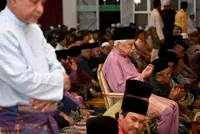
Back in Seremban, at the hybrid Maulidur Rasul event, praises to the Prophet were preceded by the Yang di-Pertuan Besar urging the state government to govern its people well regardless of race, religion or political affiliation, especially now that, statistically, more than 100% of the adult population (thanks to outsiders) have been fully vaccinated in Negri Sembilan.

Those who believe in our Federal Constitution and Rukun Negara must work to ensure that the lessons of Covid-19 mean that our national values are now, more than ever, strengthened and disseminated.

Tunku Zain Al-‘Abidin is founding president of Ideas. The views expressed here are the writer’s own.

Get 20% OFF The Star Digital Access

Monthly Plan

RM 13.90/month

RM 11.12/month

Billed as RM 11.12 for the 1st month, RM 13.90 thereafter.

Best Value

Annual Plan

RM 12.33/month

RM 9.87/month

Billed as RM 118.40 for the 1st year, RM 148 thereafter.

Follow us on our official WhatsApp channel for breaking news alerts and key updates!
Tunku Zain Al-‘Abidin ,

Next In Columnists

Federal funds and fiscal capacity
Chinese wind blowing in Johor
The incredible star power rising from the East
Make Penang AI plan a bridge for majority
Giants fall, England survive – World Cup quarter-finals take shape
Who shapes global AI rules: Asean-China cooperation role
Why the Johor election is good for Malaysian democracy
Confessions of a durian season sinner
Looming threat to social security
More predictable than the World Cup

Others Also Read