by Xinhua writers Lu Junyu, Wu Nian
RIO DE JANEIRO, Nov. 29 (Xinhua) -- Brazil and China have complementary strengths in scientific research and much to gain from deeper cooperation, Helena Nader, president of the Brazilian Academy of Sciences, told Xinhua in a recent interview, highlighting the role of young researchers in sustaining the partnership in the decades ahead.
The young generation will be the ones responsible for really putting every effort into sustaining this collaboration, said Nader, who is also a foreign member of the Chinese Academy of Sciences.
Speaking on the sidelines of the first Brazil-China Meeting of Young Researchers, Nader noted that while the two countries have long enjoyed close economic and trade ties and hold each other's scientific achievements in high regard, their collaboration in scientific research has yet to reach its full potential.
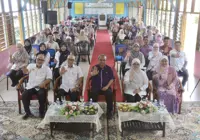
The meeting, held from Wednesday to Friday in Goiania, capital of the central Brazilian state of Goias, focused on the role of science in safeguarding national sovereignty. Discussions covered social development, science, technology and innovation in health, as well as artificial intelligence and digital transformation.
Having visited China several times and exchanged views with Chinese peers, Nader said she was particularly impressed by the country's young researchers.
Noting that science and education require sustained investment, Nader said Brazil could learn from China's experience in integrating science into policymaking, advancing basic research and fostering technological innovation.
Brazil's expertise in tropical agriculture and biodiversity complements China's technological strengths, Nader said, adding that closer cooperation could open up new avenues for joint research. She expressed hope that more research institutions from both countries would work together in areas such as agricultural technology, environmental science and health.
For Nader, the significance of closer scientific cooperation extends well beyond the two countries.
Greater collaboration and knowledge sharing, she said, could help countries of the Global South narrow disparities in scientific capacity and strengthen their ability to pursue independent development. She cited China's achievements in poverty reduction and expanding access to education as valuable lessons for other developing nations.
Looking ahead, Nader expressed hope that these exchanges would evolve into lasting research partnerships. Rather than simply holding more meetings, she looks forward to seeing a growing body of research jointly published by Brazilian and Chinese scientists over the next decade.