
The sea gypsies are loathe to give up traditional ways of life tied to the water. -- The Nation
WHEN the tsunami swept through a sea gypsy community in Phang Nga’s Takua Pa district, the locals lost not only their houses but also the land where their ancestors have lived for generations.
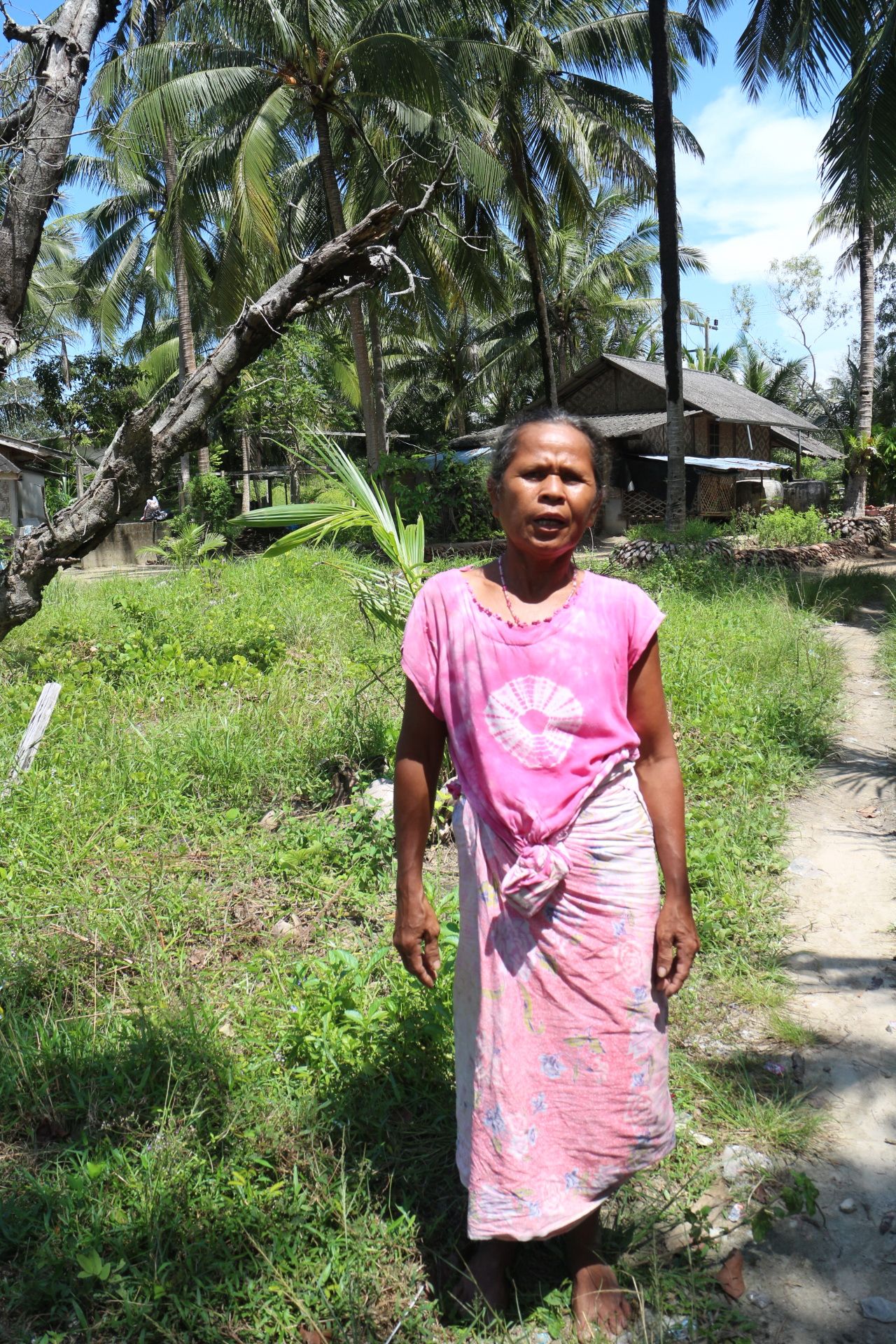
Ever since the 2004 tsunami sea gypsy Larp Harnthalay, of the Moken tribe in Thailand, lives in fear of losing her land to developers. Since the disaster, claims to what natives deem ancestral lands have sprung up. - The Nation
Tian accepted the investor’s offer in 2009, and got the land title deed the following year.
Larp, however, is determined to fight on as she says she needs to protect the land that belonged to her ancestors and pass it on to her descendants.
“I won’t bow down. I will fight till the day I die. My family has lived here for hundreds of years,” Larp says.
But things today are far different from what they used to be before the tsunami.
All her neighbours have about half the area of land they used to own, and Larp fears, deep down, that her child and grandchild will not have a place to call their own in the end.
Larp is the only resident without a title deed in Tap Tawan.
“I started learning the Thai standard language after the tsunami hit. It’s because I need to contact various authorities in a bid to protect my ancestral land,” says Larp, who completed only Prathom 4 (Grade 4) education and previously spoke only the local dialect.
Her voice shakes with emotion as she talks about the “injustice”.
“Before the tsunami, we never faced such a problem,” she says.
Tian says he also feels deeply frustrated, sad and enraged to see how investors even encroached on the cemetery of the Moken.
Pakveep Graveyard, according to him, had long been the final resting place for Moken from three local communities including Tap Tawan. It used to span well over 60 rai (9.6ha) of land.
“But you know, the graveyard has just six rai (0.96ha),” Tian says, “There’s now a hotel going up on the graveyard of our ancestors.”
It is estimated that there are more than 10,000 sea gypsies living in 41 communities across Thailand’s Andaman provinces. Of them, 15 communities have reported land problems related to their properties. There have been problems at seven sea gypsy cemeteries too.
Larp says that with the land problems, she also finds it harder to earn a living.
“I used to pan for tin. But this is not possible any more. Hotels have mushroomed and there are no mines in my neighbourhood any more. Hotels have beautiful landscapes. They won’t allow me to pile anything in their localities,” she says.
She says an old woman like her faces a tougher situation when compared to the young.
“Young people can find jobs at hotels. My last resort is to catch squid from the sea,” says the sea gypsy. – The Nation/Asia News Network
Already a subscriber? Log in
The Star Festive Promo: Get 35% OFF Digital Access
Cancel anytime. Ad-free. Unlimited access with perks.