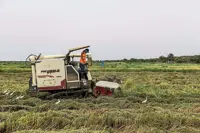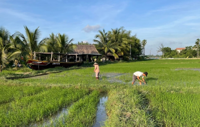
KEPALA BATAS: Getting more rice out of every hectare of padi land is the goal behind the Federal Government’s push to raise the country’s average rice yield to seven tonnes per hectare before 2030.
The plan calls for better irrigation, smarter farming practices and greater use of technology to transform the way rice is grown.
Agriculture and Food Security Minister Datuk Seri Mohamad Sabu said the focus was on increasing productivity in existing paddy fields rather than simply expanding cultivated areas.
He said improvements to tertiary irrigation infrastructure in areas under the Muda Agricultural Development Authority (Mada) are expected to help farmers achieve yields between seven and 10 tonnes per hectare.
“Recent harvests at several places have already seen many farmers recording yields of eight to nine tonnes per hectare.
“With proper planting schedules, fertilisation and crop management, production can be increased further,” he said during a press conference after the handover ceremony of the ministry’s Kampung Angkat Madani project at the Pokok Sena Area Farmers’ Organisations here yesterday.
Mohamad said Mada recorded about a 2% increase in rice yields this year, although production varied among farmers, with some achieving four tonnes per hectare while others recorded as much as nine tonnes.
He said farmers will enjoy a direct benefit as every additional tonne of padi produced would translate into an extra RM500 in output value.
“For example, if a farmer increases production from five to 10 tonnes per hectare, that would mean an additional RM2,500 without having to expand the cultivated area,” he said.
He cited Sekinchan as an example of how technology and improved farming methods could boost productivity, with some farmers achieving between seven and 10 tonnes per hectare, while a few had recorded up to 12 tonnes.
On preparations for the anticipated El Nino phenomenon, Mohamad said the ministry was working to ensure sufficient water reserves for padi cultivation, particularly between December and April next year.
He said water levels at Pedu Dam, Kedah, are currently encouraging, but efforts are being made to increase storage capacity to prepare for a possible prolonged dry spell.
“Water releases for padi irrigation have been reduced due to the recent rainfall, allowing us to retain more water in the reservoirs,” he said.
Mohamad said the ministry and Mada engineers will closely monitor water levels at the three dams under Mada and take the necessary measures should supplies become insufficient.
Cloud seeding could be considered if required, depending on suitable cloud formations and advice from the Malaysian Meteorological Department.
He added that the government is spending about RM245mil to replace the ageing valve system at Pedu Dam, expected to be completed by November next year.
Earlier, Mohamad handed over the completed community development projects at Kampung Guar Petai under the Kampung Angkat Madani (KAM) and Technical and Vocational Education and Training Madani initiatives.
He also handed over an agricultural drone worth about RM58,000 to the Pokok Sena PPK for training purposes.