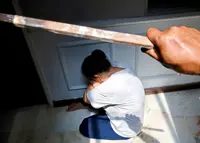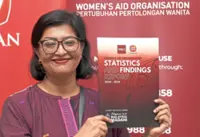
KUALA LUMPUR: The number of domestic violence cases recorded by the Women’s Aid Organisation (WAO) rose to 1,759 in 2025 from 1,162 in 2024, with patterns of abuse increasingly involving the misuse of digital technology to control partners and monitor their movements.
WAO executive director Nazreen Nizam said the increase reflected a worrying trend involving psychological, emotional and sexual violence, alongside physical abuse, which was more easily identifiable.
"Physical violence remains prevalent among the domestic violence cases we receive, but there are also cases involving psychological, emotional and sexual abuse, and more recently, we have been seeing more cases of technology-facilitated gender-based violence.
"This involves individuals using digital technology, including artificial intelligence (AI) and online platforms, to track their partners’ movements, among other things. We are seeing an increasing number of such cases, as well as dating violence involving unmarried couples,” she said.
She said this during the Listen podcast broadcast on the Facebook pages of Bernama TV and Bernama Radio, which discussed challenges in providing protection, victim support and societal responsibility.
Nazreen said cases of abuse involving unmarried couples, including those dating or engaged, were also increasing, although they were not protected under the Domestic Violence Act 1994.
As such, WAO, which was established in 1982, is advocating for the scope of the Act to be expanded to extend legal protection to those affected.
She said emotional and psychological abuse often went unnoticed because it left no physical scars, making it difficult for victims to share their experiences and be believed by those around them.
"This can have serious repercussions on victims’ mental health, with some even at risk of self-harm when they feel there is no way out of their situation,” she said.
Nazreen said WAO provided counselling services through qualified counsellors, alongside support from social workers, to help survivors cope with trauma and plan their next steps according to their individual needs.
On why women found it difficult to leave unhealthy relationships, she said financial dependence on their partners was among the main barriers, particularly for those who had been out of the workforce for years to care for their families.
"When women become financially dependent on their husbands, they often find it difficult to leave. We must also understand that domestic violence stems from an unequal distribution of power in a relationship,” she said.
Nazreen said WAO adopted a survivor-centric approach, allowing survivors to make their own decisions, including whether to return home after seeking temporary shelter.
"Survivors can contact WAO again at any time, and we will help them develop a safety plan should they face the risk of further abuse,” she said.
Besides providing temporary shelter for women and children, WAO also assists survivors in obtaining medical treatment, lodging police reports and accessing welfare and zakat assistance.
The organisation also conducts economic empowerment programmes through skills training, such as sewing and food preparation, to help survivors generate income and become more financially independent.
In a related development, Nazreen said the way some frontliners responded to domestic violence complaints still needed improvement, citing allegations that some victims had been advised to return home because their cases were deemed trivial.
She said training in gender sensitivity and domestic violence case management should be expanded among enforcement personnel to ensure every complaint received due attention.
Nazreen also called on the government to strengthen financial support and grant allocations for non-governmental organisations providing shelter, counselling and rehabilitation services to survivors.
She said the public must also play a role by assisting victims cautiously, including contacting them when it was safe to do so or seeking police assistance if serious violence was suspected.
"When it comes to domestic violence, we cannot simply mind our own business. We do not need to concern ourselves with what time someone comes home, what they wear or what they do in their private lives.
"But if we know our neighbours are experiencing violence, perhaps because we can hear what is happening, we must take action,” she said, advising victims or those requiring assistance to contact the WAO hotline at 03-3000 8858 or via WhatsApp and SMS at 018-988 8058.- Bernama