Anwar advocates for more regional autonomy at the 49th Asean Summit
MANILA: Staying out of the rivalry between the world’s biggest powers is one challenge for Asean. Standing on its own feet while navigating that rivalry is another.
That was the broader message analysts drew from Prime Minister Datuk Seri Anwar Ibrahim’s three-day visit to Manila, where his emphasis on dialogue, economic resilience and regional cooperation reflected Malaysia’s vision of a stronger, more independent Asean.
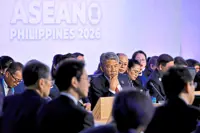
Political analyst Prof Datuk Dr Sivamurugan Pandian said Anwar’s participation in the 49th Asean Summit and related meetings from Nov 15 to 17 demonstrated Malaysia’s ambition for a regional bloc capable of shaping its own future.
“Asean must not be a spectator in shaping regional affairs nor allow major-power rivalry to dictate its future,” he said.
He said Anwar’s interventions on several matters including the Thailand-Cambodia tensions, the South China Sea, food security and artificial intelligence (AI) reflected a broader understanding of regional security.
“Asean centrality must mean more than having a seat at the table; it must mean having the capacity and political will to shape the table.”
International relations expert Dr Abdolreza Alami described Anwar’s approach as an attempt to move Asean “from passive neutrality towards active strategic autonomy”.
He said Malaysia was advocating neither an anti-Western nor an anti-China position, but a regional organisation capable of engaging major powers without allowing their rivalries to dictate its priorities.
“Strategic independence, in this context, does not mean isolation or disengagement. It means preserving the freedom to cooperate with different powers without allowing external rivalries to dictate Asean’s priorities,” he said.
At the Asean-China Summit, Anwar called for direct engagement with Beijing to address South China Sea disputes, while his intervention at the East Asia Summit stressed the importance of keeping communication channels open.
Alami cautioned, however, that diplomatic engagement must produce measurable results, particularly in Myanmar and the South China Sea.
Philippine President Ferdinand Marcos Jr said on Tuesday that negotiations on the South China Sea Code of Conduct were 85% to 90% complete, although an agreement remained unfinished.
Economist Prof Emeritus Dr Barjoyai Bardai said Anwar’s proposals also signalled a shift towards greater economic self-reliance, with food, energy and technological security becoming increasingly important.
“Security today is not just about military defence or territorial integrity.
“It is also about food security, energy security, technological sovereignty, financial stability and the resilience of supply chains,” Barjoyai said.
He said Asean must strengthen regional production networks and technological capabilities rather than remain excessively dependent on external markets.
“Anwar’s vision can be described as moving from Asean Centrality to Asean Economic Sovereignty.
“Asean Centrality concerns the region’s position in international diplomacy. Asean Economic Sovereignty concerns its ability to control more of its economic destiny.
“The two must go together,” Barjoyai added.
Nusantara Academy for Strategic Research senior fellow Dr Azmi Hassan said Anwar’s approach reflected Malaysia’s commitment to maintaining ties with Washington and Beijing while prioritising diplomacy over South China Sea disputes.
He said Anwar’s emphasis on intra-Asean trade and energy cooperation also aimed to reduce dependence on external powers.
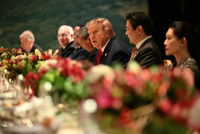
The diplomatic dimension was further highlighted at the Asean-US Special Summit, where US President Donald Trump praised Anwar’s role in the Thailand-Cambodia peace accord.
Anwar subsequently credited both countries’ commitment to continued dialogue as essential to lasting peace.
Ultimately, the experts said Asean’s credibility would rest not on what its leaders pledged, but on what its member states could achieve together.